• Email Us: [email protected]
  • Contact Us: +1 718 874 1545
  • Skip to main content
  • Skip to primary sidebar

Medical Market Report

  • Home
  • All Reports
  • About Us
  • Contact Us

Hidden Structure Discovered Behind The Milky Way’s “Zone Of Avoidance”

November 9, 2022 by Deborah Bloomfield

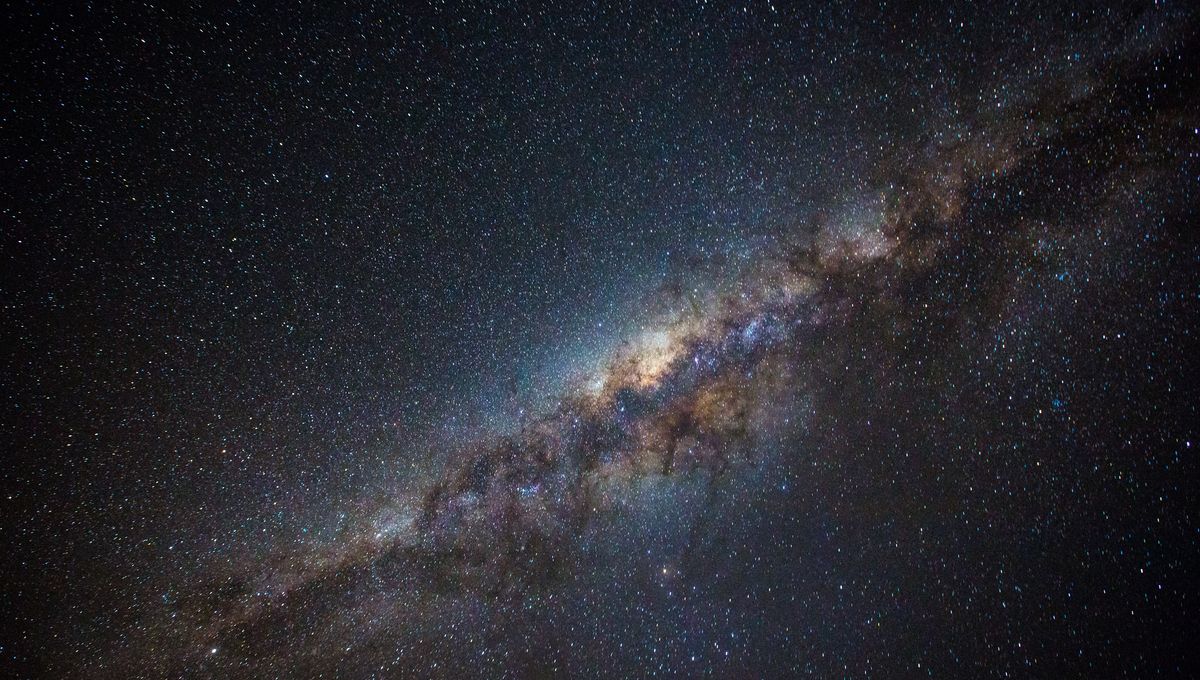
Being inside of a galaxy certainly has its perks, given that planets capable of sustaining life would be unlikely to form in intergalactic space. But it means that there is a big chunk of the universe we can’t see because it is blocked by the central region of our own Milky Way. Now astronomers have been able to determine the existence of a galaxy cluster behind the wonderfully ominous-sounding “zone of avoidance”. 

In the zone of avoidance, which makes up 10-20 percent of the sky visible from Earth, visible light is blocked by the vast clouds of gas and dust located through the plane of the Milky Way. Other wavelengths, like infrared, can move through it as the region is more transparent to them. This is how JWST (which sees in infrared) can see some things that Hubble (visible light) cannot. 

Advertisement

Near-infrared observations are in fact proving very important in studying what lies in the zone of avoidance. We know, for example, that the equally ominous-sounding Great Attractor – a major galaxy cluster that is pulling the Milky Way toward itself – is located in that direction. Now we know there is another cluster in that direction, albeit much smaller.


This rich group of galaxies is known as the not-very-catchy VVVGCl-B J181435-381432. Its light has traveled for 2.7 billion years to reach us and its mass is estimated to be about 45 to 50 times that of the Milky Way, roughly in line with the expectations for galaxy clusters at that epoch.

The team also estimated the radius size, although the precise value depends on the expansion rate of the universe (a currently contentious number due to the so-called Hubble tension). They estimate the radius is roughly the distance between the Milky Way and Andromeda, the closest largest galaxy to our own. This cluster is packing a lot of mass in a (relatively) small space.

Advertisement

The team used the Gemini South telescope to study five galaxies that are now believed to be part of this cluster. Because of their number, they suspected that together they made a galaxy cluster. They now think there could be as many as 58 galaxies in the structure.

There is still much we don’t know about the zone of avoidance (other than astronomers enjoy naming things) but astronomers are being clever in ways to understand it. Which is a good thing because the other option is to wait several tens of millions of years for it to become visible and who’s got time for that?

The research is submitted to Astronomy & Astrophysics and is available on the ArXiv preprint server.

Deborah Bloomfield
Deborah Bloomfield

Related posts:

  1. Oil losses from Hurricane Ida rank among worst in 16 years
  2. The Station: Gogoro scoots into a SPAC, a Rivian milestone and Tesla prepares to unleash FSD beta software
  3. OPEC+ seen sticking to November output plans, despite $80 oil
  4. “Man Of The Hole”: Last Known Member Of Uncontacted Amazon Tribe Has Died

Source Link: Hidden Structure Discovered Behind The Milky Way’s "Zone Of Avoidance"

Filed Under: News

Primary Sidebar

  • How America’s Aerospace Defense Came To Track Santa Claus For 70 Years
  • 3200 Phaethon: Parent Body Of Geminids Meteor Shower Is One Of The Strangest Objects We Know Of
  • Does Sleeping On A Problem Actually Help? Yes – It’s Science-Approved
  • Scientists Find A “Unique Group” Of Polar Bears Evolving To Survive The Modern World
  • Politics May Have Just Killed Our Chances To See A Tom Cruise Movie Actually Shot In Space
  • Why Is The Head On Beer Often White, When Beer Itself Isn’t?
  • Fabric Painted With Dye Made From Bacteria Could Protect Astronauts From Radiation On Moon
  • There Used To Be 27 Letters In The English Alphabet, Until One Mysteriously Vanished
  • Why You Need To Stop Chucking That “Liquid Gold” Down Your Kitchen Sink
  • Youngest Mammoth Fossils Ever Found Turn Out To Be Whales… 400 Kilometers From The Coast
  • The First Wheelchair User To Travel To Space Is About To Make History
  • “It Was Bigger Than A Killer Whale”: 66 Million-Year-Old Tooth Suggests Mosasaurs Were Hunting In Rivers, Not Just Seas
  • Killer Whales And Dolphins Team Up In First-Ever Footage Of Cooperative Hunting
  • Why Does Chocolate In Advent Calendars Taste Different From Normal Chocolate?
  • Why Do Sheep And Goats Have Rectangular Pupils?
  • What Kind Of Parents Were Dinosaurs?
  • First Images Of A Tatooine-Like Planet That Orbits Its Two Stars Closer Than We’ve Seen Before
  • JWST Finds Earliest Supernova Yet, From When The Universe Was Just 730 Million Years Old
  • How A Comet On Christmas Day Changed What We Knew About Space
  • What Color Was Diplodocus? First-Ever Sauropod Fossils With Melanosomes Bring Us A Step Closer To Finding Out
  • Business
  • Health
  • News
  • Science
  • Technology
  • +1 718 874 1545
  • +91 78878 22626
  • [email protected]
Office Address
Prudour Pvt. Ltd. 420 Lexington Avenue Suite 300 New York City, NY 10170.

Powered by Prudour Network

Copyrights © 2025 · Medical Market Report. All Rights Reserved.

Go to mobile version