• Email Us: [email protected]
  • Contact Us: +1 718 874 1545
  • Skip to main content
  • Skip to primary sidebar

Medical Market Report

  • Home
  • All Reports
  • About Us
  • Contact Us

Hippos Hung Around In Europe 80,000 Years Later Than We Thought

October 13, 2025 by Deborah Bloomfield

These days, the humble hippo is found exclusively in sub-Saharan Africa, but that hasn’t always been the case – thousands of years ago, the river horse also inhabited central Europe, for far longer than we once thought.

The rest of this article is behind a paywall. Please sign in or subscribe to access the full content.

During the Middle and Late Pleistocene, some 780,000 to 12,000 years ago, Europe’s climate oscillated between periods of freezing temperatures and warmer interludes, which allowed hippopotamuses to migrate out of Africa in multiple waves. At their peak geographic distribution, hippos ranged from the British Isles in the northwest to the Iberian and Italian peninsulas in the south. 

It was previously assumed that the surprisingly airborne mammals went extinct in Central Europe about 115,000 years ago, as conditions became less favorable with the onset of the last ice age. However, a new analysis of fossils from Germany demonstrates that this was not the case.

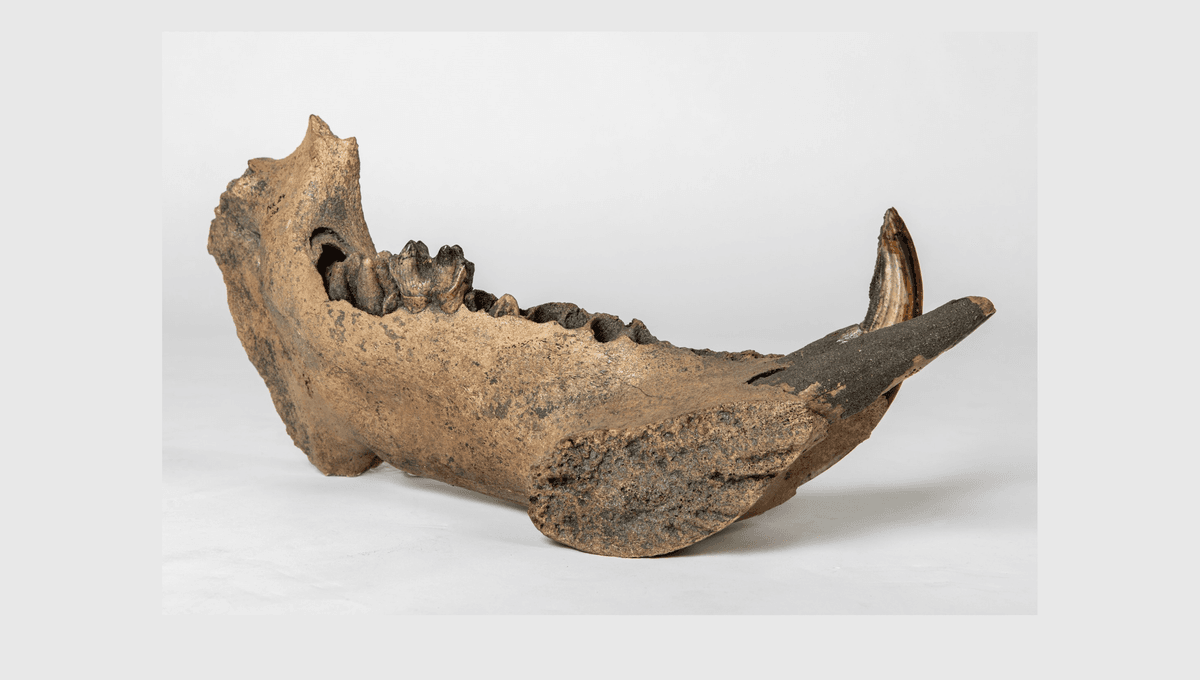
According to bone finds from the Upper Rhine Graben in southwestern Germany, hippos were still around until sometime between 47,000 and 31,000 years ago, well into the last ice age. 

Radiocarbon dating the fossils of 19 hippos confirmed their presence in central Europe during a milder climatic phase in the middle Weichselian – which spanned from around 47,000 until 31,000 years ago. This places them in the same place and time period as woolly mammoths and woolly rhinos.

Meanwhile, ancient DNA sequencing showed that the European ice age hippos belonged to the same species as modern African hippos (Hippopotamus amphibius), and that there was a very low genetic diversity in this population, suggesting it was small and isolated.

“The results demonstrate that hippos did not vanish from middle Europe at the end of the last interglacial, as previously assumed,” first author Dr Patrick Arnold said in a statement. “Therefore, we should re-analyze other continental European hippo fossils traditionally attributed to the last interglacial period.”

The revelations are not just limited to hippos, as Professor Wilfried Rosendahl added: “The current study provides important new insights which impressively prove that ice age was not the same everywhere, but local peculiarities taken together form a complex overall picture – similar to a puzzle. It would now be interesting and important to further examine other heat-loving animal species, attributed so far to the last interglacial.”

The study is published in Current Biology.

Deborah Bloomfield
Deborah Bloomfield

Related posts:

  1. Vivo X70 Pro Specs, colour options found on TENAA listings
  2. Inspiration4 crew, meet outer space: SpaceX’s first all-civilian mission launches to orbit
  3. The Medieval World’s Most Terrifying Weapon Is Still A Mystery Today
  4. Who Wrote The Bible?

Source Link: Hippos Hung Around In Europe 80,000 Years Later Than We Thought

Filed Under: News

Primary Sidebar

  • Ambitious Iguana “Love Island” For Near-Extinct Reptiles Becomes Epic Conservation Success Story
  • Sol 1,540: NASA Releases Video Of Perseverance Rover’s Record-Breaking Drive On Mars
  • Why Carl Sagan Was Way Ahead Of His Time And The Legacy He Left Behind
  • Why Were Pompeii Victims All Wearing Thick Woolly Cloaks In August?
  • We May Finally Know What Causes These Bizarre Bright Blue Cosmic Flashes
  • What’s The Biggest Rock In The World?
  • There Is A Very Simple Test To See If You Have Aphantasia
  • Bringing Extinct Animals To Life: Is Artificial Intelligence Helping Or Harming Palaeoart?
  • This Brilliant Map Has 3D Models Of Nearly Every Single Building In The World – All 2.75 Billion Of Them
  • These Hognose Snakes Have The Most Dramatic Defense Technique You’ve Ever Seen
  • Titan, Saturn’s Biggest Moon, Might Not Have A Secret Ocean After All
  • The World’s Oldest Individual Animal Was Born In 1499 CE. In 2006, Humans Accidentally Killed It.
  • What Is Glaze Ice? The Strange (And Deadly) Frozen Phenomenon That Locks Plants Inside Icicles
  • Has Anyone Ever Actually Been Swallowed By A Whale?
  • First-Known Instance Of Bees Laying Eggs In Fossilized Tooth Sockets Discovered In 20,000-Year-Old Bones
  • Polar Bear Mom Adopts Cub – Only The 13th Known Case Of Adoption In 45 Years Of Study At Hudson Bay
  • The Longest-Running Evolution Experiment Has Been Going For 80,000 Generations
  • From Shrink Rays And Simulated Universes To Medical Mishaps And More: The Stories That Made The Vault In 2025
  • Fastest Cretaceous Theropod Yet Discovered In 120-Million-Year-Old Dinosaur Trackway
  • What’s The Moon Made Of?
  • Business
  • Health
  • News
  • Science
  • Technology
  • +1 718 874 1545
  • +91 78878 22626
  • [email protected]
Office Address
Prudour Pvt. Ltd. 420 Lexington Avenue Suite 300 New York City, NY 10170.

Powered by Prudour Network

Copyrights © 2025 · Medical Market Report. All Rights Reserved.

Go to mobile version