• Email Us: [email protected]
  • Contact Us: +1 718 874 1545
  • Skip to main content
  • Skip to primary sidebar

Medical Market Report

  • Home
  • All Reports
  • About Us
  • Contact Us

Hippos Hung Around In Europe 80,000 Years Later Than We Thought

October 13, 2025 by Deborah Bloomfield

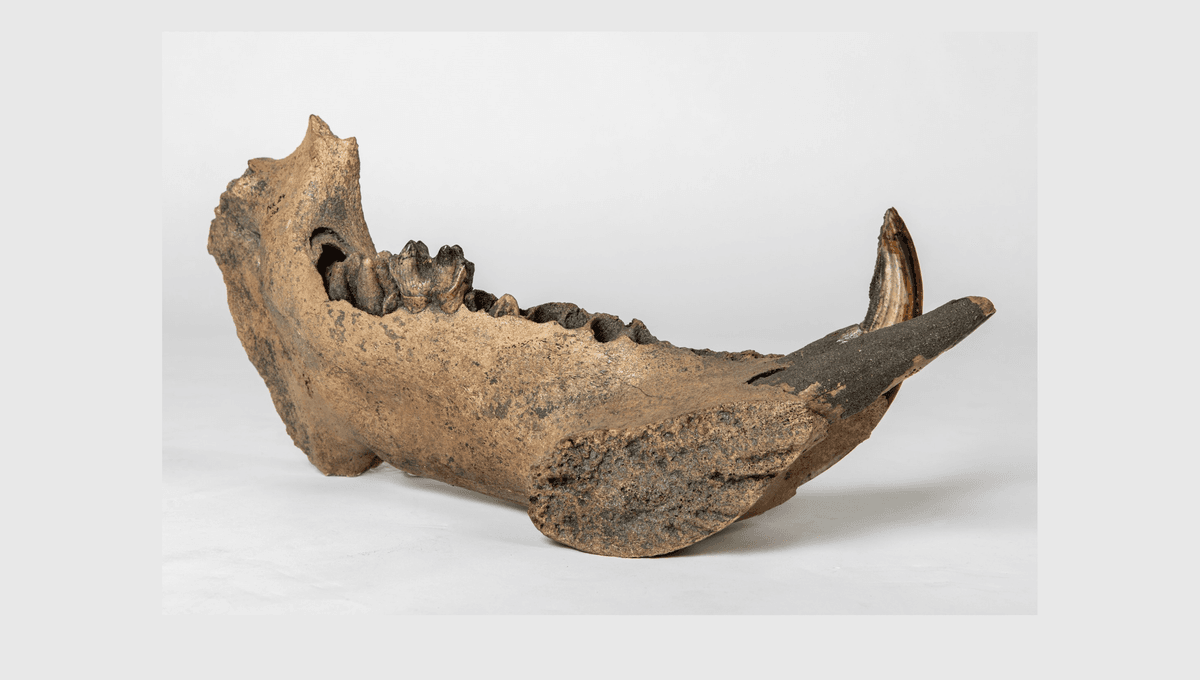
These days, the humble hippo is found exclusively in sub-Saharan Africa, but that hasn’t always been the case – thousands of years ago, the river horse also inhabited central Europe, for far longer than we once thought.

The rest of this article is behind a paywall. Please sign in or subscribe to access the full content.

During the Middle and Late Pleistocene, some 780,000 to 12,000 years ago, Europe’s climate oscillated between periods of freezing temperatures and warmer interludes, which allowed hippopotamuses to migrate out of Africa in multiple waves. At their peak geographic distribution, hippos ranged from the British Isles in the northwest to the Iberian and Italian peninsulas in the south. 

It was previously assumed that the surprisingly airborne mammals went extinct in Central Europe about 115,000 years ago, as conditions became less favorable with the onset of the last ice age. However, a new analysis of fossils from Germany demonstrates that this was not the case.

According to bone finds from the Upper Rhine Graben in southwestern Germany, hippos were still around until sometime between 47,000 and 31,000 years ago, well into the last ice age. 

Radiocarbon dating the fossils of 19 hippos confirmed their presence in central Europe during a milder climatic phase in the middle Weichselian – which spanned from around 47,000 until 31,000 years ago. This places them in the same place and time period as woolly mammoths and woolly rhinos.

Meanwhile, ancient DNA sequencing showed that the European ice age hippos belonged to the same species as modern African hippos (Hippopotamus amphibius), and that there was a very low genetic diversity in this population, suggesting it was small and isolated.

“The results demonstrate that hippos did not vanish from middle Europe at the end of the last interglacial, as previously assumed,” first author Dr Patrick Arnold said in a statement. “Therefore, we should re-analyze other continental European hippo fossils traditionally attributed to the last interglacial period.”

The revelations are not just limited to hippos, as Professor Wilfried Rosendahl added: “The current study provides important new insights which impressively prove that ice age was not the same everywhere, but local peculiarities taken together form a complex overall picture – similar to a puzzle. It would now be interesting and important to further examine other heat-loving animal species, attributed so far to the last interglacial.”

The study is published in Current Biology.

Deborah Bloomfield
Deborah Bloomfield

Related posts:

  1. Vivo X70 Pro Specs, colour options found on TENAA listings
  2. Inspiration4 crew, meet outer space: SpaceX’s first all-civilian mission launches to orbit
  3. The Medieval World’s Most Terrifying Weapon Is Still A Mystery Today
  4. Who Wrote The Bible?

Source Link: Hippos Hung Around In Europe 80,000 Years Later Than We Thought

Filed Under: News

Primary Sidebar

  • This Month’s New Moon Will Be The Farthest From Earth For The Next 18 Years
  • Playing Music To Baby Mice Shapes Their Brain Development In A Sex-Specific Way
  • Ice XXI: Scientists Discover A New Form Of Ice Born At Room Temperature Under Intense Pressure
  • Citizen Scientists Are Helping With Rescue Efforts In Hurricane Melissa’s Aftermath – Here’s How You Can Too
  • What Is The Radio Blackout Scale And When Is It Needed?
  • “It’s Alive!”: The Real (And Horrifying) Science That Inspired Mary Shelley’s Frankenstein
  • First-Ever View Of The Sun’s Polar Magnetic Field Reveals Major Surprise
  • A Killer Whale Birth Has Been Captured On Camera In The Wild For The First Time
  • If You Shine A Light In Your Garden And See Lots Of Dots Reflected Back, We’ve Got Bad News
  • The “Sailor’s Eyeball” Blob Is One Of The Largest Single-Celled Organisms Ever Discovered
  • Icefish Live In Sub-Zero Antarctic Waters, So Why Don’t They Freeze?
  • We Finally Know What Happened To The Stone Of Destiny
  • Meet The Fishing Cat: The World’s Most Aquatic Feline Has Evolved To Master The Wetlands
  • Why Is There A Mysterious White Pyramid In Arizona?
  • Humpback Hitchhickers: Watch POV Footage Of Suckerfish Clinging To Whales As They Migrate Across Oceans
  • Oldowan Tools Saw Early Humans Through 300,000 Years Of Fire, Drought, And Shifting Climates, New Site Reveals
  • There Are Just Two Places In The World With No Speed Limits For Cars
  • Three Astronauts Are Stranded In Space Again, After Their Ride Home Was Struck By Space Junk
  • Snail Fossils Over 1 Million Years Old Show Prehistoric Snails Gave Birth to Live Young
  • “Beautiful And Interesting”: Listen To One Of The World’s Largest Living Organisms As It Eerily Rumbles
  • Business
  • Health
  • News
  • Science
  • Technology
  • +1 718 874 1545
  • +91 78878 22626
  • [email protected]
Office Address
Prudour Pvt. Ltd. 420 Lexington Avenue Suite 300 New York City, NY 10170.

Powered by Prudour Network

Copyrights © 2025 · Medical Market Report. All Rights Reserved.

Go to mobile version