• Email Us: [email protected]
  • Contact Us: +1 718 874 1545
  • Skip to main content
  • Skip to primary sidebar

Medical Market Report

  • Home
  • All Reports
  • About Us
  • Contact Us

How Much Of Cleopatra’s Handwriting Has Survived The Centuries?

September 22, 2023 by Deborah Bloomfield

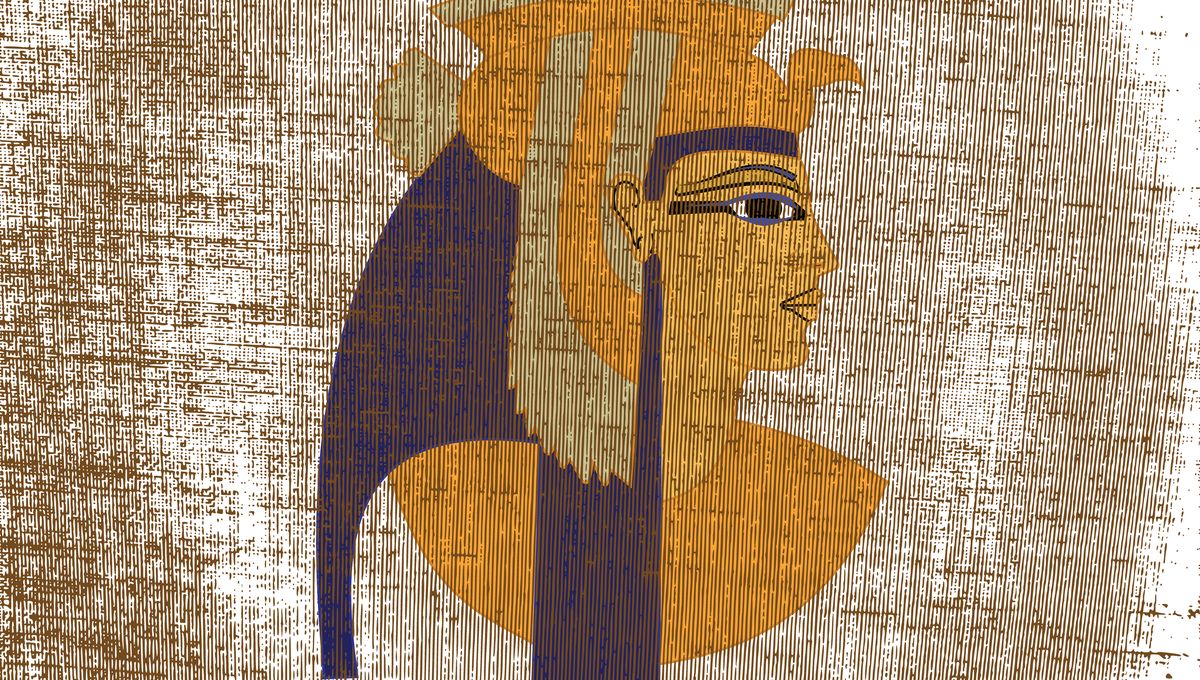
Queen Cleopatra has remained one of the most high-profile figures in history. Often remembered for her cunning and romantic love affairs with both Julius Caesar and Mark Antony, this queen of Egypt was an accomplished ruler in her own right, and one of the few female rulers of her age. It is perhaps fitting then that the only confirmed piece of handwriting we have for this legendary woman should symbolize her power in a single word.

“Ginesthoi” (γίνεσθοι in ancient Greek), meaning “make it happen” or “do as I command”, appears on an ancient royal decree that was created in 33 BCE. The word was allegedly written in Cleopatra’s hand and appears as a postscript to the decree itself.

Advertisement

The decree grants tax exemption to a Roman official thought to be the famous general and consul, Publius Canidius Crassus, who was closely associated with Mark Antony (though there is some disagreement there). Canidius commanded Antony’s land armies against Octavian, the future emperor Augustus, at the Battle of Actium in 31 BC and was later executed in Egypt on Octavian’s orders.

But before this, Canidius was permitted to export 10,000 bags of wheat and import 5,000 amphorae of wine a year, without taxation.

“We have granted to Publius Canidius and his heirs the annual exportation of 10,000 artabas [300 tons] of wheat and the annual importation of 5,000 Coan amphoras [around 34,500 gallons] of wine without anyone exacting anything in taxes from him or any other expense whatsoever.”

He was also awarded tax exemption for all the land he held in Egypt, an exemption that was extended to his tenants too.

Advertisement

According to Professor Peter van Minnen, who has included the document in several published articles since 2000, the document was meant to be an internal note from Cleopatra to “a high-ranking official” that ended up being recycled as papyrus wrappings for a mummy. This was not an unusual practice in Ancient Egypt – unwanted papyrus was regularly reused for mummies and remains a valuable source for documents that would have otherwise been lost to history.

ⓘ IFLScience is not responsible for content shared from external sites. 

Given the document’s nature, Minnen maintains, the only person who could provide such authority was the queen herself. So while we do not have a name or signature to confirm this, such a presentation could have only come from Cleopatra herself, and her handwriting would have been recognized by her administrators.

It is important to note that this interpretation is not universally supported by historians, as there is no way to confirm that it really did come from Cleopatra, but it remains a strong possibility. If it is her handwriting, the message adds to our understanding that Cleopatra took her responsibilities seriously and did not just reign, but also ruled.

Deborah Bloomfield
Deborah Bloomfield

Related posts:

  1. Sustainable jet fuel company Alder Fuels seals investments from United, Honeywell
  2. Migration not the solution to EU’s population challenge -CEE leaders
  3. BoK to hold fire but hike next month to mitigate high debt risk: Reuters poll
  4. What Is The ‘Splinternet’? Here’s Why The Internet Is Less Whole Than You Might Think

Source Link: How Much Of Cleopatra’s Handwriting Has Survived The Centuries?

Filed Under: News

Primary Sidebar

  • US Just Killed NASA’s Mars Sample Return Mission – So What Happens Now?
  • Art Sleuths May Have Recovered Traces Of Da Vinci’s DNA From One Of His Drawings
  • Countries With The Most Narcissists Identified By 45,000-Person Study, And The Results Might Surprise You
  • World’s Oldest Poison Arrows Were Used By Hunters 60,000 Years Ago
  • The Real Reason You Shouldn’t Eat (Most) Raw Cookie Dough
  • Antarctic Scientists Have Just Moved The South Pole – Literally
  • “What We Have Is A Very Good Candidate”: Has The Ancestor Of Homo Sapiens Finally Been Found In Africa?
  • Europe’s Missing Ceratopsian Dinosaurs Have Been Found And They’re Quite Diverse
  • Why Don’t Snorers Wake Themselves Up?
  • Endangered “Northern Native Cat” Captured On Camera For The First Time In 80 Years At Australian Sanctuary
  • Watch 25 Years Of A Supernova Expanding Into Space Squeezed Into This 40-Second NASA Video
  • “Diet Stacking” Trend Could Be Seriously Bad For Your Health
  • Meet The Psychedelic Earth Tiger, A Funky Addition To “10 Species To Watch” In 2026
  • The Weird Mystery Of The “Einstein Desert” In The Hunt For Rogue Planets
  • NASA Astronaut Charles Duke Left A Touching Photograph And Message On The Moon In 1972
  • How Multilingual Are You? This New Language Calculator Lets You Find Out In A Minute
  • Europa’s Seabed Might Be Too Quiet For Life: “The Energy Just Doesn’t Seem To Be There”
  • Amoebae: The Microscopic Health Threat Lurking In Our Water Supplies. Are We Taking Them Seriously?
  • The Last Dogs In Antarctica Were Kicked Out In April 1994 By An International Treaty
  • Interstellar Comet 3I/ATLAS Snapped By NASA’s Europa Mission: “We’re Still Scratching Our Heads About Some Of The Things We’re Seeing”
  • Business
  • Health
  • News
  • Science
  • Technology
  • +1 718 874 1545
  • +91 78878 22626
  • [email protected]
Office Address
Prudour Pvt. Ltd. 420 Lexington Avenue Suite 300 New York City, NY 10170.

Powered by Prudour Network

Copyrights © 2026 · Medical Market Report. All Rights Reserved.

Go to mobile version