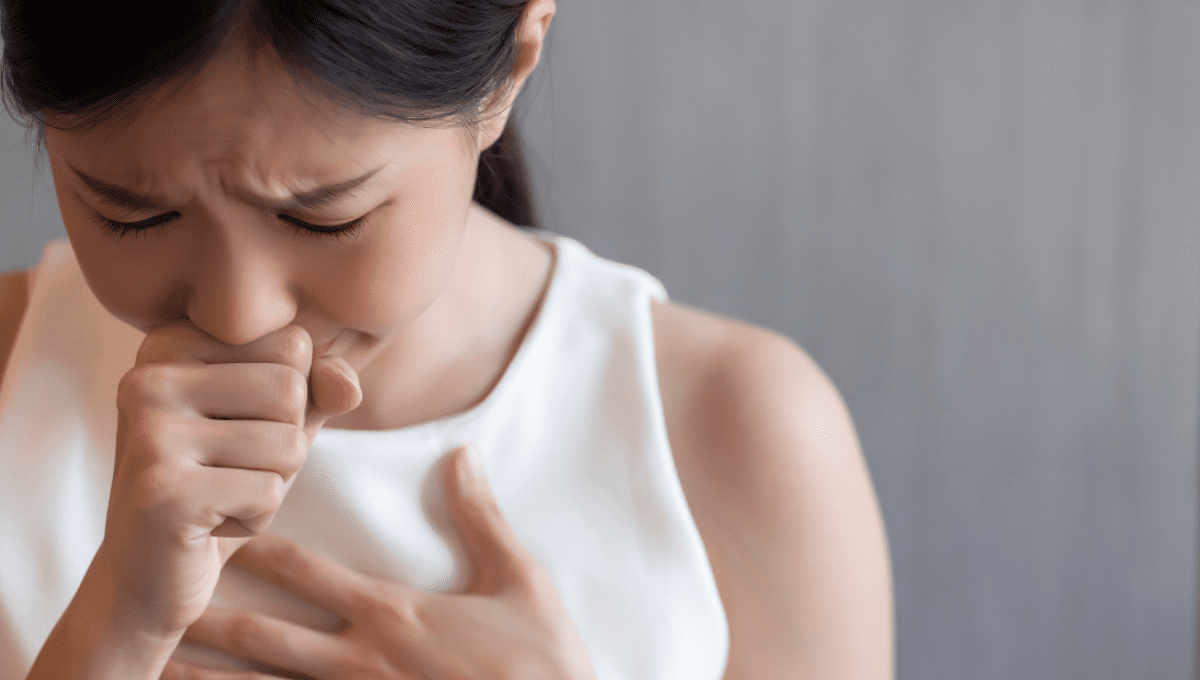
A straw designed to stop hiccups was released in 2021, beating traditional methods for how to stop hiccups in a study. However, if you’re sat at home Googling “how to stop hiccups”, you’re probably looking for a more instant solution than ordering in custom-made straws.
Here, we discuss what hiccups even are, why we get them, and common triggers. To the relief of squeaking humans worldwide, we will also explore the best methods for how to stop hiccups according to science.
What are hiccups
Beating the squeak comes down to understanding what hiccups are and how to remedy the phenomenon. So, for a quick recap, hiccups are a reflex where the diaphragm (the big muscle which contracts to free up space in the chest cavity so we can breathe) goes into spasm. They’re an involuntary and often annoying reflex with many triggers, but for most people, they will pass after a short time.
For some people, hiccupping for a long time (sometimes even as long as 68 years) can be a sign of an underlying health condition. This variety is more complex and requires investigation by a medical professional, so we will not be discussing it here.
However, for stopping your common garden variety hiccup, read on.
How to stop hiccups
A 1985 paper speaks of a patient who hiccupped for over eight years and reportedly received over 60,000 letters with cure suggestions. That particular patient eventually penned their hiccup cessation to praying to St. Jude, so if that doesn’t fit with your religion (or lack thereof), we’re going to need some better remedies.
Some anecdotal cures such as holding your breath (for a short time), breathing into a bag, or the classic bending over and drinking from the far side of a cup could be said to share an approach in that they will influence your diaphragm.
Though a 2013 paper rightfully concluded that without randomized placebo-controlled trials it’s not possible to confirm or deny such treatments work, perhaps the reason why such approaches have spread far and wide is linked to the fact that stretching a muscle can stop it from spasming.
Official advice on how to stop hiccups
NHS England has an extensive list of Dos and Do Nots on how to cure hiccups. They back the breathing into a paper bag method, as well as holding your breath for a short period, and further suggestions include:
- pull your knees up to your chest and lean forward
- sip ice-cold water (temperature changes can start hiccups, but also stop them)
- taste something sharp like lemon or vinegar
Harvard Medical School’s Harvard Health advice takes the breath method one step further in working in a three-step process. Known as “supra-supramaximal inspiration,” it was first described in the Journal of Emergency Medicine and involves:
- Take a deep breath and hold it for 10 seconds
- Without breathing out, take in a tiny bit more air
- Repeat step 2, and breathe out
The method is thought to compress hiccups both by acting on the spasming diaphragm and briefly increasing carbon dioxide levels in the body.
The science of hiccups
That correct (but unhelpful in a crisis) 2013 review of hiccup cures speaks of the “paucity of high quality studies” surrounding the topic, but that’s not to say there aren’t some eyebrow-raising case studies.
A case report from the 1990s details the curious experience of a 60-year-old man with acute pancreatitis. After developing persistent hiccups, he experienced relief after receiving a rectal massage. The fingers were subsequently removed from the man’s anus, and several hours later the hiccups returned. However, a second rectal massage again did the trick.
Another unexpected direction for hiccup remedies comes from a 2000 paper about a 40-year-old man who had been hiccupping for four days. His torment came to an end immediately following sexual intercourse, which the paper authors suggest could have tapped into the same sympathetic stimulation that’s said to explain why getting a scare can halt the hiccups.
It seems pertinent to state here that case studies are just that: examples of one or a small number of people who experienced a sequence of events and should not be taken as a go-ahead to approach your housemates, trousers down, the next time an attack of hiccups sets in.
What causes hiccups
With such a rich and diverse menu of hiccup cures to choose from, and with many carrying questionable validity, it appears that prevention is better than a cure. As such, familiarizing yourself with the triggers may serve you well for a hiccup-free future.
Unfortunately, harmless hiccups can be caused by almost as many triggers are there are bizarre “cures”. A wide range of inoffensive activities can get our diaphragms dancing, from eating too fast or too much, to drinking fizzy or cold drinks, or alcohol. Even just getting in the shower or experiencing a shock, surprise, or stressful situation can trigger an attack.
Hiccups that don’t stop may be benign, but case studies have shown that they can be associated with infection, organ damage, or disease as well as some benign tumors and cancers. So, if you have new and persistent hiccups lasting more than 48 hours, it’s worth speaking with your healthcare provider.
All “explainer” articles are confirmed by fact checkers to be correct at time of publishing. Text, images, and links may be edited, removed, or added to at a later date to keep information current.

Source Link: How To Stop Hiccups: The Science Of Hiccups And What Causes Them
