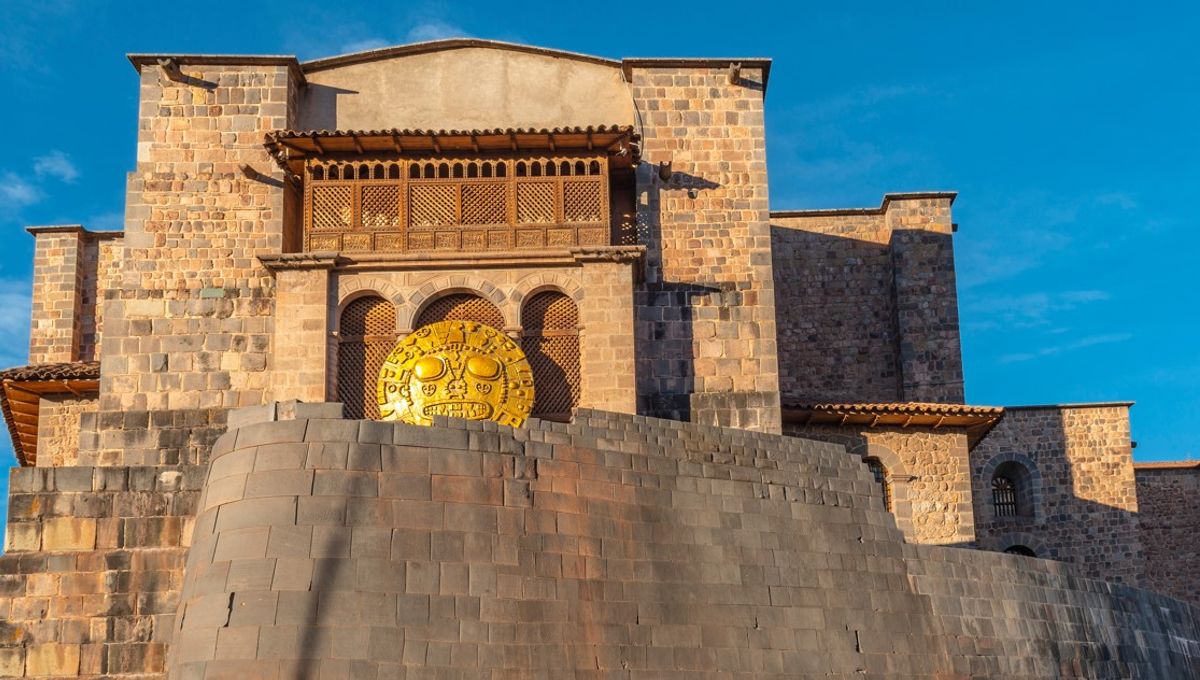
After centuries of rumor and speculation, archaeologists have finally confirmed the existence of a colossal underground tunnel system beneath the Peruvian city of Cusco. Built by the ancient Inca, the labyrinth – or Chincana – radiates outwards from the Temple of the Sun, extending for more than a mile towards a fortress on the edge of the city.
The discovery was announced at a press conference during which researchers explained how they located the subterranean passages in three stages. The first of these involved studying historical texts from the 16th to 18th centuries in search of references to the Chincana and its whereabouts.
Among the most enlightening accounts was one written by an anonymous Spanish Jesuit in 1594, who explained that the main tunnel ran beneath the bishop’s houses behind Cusco Cathedral. The same text indicated that the passageway began at the Temple of the Sun – or Coricancha – and ended at the citadel of Sacsahuaman, some 1.75 kilometers (1.1 miles) away.
Speaking to reporters at a press conference, archaeologist Jorge Calero Flores explained that these centuries-old documents “gave us an idea of where [the Chincana] is.”
The second phase of the investigation saw the researchers conduct acoustic prospecting, essentially banging on the ground and listening for areas of deeper resonance, indicating the presence of hollow chambers. Finally, the team made use of ground-penetrating radar to more accurately map out the tunnel system.
In doing so, they were able to identify the main stretch of tunnel connecting Coricancha to Sacsahuaman as well as three smaller branches. One of these bifurcations extends towards an area of Sacsahuaman known as Muyucmarca, while another reaches a place called Callispuquio, and the third runs behind the Church of San Cristóbal.
Now a popular tourist destination and jumping-off point for treks to Machu Picchu, Cusco was the capital of the powerful Inca Empire in the 15th century before eventually being conquered by the Spanish. Previous investigations have hinted at the presence of an underground network of tunnels built by the Inca, yet until now this had never been located.
While archaeologists are yet to set foot inside this subterranean maze, the researchers believe that the Inca constructed the Chincana by digging a trench that was later fortified with stone walls and carefully worked roof beams. It’s likely that these sunken passages followed the exact layout of Cusco’s streets and above-ground walkways, which were built directly on top of the tunnels.
Exactly what the Chincana was used for remains something of a mystery, although archaeologist Mildred Fernández Palomino told reporters that she and her team plan to access the tunnels and find out in the near future. “Now we have to excavate at key points to be able to enter the Chincana – perhaps in March or April,” she said.

Source Link: Huge Ancient Inca Underground Labyrinth Discovered Beneath Cusco, Starting At Sun Temple
