• Email Us: [email protected]
  • Contact Us: +1 718 874 1545
  • Skip to main content
  • Skip to primary sidebar

Medical Market Report

  • Home
  • All Reports
  • About Us
  • Contact Us

Human Beats AI In 14 Out Of 15 Go Games By Tricking It Into Serious Blunder

February 21, 2023 by Deborah Bloomfield

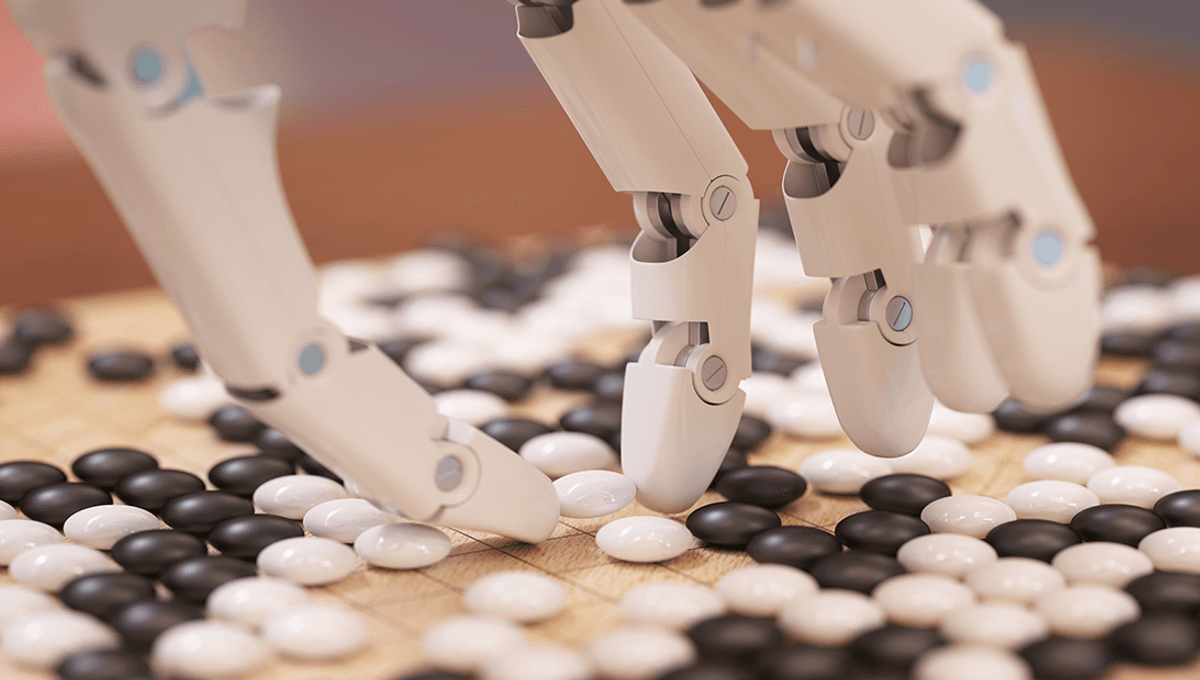
The top player in the world at the board game Go is a machine-learning algorithm that taught itself how to play. In fact, Google’s AlphaGo Zero taught itself how to become world champion of the game in just three days, just to really rub it in to its professional human competitors, who spent years honing their game only to be beaten by the bot.

The bot can even beat the previous version of itself, which could beat world champions. 

Advertisement

“It defeated the version of AlphaGo that won against the world champion Lee Sedol, and it beat that version of AlphaGo by hundred games to zero,” the lead researcher for AlphaGo explained in a 2017 video.


Well, now humans have pulled one back against the machines. One Go player, who is placed one level below the top amateur ranking according to the Financial Times, was able to beat AI player KataGo in 14 out of 15 games.

How did humans achieve this comeback? Well, with a little help from, uh, machine-learning. A group of researchers, who published a preprint of their research, trained their own AI “adversaries” to search for weaknesses in KataGo.

“Notably, our adversaries do not win by learning to play Go better than KataGo – in fact, our adversaries are easily beaten by human amateurs,” the team wrote in their paper. “Instead, our adversaries win by tricking KataGo into making serious blunders.”

Advertisement

“This result suggests that even highly capable agents can harbor serious vulnerabilities,” they added.

The exploit the algorithm found was to attempt to create a large loop of stones around the AI victim’s stones, but then “distract” the AI by placing pieces in other areas of the board. The computer fails to pick up on the strategy, and loses 97-99 percent of the time, depending on which version of KataGo is used. 

The strategy it developed was then used by Kellin Pelrine, an author on the paper, to beat the computer itself consistently. No further help was needed from AI once Pelrine had learned the strategy. 

While it’s great that we showed SkyNet we’ve still got it (even if we did get a little help from a Terminator) the team says that the research has bigger implications.

Advertisement

“Our results underscore that improvements in capabilities do not always translate into adequate robustness,” the team concluded. “Failures in Go AI systems are entertaining, but similar failures in safety-critical systems like automated financial trading or autonomous vehicles could have dire consequences.”

A preprint of the study has been published on the researchers’ website.

[H/T: Financial Times]

Deborah Bloomfield
Deborah Bloomfield

Related posts:

  1. Qatar working to open humanitarian corridors to Afghanistan, official says
  2. Oil holds above $75 on U.S. inventories and gas prices
  3. US Navy Suggests It Has More UFO Videos But Will Not Be Releasing Them
  4. Neanderthals In Large Groups Hunted Elephants Twice The Size Of Today’s Giants

Source Link: Human Beats AI In 14 Out Of 15 Go Games By Tricking It Into Serious Blunder

Filed Under: News

Primary Sidebar

  • There Is A Very Simple Test To See If You Have Aphantasia
  • Bringing Extinct Animals To Life: Is Artificial Intelligence Helping Or Harming Palaeoart?
  • This Brilliant Map Has 3D Models Of Nearly Every Single Building In The World – All 2.75 Billion Of Them
  • These Hognose Snakes Have The Most Dramatic Defense Technique You’ve Ever Seen
  • Titan, Saturn’s Biggest Moon, Might Not Have A Secret Ocean After All
  • The World’s Oldest Individual Animal Was Born In 1499 CE. In 2006, Humans Accidentally Killed It.
  • What Is Glaze Ice? The Strange (And Deadly) Frozen Phenomenon That Locks Plants Inside Icicles
  • Has Anyone Ever Actually Been Swallowed By A Whale?
  • First-Known Instance Of Bees Laying Eggs In Fossilized Tooth Sockets Discovered In 20,000-Year-Old Bones
  • Polar Bear Mom Adopts Cub – Only The 13th Known Case Of Adoption In 45 Years Of Study At Hudson Bay
  • The Longest-Running Evolution Experiment Has Been Going For 80,000 Generations
  • From Shrink Rays And Simulated Universes To Medical Mishaps And More: The Stories That Made The Vault In 2025
  • Fastest Cretaceous Theropod Yet Discovered In 120-Million-Year-Old Dinosaur Trackway
  • What’s The Moon Made Of?
  • First Hubble View Of The Crab Nebula In 24 Years Is A Thing Of Beauty… With Mysterious “Knots”
  • “Orbital House Of Cards”: One Solar Storm And 2.8 Days Could End In Disaster For Earth And Its Satellites
  • Astronomical Winter Vs. Meteorological Winter: What’s The Difference?
  • Do Any Animal Species Actively Hunt Humans As Prey?
  • “What The Heck Is This?”: JWST Reveals Bizarre Exoplanet With Inexplicable Composition
  • The Animal With The Strongest Bite Chomps Down With A Force Of Over 16,000 Newtons
  • Business
  • Health
  • News
  • Science
  • Technology
  • +1 718 874 1545
  • +91 78878 22626
  • [email protected]
Office Address
Prudour Pvt. Ltd. 420 Lexington Avenue Suite 300 New York City, NY 10170.

Powered by Prudour Network

Copyrights © 2025 · Medical Market Report. All Rights Reserved.

Go to mobile version