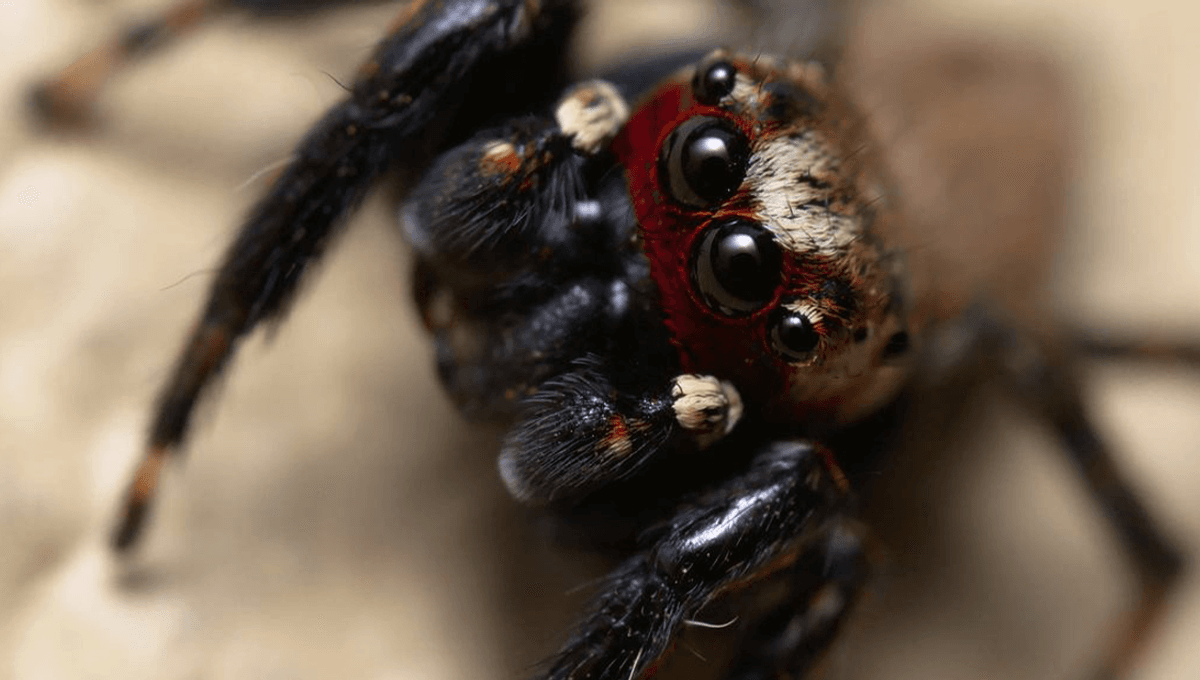
Human blood is the preferred meal of the East African jumping spider, Evarcha culicivora, but the “vampire spider” doesn’t feed directly on humans. Described as an indirect vampire, it preferentially selects mosquitos with a full belly of blood meal, and it’s a diet that makes them more attractive to their vampire spider mates.
The curious dietary habits of vampire spiders were put to the test in a 2006 study that used motionless lures made of dead insects to test E. culicivora’s preferences. It’s not surprising that they can be so selective as we know dreaming jumping spiders have very good eyesight and may even recognize each other.
The study concluded that these jumping spiders were the first predator recognized to actively select for Anopheles mosquitoes, which was big news because, as we all know, mosquitoes spell bad news. Female Anopheles are the world’s deadliest animal according to the Centers for Disease Control and Prevention. Why? Because they spread so many diseases.
Malaria, dengue, West Nile, yellow fever, Zika, chikungunya, and lymphatic filariasis are just a few diseases spread by mosquitoes, meaning they kill more people than any other creature in the world.
A specialized predator like E. culicivora could therefore be considered as a biological control for the blood-sucking disease vectors, though as history has taught us, a lot of care needs to be taken when deciding if it’s safe or practical to wield wild animals as a form of contagion control.
Vampire spiders’ affinity for bloodsucking mosquitoes doesn’t stop at the dinner table, either, as a 2009 paper revealed that it influences mate choice, too. “When E. culicivora feeds indirectly on blood, it acquires a diet-related odor that makes it more attractive to the opposite sex,” explained the authors.
“Both sexes of E. culicivora spent more time close to the odor of opposite-sex conspecifics that had been on a diet of bloodfed mosquitoes (blood diet) instead of any of the three nonblood diets. Opposite-sex conspecifics that had been on a nonblood diet became more attractive once they were switched to a blood diet. That the attractive odor from blood dissipates was shown when spiders became less attractive once they were switched to a nonblood diet or subjected to a fast.”
A strange critter indeed, and our blood isn’t the only thing they find attractive. A glamorous study that presented vampire spiders with two identical socks – one that had been worn for 12 hours and another that was box-fresh – showed that they are drawn to our dirty laundry. The attraction is probably connected to the olfactory sensitivity that draws them to bloodsucking mosquitoes, so could become part of their superpower in the fight against mosquitoes.
[H/T: Discover Magazine]

Source Link: Human Blood Is An Aphrodisiac For The Vampire Spider
