Extreme environments push life to its limits, but we’ve found all sorts of wacky extremophiles in some of Earth’s most hostile places. In Antarctica, the waters can dip well below freezing, so how is it possible that life can survive here? And for that matter, why doesn’t the water freeze?
Ice forms when low temperatures cause molecules to slow down and form a solid crystalline structure, the tipping point for which is 0°C (32°F) for water (and did you know we just discovered a new kind?). This threshold can change due to something known as freezing-point depression, which explains everything from why seawater stays fluid in freezing temperatures, to why ice cream stays soft when kept below zero.
Does the ocean freeze?
The threshold for forming that crystalline structure can drop when we introduce a small amount of something else like salt or alcohol into water, or copper into molten silver. This is why the freezing point of saltwater is around -1.8°C (28.8°F).
Ice does form in seawater, but as it forms, it increases in density causing saltwater to sink from the surface before it gets cold enough to freeze. This means that in order to form something solid like the ice shelves polar bears rely on to feed, you need about 100 to 150 meters (300 to 450 feet) of the water’s surface to get cold enough to freeze. AKA, a good day for polar bears.
Icefish in the freezing Antarctic
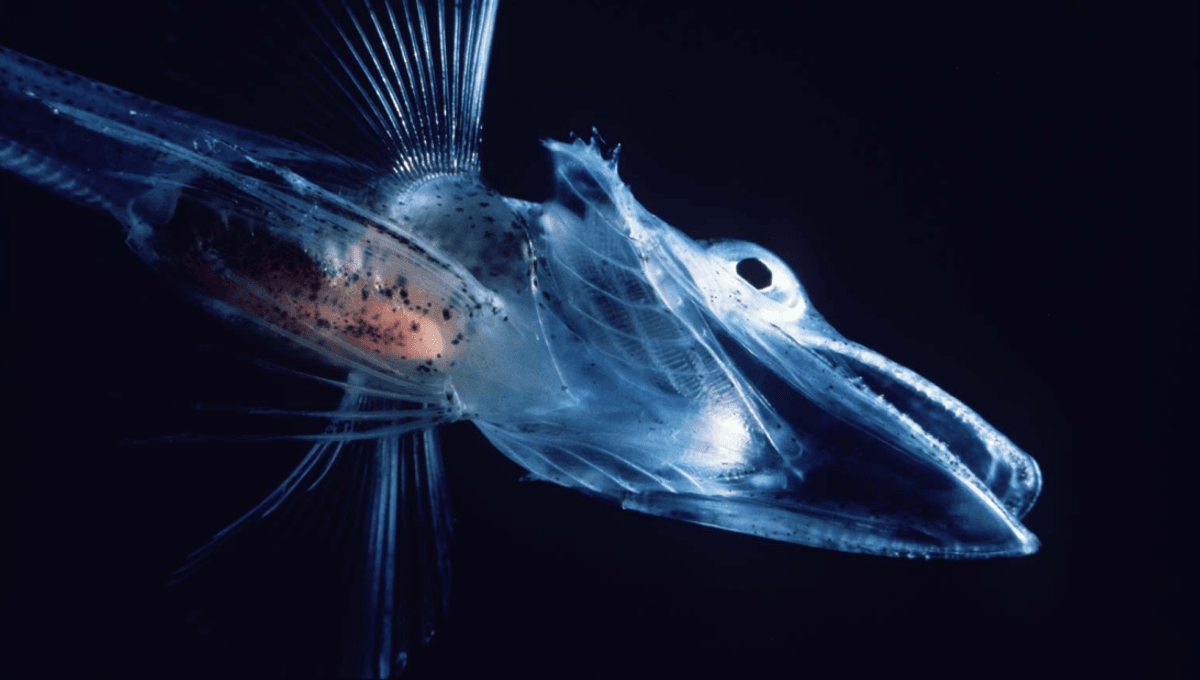
That ice is all very well for animals at the surface, but what about those aliens lurking in the freezing salty depths of Antarctica? Here you can find icefish who seem to defy biology, thriving in nests 60 million strong – something we found beneath the Filchner Ice Shelf in the south of the Antarctic Weddell Sea, marking the world’s largest fish breeding area known to date.
Saltwater doesn’t run through their veins, so why don’t icefish freeze? They are protected from freezing because they produce large quantities of antifreeze proteins (AFPs) in their blood. This means that if an ice crystal tries to form inside their bodies, the AFPs bind to it and inhibit its growth.
So, no crystals then, but that’s not the only challenge icefish had to overcome to persist in the freezing Southern Ocean. As biologist and author Sean B Carroll told Big Thinkers, another very strange feature of their blood can be seen with the naked eye.
“If you open virtually any fish you know, slice it open, you’re going to see red blood because that’s something that animals with backbones have and have had for almost 500 million years on this planet,” he said. “If you slice open an icefish, their blood is colorless because they’ve gotten rid of red blood cells, And the reason they’ve ditched red blood cells is that those low temperatures, it makes their blood too viscous.”
Icefish are the only known vertebrates to lack oxygen-carrying hemoglobin (those red blood cells Carroll mentioned) in their blood, but it’s come at a cost. While you or I would die without them, they can persist because there’s a high dissolved oxygen concentration in their habitat. It’s not a great swap, however, because their blood carries one tenth of the oxygen you’d find in that of a red-blooded fish. That means they have to maintain a high blood volume and have very costly cardiac output, all of which is energetically expensive.
So, not a walk in a park for these extremophile fish. But you have to admit, they do look incredibly cool.

Source Link: Icefish Live In Sub-Zero Antarctic Waters, So Why Don’t They Freeze?
