• Email Us: [email protected]
  • Contact Us: +1 718 874 1545
  • Skip to main content
  • Skip to primary sidebar

Medical Market Report

  • Home
  • All Reports
  • About Us
  • Contact Us

IFLScience We Have Questions: How Do Sunken Cities End Up Underwater?

September 23, 2024 by Deborah Bloomfield

Submerged settlements, also known as sunken cities, might sound mythical but they are very real, and while their migration underwater makes them harder to find, it can also preserve them far better than they would have fared surface-side. Marine archaeologist Professor Jon Henderson knows this all too well. As Head of Archaeology at the University of Edinburgh, his studies have taken him from the frozen crannogs of Scotland to the submerged ancient town of Pavlopetri in southern Laconia, Greece. 

Advertisement

Underwater archaeology pits researchers in a race against time as they must study ruins emerging from the sediment before the sea has a chance to wash vital information away. So how do they end up underwater, and what’s in a marine archaeologist’s toolkit to capture sunken cities before it’s too late?

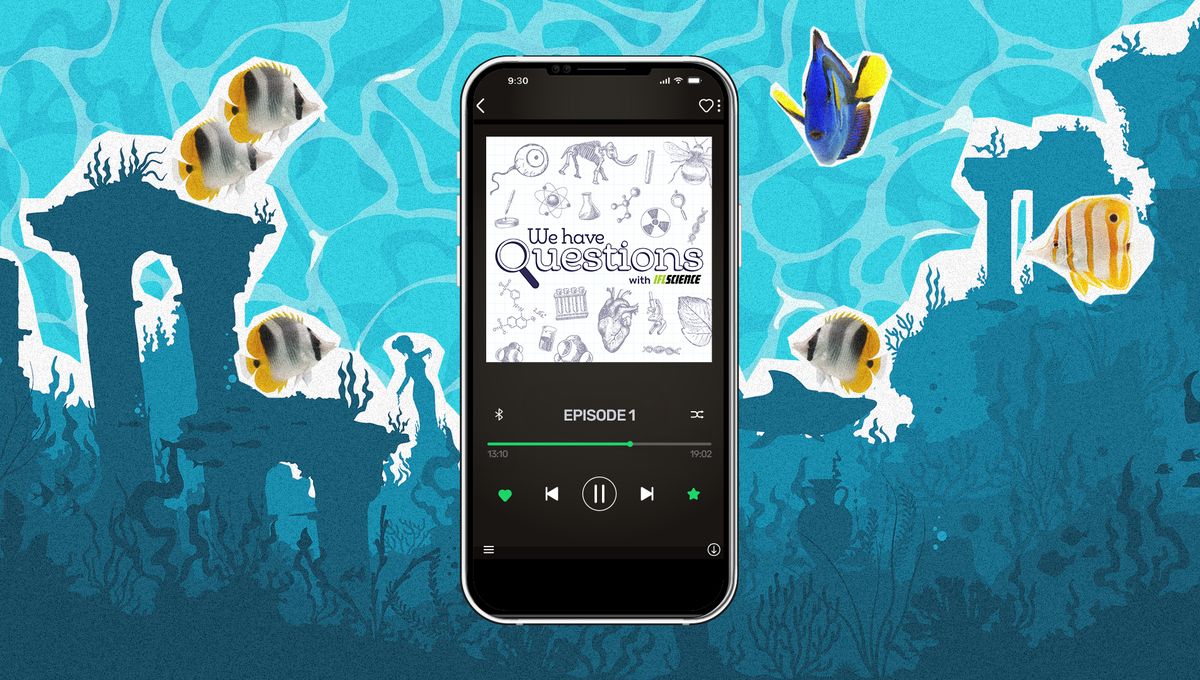
Episode 1 of the We Have Questions podcast asks “How Do Sunken Cities End Up Underwater?” – a question taken from issue 20 of CURIOUS, IFLScience’s e-magazine. Also in this issue, we ask if technology helps or harms grief, if there is any truth to personality tests, and we meet author Dr Jen Gunter and read an excerpt from her new book BLOOD: The Science, Medicine, and Mythology of Menstruation.

You can listen to this episode and subscribe to the podcast on all your favorite podcast apps: Apple Podcasts, Spotify, Podbean, Amazon Music, and more.

Deborah Bloomfield
Deborah Bloomfield

Related posts:

  1. Cricket-Manchester test likely to be postponed after India COVID-19 case
  2. EU to attend U.S. trade meeting put in doubt by French anger
  3. Soccer-West Ham win again, Leicester and Napoli falter
  4. Was Jesus A Hallucinogenic Mushroom? One Scholar Certainly Thought So

Source Link: IFLScience We Have Questions: How Do Sunken Cities End Up Underwater?

Filed Under: News

Primary Sidebar

  • Fastest Cretaceous Theropod Yet Discovered In 120-Million-Year-Old Dinosaur Trackway
  • What’s The Moon Made Of?
  • First Hubble View Of The Crab Nebula In 24 Years Is A Thing Of Beauty… With Mysterious “Knots”
  • “Orbital House Of Cards”: One Solar Storm And 2.8 Days Could End In Disaster For Earth And Its Satellites
  • Astronomical Winter Vs. Meteorological Winter: What’s The Difference?
  • Do Any Animal Species Actively Hunt Humans As Prey?
  • “What The Heck Is This?”: JWST Reveals Bizarre Exoplanet With Inexplicable Composition
  • The Animal With The Strongest Bite Chomps Down With A Force Of Over 16,000 Newtons
  • The Eschatian Hypothesis: Why Our First Contact From Aliens May Be Particularly Bleak, And Nothing Like The Movies
  • The Great Mountain Meltdown Is Coming: We Could Reach “Peak Glacier Extinction” By 2041
  • Comet 3I/ATLAS Is Experiencing A Non-Gravitational Acceleration – What Does That Mean?
  • The First Human Ancestor To Leave Africa Wasn’t Who We Thought It Was
  • Why Do Warm Hugs Make Us Feel So Good? Here’s The Science
  • “Unidentified Human Relative”: Little Foot, One Of Most Complete Early Hominin Fossils, May Be New Species
  • Thought Arctic Foxes Only Came In White? Think Again – They Come In Beautiful Blue Too
  • COVID Shots In Pregnancy Are Safe And Effective, Cutting Risk Of Hospitalization By 60 Percent
  • Ramanujan’s Unexpected Formulas Are Still Unraveling The Mysteries Of The Universe
  • First-Ever Footage of A Squid Disguising Itself On Seafloor 4,100 Meters Below Surface
  • Your Daily Coffee Might Be Keeping You Young – Especially If You Have Poor Mental Health
  • Why Do Cats And Dogs Eat Grass?
  • Business
  • Health
  • News
  • Science
  • Technology
  • +1 718 874 1545
  • +91 78878 22626
  • [email protected]
Office Address
Prudour Pvt. Ltd. 420 Lexington Avenue Suite 300 New York City, NY 10170.

Powered by Prudour Network

Copyrights © 2025 · Medical Market Report. All Rights Reserved.

Go to mobile version