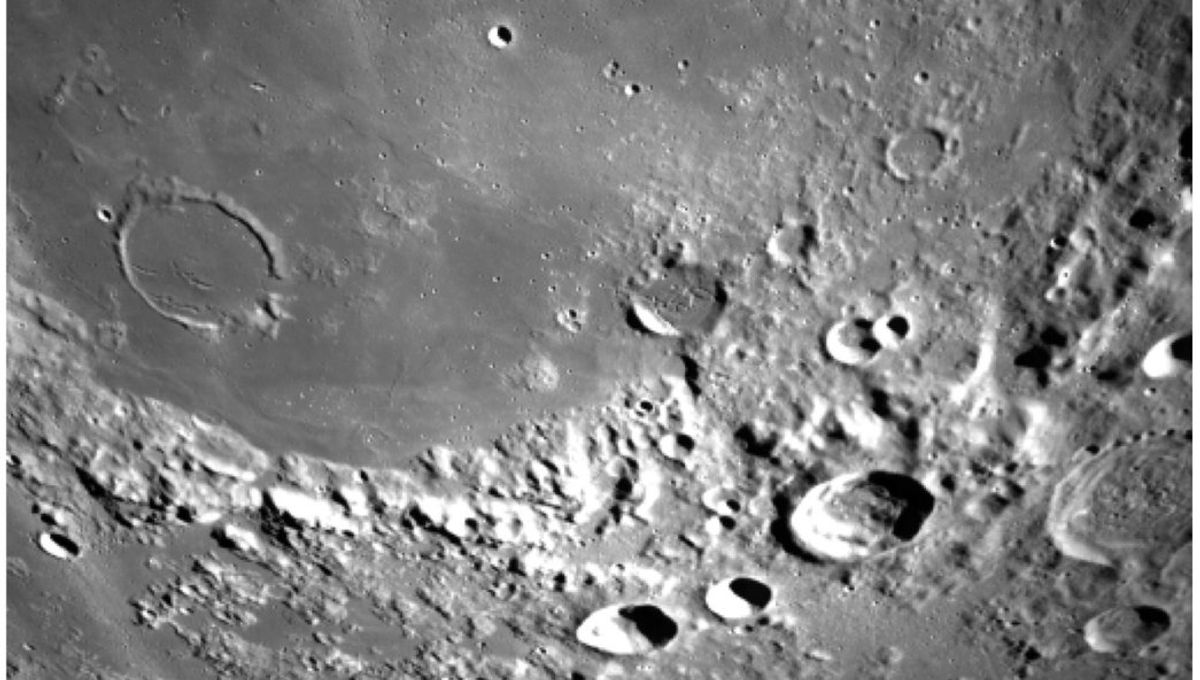
India’s Chandrayan-3 lunar mission is proving a scientific success as well as a technical triumph, with its Pragyan rover successfully analyzing the composition of the Moon’s surface close to the lunar south pole. The data returned has value beyond that of previous missions, both crewed and robotic, because the area being studied is close to the likely locations for future bases. So far, however, the mission has not discovered the most valuable prize of all: water ice.
A statement from the Indian Space Research Organization (ISRO) has announced the Laser-Induced Breakdown Spectroscopy (LIBS) instrument carried aboard Chandrayan-3 has confirmed the presence of sulfur. The statement notes this is; “Something that was not feasible by the instruments onboard the orbiters.”
LIBS works by exposing materials to intense pulses of laser light, turning them to plasma, the electromagnetic spectrum of which can be resolved to identify the composition. All this with less than 1.2 watts of power. The technique only reveals the elements, however, not the molecules in which they may have combined.
Besides sulfur, the early results include aluminum, calcium, iron, chromium, titanium, manganese, silicon, and oxygen. No hydrogen, a requirement for water, has been found in the samples tested so far, but the statement says; “Thorough investigation regarding the presence of Hydrogen is underway.”
The achievement follows the first measurement of temperatures at lunar high latitudes, made by the Vikram lander.
Transporting massive quantities of material to the Moon will be punishingly expensive, even as the costs of space launches decline. Consequently, the only thing that will make it economically feasible to establish a long-term presence there is if we can source most of what we need on-site.
Evidence that water survives in frozen form at the bottom of craters near the lunar poles is one of the things that has sparked the latest Moon race after decades of neglect. It’s what has driven India to make its first Moon landing at 69 degrees South, and motivated Russia to its own disastrous attempt.
Confirming the presence of such ice will be Chandrayan-3’s primary achievement if it manages it, but every other element means one less thing we need to bring – at least if they exist in a form that is easy to extract. Sulfur is of particular interest based on research that indicates it could be used to make concrete, rather than relying on Portland Cement, whose ingredients are likely to be less accessible.
Even if Pragyan fails to find hydrogen within the material it has studied, it will not be the death blow to hopes of finding lunar ice. The deeper the rover goes into the shadow of crater walls, the more likely it is to find ice that has survived the long, hot lunar days. As yet, the rover has not reached the best spots to conduct this search.
The path to these prime locations is not smooth, however, particularly for such a small rover. Nevertheless, the six-wheeled vehicle has so far managed well, with assistance from Earth.
“On August 27, 2023, the Rover came across a 4-meter diameter crater positioned 3 meters ahead of its location,” ISRO wrote on X, formerly Twitter. “The Rover was commanded to retrace the path. It’s now safely heading on a new path.”

Source Link: Indian Moon Rover Hits Jackpot, Detects Wealth Of Elements At Lunar South Pole
