• Email Us: [email protected]
  • Contact Us: +1 718 874 1545
  • Skip to main content
  • Skip to primary sidebar

Medical Market Report

  • Home
  • All Reports
  • About Us
  • Contact Us

India’s Moon Rover Chandrayaan-3 Has Entered Lunar Orbit

August 7, 2023 by Deborah Bloomfield

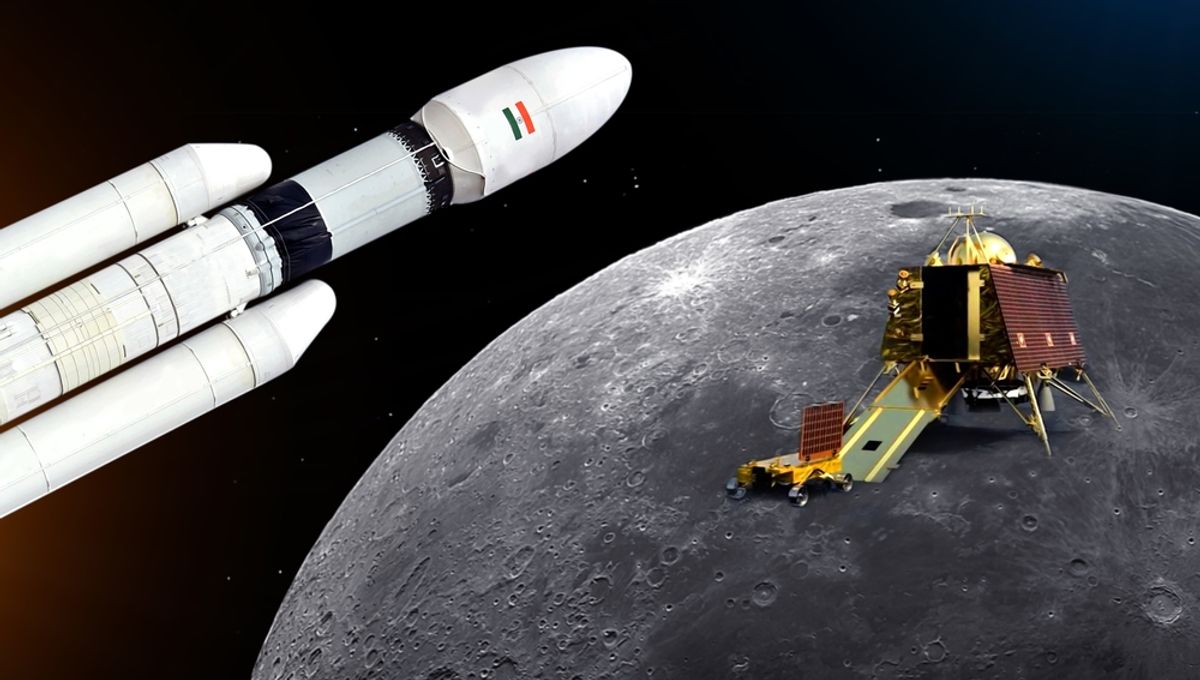
India has crossed a major milestone in the quest to become the fourth nation to make a soft landing on the Moon. Having launched on July 14, the Chandrayaan-3 mission entered lunar orbit on August 5. Touchdown is scheduled to take place on August 23 or 24.

The United States, the Soviet Union, and China have all sent missions to the Moon which have returned data, and sometimes actual moon rocks. However, Israel failed, as did a United Arab Emirates and private Japanese partnership, proving this is no easy task. “This is the third time in succession that ISRO has successfully inserted its spacecraft into the lunar orbit,” The Indian Space Research Organization (ISRO) said in a statement. 

Advertisement


ISRO doesn’t want to just follow in the footsteps of others. Its mission is to the Lunar South Pole, a target that is both more difficult and potentially more rewarding than the locations other agencies have used.

The lunar polar regions are more challenging than the rest of the Earth-facing side of the Moon since communications can easily be obstructed.

ISRO wants to go there for the same reason it’s been chosen as the target for Artemis III: the permanent shadows at the bottom of craters keep this region cold. Elsewhere, sunlight during the long lunar day turns ice close to the surface into water vapor, which quickly escapes into space.

With water being the greatest need for lunar colonies or even long-term bases, the poles appear to be the place to go: the world will be watching whatever information Chandrayaan-3 can supply about their nature.

Advertisement

Before that, however, the lander needs to actually land, and the rover successfully deploy – after the failure of so many previous efforts, that’s no sure thing. On the other hand, India’s record in space is good. Although a late-comer to space missions, India not only succeeded in putting the Chandrayaan-1 and 2 spacecraft in lunar orbit in 2008 and 2019 respectively but has also put the Mangalyaan craft into orbit around Mars, returning spectacular images in the process.

By making its missions substantially cheaper than those of other countries, ISRO has also paved the way for more science at a lower price. In the case of Chandrayaan-3, that means a budget of $74.6 million. 

One consequence of the cost savings is that the mission took weeks to reach lunar orbit. There will now be a further two and a half weeks where Chanrrayaan-3 maneuvers into an orbit that takes it over the poles and gradually reduces its height. That wouldn’t have been viable for Apollo, which needed to get there in a few days. India’s robots, however, can wait in a way astronauts could not.

Deborah Bloomfield
Deborah Bloomfield

Related posts:

  1. Israeli minister says Iran giving militias drone training near Isfahan
  2. French watchdog chief calls for ban on ‘payment for order flow’ in EU stock market
  3. What Would Happen To Humanity If All Microbes Suddenly Disappeared?
  4. IFLScience The Big Questions: How Is Climate Change Affecting Polar Bear Populations?

Source Link: India's Moon Rover Chandrayaan-3 Has Entered Lunar Orbit

Filed Under: News

Primary Sidebar

  • US Just Killed NASA’s Mars Sample Return Mission – So What Happens Now?
  • Art Sleuths May Have Recovered Traces Of Da Vinci’s DNA From One Of His Drawings
  • Countries With The Most Narcissists Identified By 45,000-Person Study, And The Results Might Surprise You
  • World’s Oldest Poison Arrows Were Used By Hunters 60,000 Years Ago
  • The Real Reason You Shouldn’t Eat (Most) Raw Cookie Dough
  • Antarctic Scientists Have Just Moved The South Pole – Literally
  • “What We Have Is A Very Good Candidate”: Has The Ancestor Of Homo Sapiens Finally Been Found In Africa?
  • Europe’s Missing Ceratopsian Dinosaurs Have Been Found And They’re Quite Diverse
  • Why Don’t Snorers Wake Themselves Up?
  • Endangered “Northern Native Cat” Captured On Camera For The First Time In 80 Years At Australian Sanctuary
  • Watch 25 Years Of A Supernova Expanding Into Space Squeezed Into This 40-Second NASA Video
  • “Diet Stacking” Trend Could Be Seriously Bad For Your Health
  • Meet The Psychedelic Earth Tiger, A Funky Addition To “10 Species To Watch” In 2026
  • The Weird Mystery Of The “Einstein Desert” In The Hunt For Rogue Planets
  • NASA Astronaut Charles Duke Left A Touching Photograph And Message On The Moon In 1972
  • How Multilingual Are You? This New Language Calculator Lets You Find Out In A Minute
  • Europa’s Seabed Might Be Too Quiet For Life: “The Energy Just Doesn’t Seem To Be There”
  • Amoebae: The Microscopic Health Threat Lurking In Our Water Supplies. Are We Taking Them Seriously?
  • The Last Dogs In Antarctica Were Kicked Out In April 1994 By An International Treaty
  • Interstellar Comet 3I/ATLAS Snapped By NASA’s Europa Mission: “We’re Still Scratching Our Heads About Some Of The Things We’re Seeing”
  • Business
  • Health
  • News
  • Science
  • Technology
  • +1 718 874 1545
  • +91 78878 22626
  • [email protected]
Office Address
Prudour Pvt. Ltd. 420 Lexington Avenue Suite 300 New York City, NY 10170.

Powered by Prudour Network

Copyrights © 2026 · Medical Market Report. All Rights Reserved.

Go to mobile version