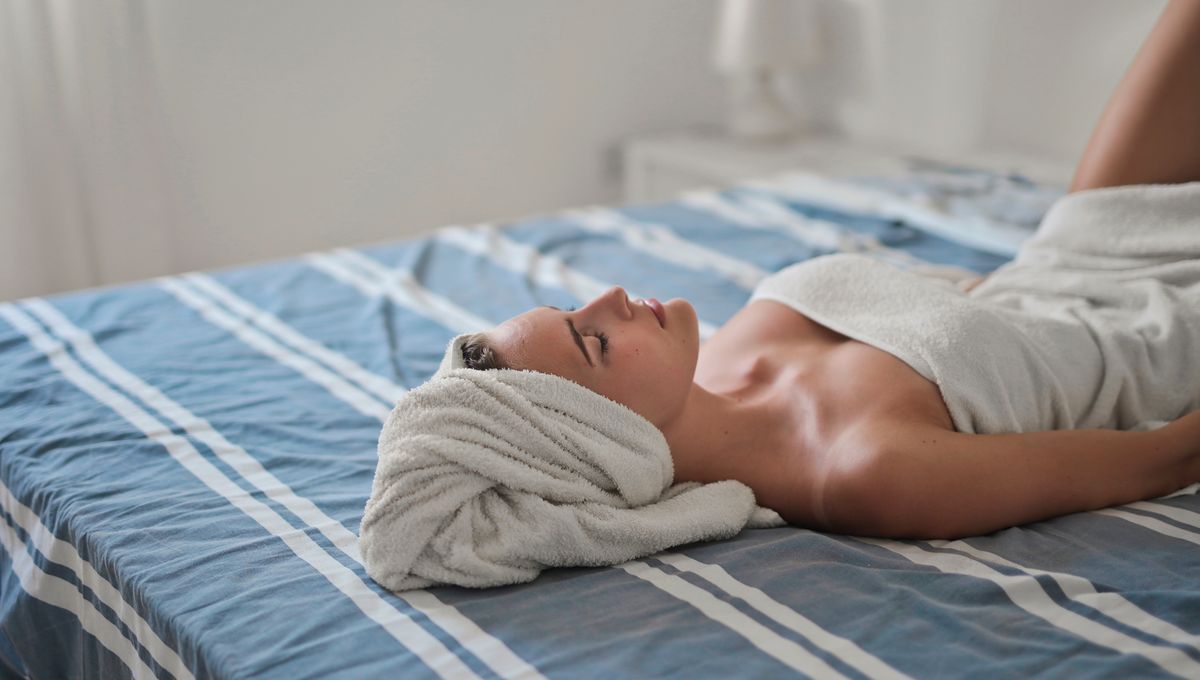
If you favor an evening over a morning shower (and that’s a whole other debate we’re not getting into now!) you may well have been tempted to hop in bed while your hair is still wet. Who has time for blow-drying when there’s sleep to be had? But if this is you, you might also have had people tell you all the ways that sleeping on wet hair is supposedly bad news for your health. So, is this true, or can you afford to skip the dryer tonight?
What are the claims about going to bed with wet hair?
There are lots of beliefs about the potential health risks of sleeping with wet hair, some more dubious than others, so we took a closer look at a few of the most popular.
“Wet hair can make you catch a cold”
This one’s pretty easy to debunk. Colds are caused by viruses, not a moist cranium. You might feel unpleasantly chilly with wet hair clinging to your neck all night, and that can make it harder to get a good night’s sleep, but it’s nothing that can’t easily be solved with a towel. While we’re here, going outside in the wintertime with wet hair won’t give you a cold either, despite what your granny told you – although she was right about some other stuff.
“Wet hair can give you a stiff neck/headache”
It’s a little harder to figure out where this rumor came from, but it’s certainly something we’ve heard over the years.
A couple of possible explanations we’ve seen include the muscles in the neck tensing up while you sleep as you subconsciously try and move away from the cold wetness, or issues with the head being colder than the rest of the body. However, we’ve not been able to find any evidence from scientific studies to back up these assertions.
If you find it uncomfortable or cold to sleep with wet hair, then don’t do it. But we’ve seen nothing to suggest these problems are in any way universal, and it’s likely many people will be able to wake headache-free from a night with wet hair.
“Sleeping on wet hair can damage it”
You might think that skipping the hairdryer will also allow you to skip the heat damage that can come with it, and that’s true. Unfortunately, if you’re trading in heat styling for eight hours of tossing and turning on wet hair, you may still be storing up some problems for yourself.
“In general, wet hair is more fragile and prone to breakage than dry hair,” dermatologist Timothy Schmidt explained for University of Utah Health. “The water weakens the hair’s protein structure, making it more elastic and easier to stretch and snap.”
A 2015 study suggested that stretching hair fibers to between 30 and 70 percent of their original length can cause damage, and it’s easy to see how that might happen while you sleep. Excessive friction can also be damaging, which is why experts tend to advise that you don’t rub your hair dry with a towel.
If you really don’t have time to fully dry your hair before bed, Schmidt suggests you let it dry naturally or with mild heat for as long as possible, and consider using a silk or satin pillowcase that will minimize friction on your damp tresses.
“Leaving your hair wet can cause dandruff”
We regret to inform you that this one is also kind of true.
A moist environment is the ideal breeding ground for fungi. Dandruff is just one condition that can result when these pesky microbes go to town on the scalp, with others including scalp ringworm and seborrheic dermatitis.
One particularly troublesome genus is Malassezia yeast, which is naturally occurring on human skin but can sometimes cause issues when it overgrows or infects hair follicles.
Wet hair, along with the moisture that can seep into your pillow as you sleep and the warmth of your head, create the perfect conditions for yeast and could put you at increased risk of a fungal infection, as emergency physician Dr Chirag Shah explained to Healthline.
The takeaway
While some of the beliefs about going to bed with wet hair can be filed in the “old wives’ tales” box, there are some that are worth further consideration. You won’t catch a cold, but you could land yourself with a fungal infection and damaged hair into the bargain.
Family medicine specialist Dr Matthew Goldman from the Cleveland Clinic has a simple piece of advice: “Whenever possible, go to sleep with dry hair.”
If you’re really struggling for time one evening, drying your hair for as long as possible and using a microfiber towel, and/or silk pillowcase, can help limit some of the damage.
And, you know, there’s always dry shampoo.
The content of this article is not intended to be a substitute for professional medical advice, diagnosis, or treatment. Always seek the advice of qualified health providers with questions you may have regarding medical conditions.

Source Link: Is It Really Bad To Go To Bed With Wet Hair?
