The ozone hole over Antarctica grows and closes up again each year – having a hole at all isn’t ideal, but scientists know roughly when to expect it. However, its appearance is now persisting later and later into the year, which according to a new study, could present a danger to the wildlife on the continent below.
In the past, the depletion of the ozone layer (aka the hole) over Antarctica usually peaked between September and October, a time when its inhabitants tend to be at their least active. This wrapped things up long before the onset of the Antarctic summer, when the protection of ice and snow melts away and dormant animals emerge.
But for the last four years, the hole ended up staying for the start of summer, persisting into December – last year’s ozone hole was also one of the biggest on record. The problem, as the study’s authors point out, is that with ozone depletion also comes exposure to ultraviolet (UV) radiation.
“Once we get to December, in the Southern Hemisphere the sun is much higher in the sky and the radiation coming down to earth is higher,” said study author Professor Sharon Robinson in a statement. “We’re seeing a UV index of 14 in Antarctica in December, up from pre-ozone hole levels of 6. A UV index of 14 is extreme – what we’d experience during summer in Sydney or San Diego.”
Because this coincides with wildlife waking up below, Robinson explained that this “means that Antarctica’s animals and plants are exposed to more than twice as much UV radiation as they were in the 1970s.”
In humans, this bump-up in exposure would be risky business, at least without slapping on plenty of sunscreen. UV rays, particularly UVB, are known to damage the skin and increase the risk of developing skin cancer.
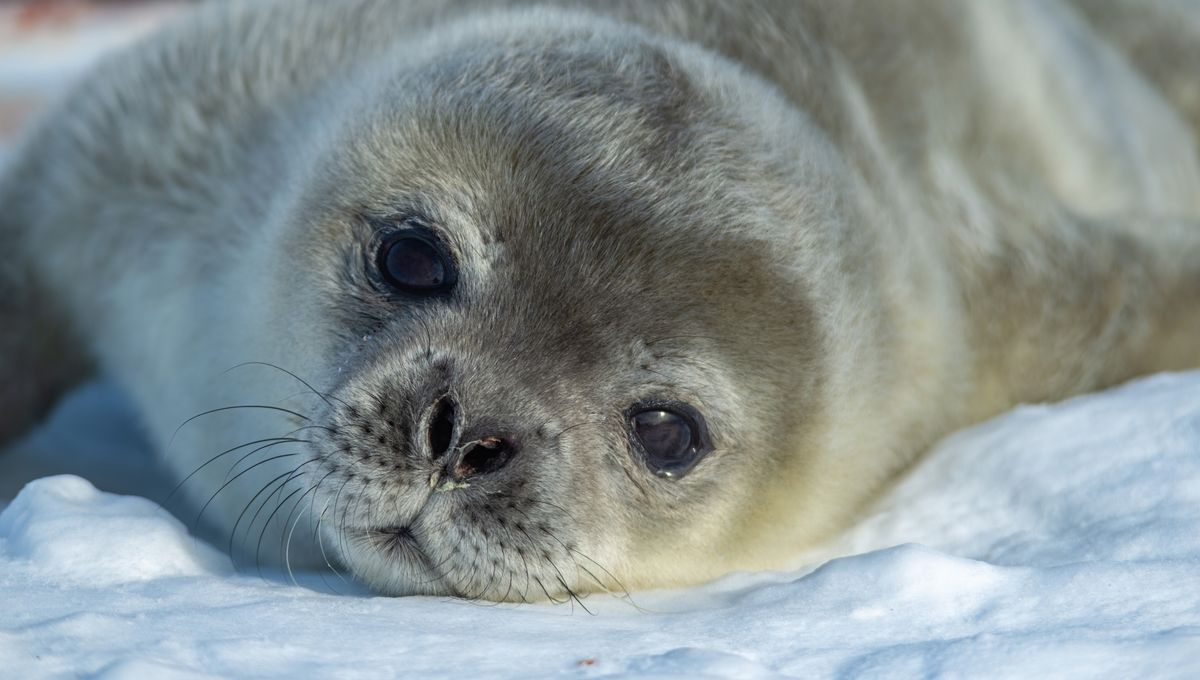
Though the precise effects of UV radiation on wild Antarctic animals are unclear, the authors point out several ways in which the persistent ozone hole could impact wildlife – particularly for the penguins and seals whose breeding season occurs at this time.
“The doubling of UV-radiation from mid-October to early December could be damaging, especially to young animals. Reflection of radiation from the sea ice surface will increase UV exposure for animals that breed on the ice. The timing of exposure is likely to be important,” the authors write.
It could be bad news for smaller organisms too, such as plankton, who might attempt to adapt by making their own “sunscreen” and in doing so, use up valuable energy. “The extended UV radiation may not kill things, but we know that there’s a cost to creating sun protection and that takes away from the other things the animals and plants are able to do,” said Robinson.
That being said, the study does caveat that some organisms might have natural defenses to UV damage. Macaroni and rockhopper penguins, for example, have pigments including melanin that are thought to help protect their eyes from UV rays.
But where damage might be possible, the authors also highlight that the persistence of the ozone hole doesn’t exist in isolation.
“The biggest thing we can do to help Antarctica is to act on climate change – reduce carbon emissions as quickly as possible so we have fewer bushfires and don’t put additional pressure on ozone layer recovery,” Robinson concluded, adding that this would also help animals out by keeping “as much sea ice as possible.”
The study is published in Global Change Biology.

Source Link: Is The Hole In The Ozone Layer Giving Antarctic Animals “Sunburn”?
