Our hopes for finding life on Mars have been downgraded significantly over the years, from the 1870s when many believed we’d find a complex system of canals up there (and presumably a creature intelligent enough to have invented barge holidays to build them too).
Now, we are on the hunt for microbial life on the planet, and sizing up the best place to look. Focus right now is on the Jezero Crater, where the Perseverance rover is currently searching for signs of ancient life. One idea, explored recently by NASA, is that life could be found underneath the Martian surface, in caves hosting similar conditions to caves found on Earth.
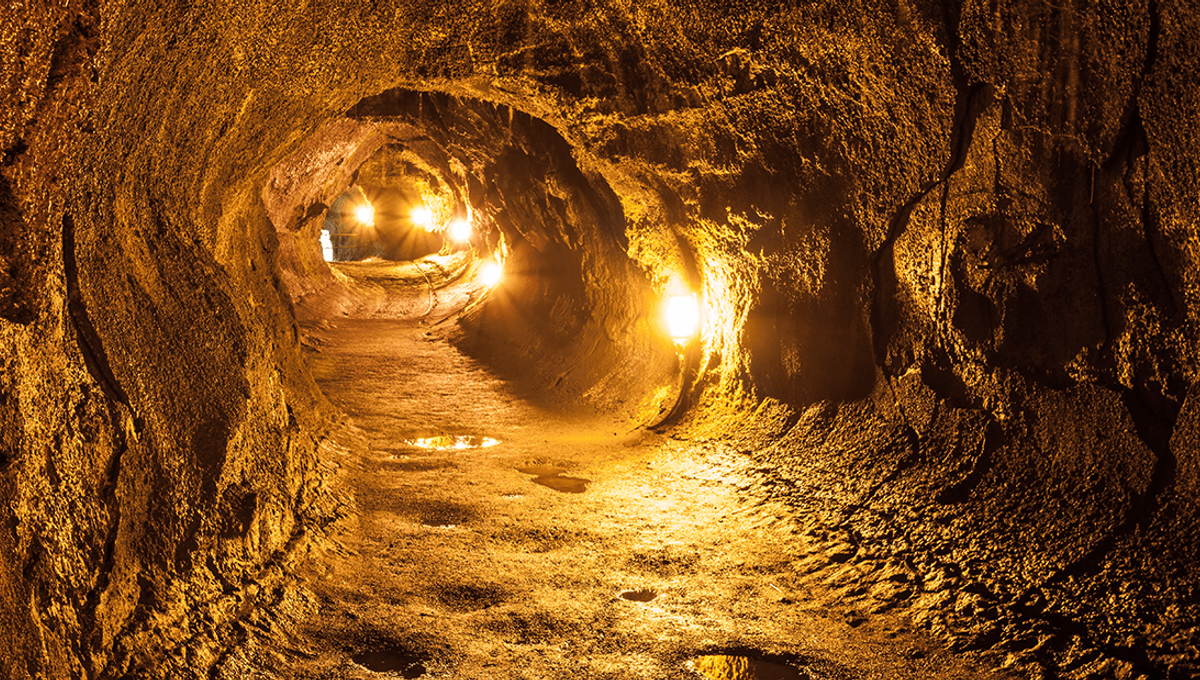
On Mars, we know that there are lava tubes, perhaps even large enough to shelter the first human astronauts from cosmic radiation bombarding the Red Planet. When these tubes formed on Mars, conditions were likely more similar to life on Earth, with flowing water, a warmer climate, and an atmosphere.
Lava tubes in all their glory in this video from OzGeographics.
It’s possible that as conditions on the surface of the planet changed, and it lost its magnetic field and atmosphere, any life may have shifted underground. Here, Daniel Viúdez-Moreiras from Spain’s National Institute for Aerospace Technology calculated that UV radiation levels would be about 2 percent of the radiation levels found at the surface.
Finding extreme conditions here on Earth could let us know what life may look like in extreme conditions elsewhere in the Solar System, and fortunately for us lava tubes are found on the Earth too, including Hawai’i’s Mauna Loa volcano lava tubes recently explored by NASA. Within these caves, formed by lava flowing through a vent, life may be sheltered from surface conditions (which would be an advantage on Mars) but it is also sheltered from necessities such as sunlight.
Just as microbial life has been found drawing humidity from the air in the dry Atacama desert with similar conditions to Mars, life in caves appears to have, uh, found a way to thrive: existing off chemicals and nutrients inside the rocks.
“The microbes we found in Hawaii could be similar to microbes that once lived on Mars,” researcher Chloe Fishman explained to NASA following a trip to collect samples in April, “or even microbes that live there today.”
The team brought back samples from the cave, in order to sequence the genomes of microbes they found there. There are already plans to explore lava tubes on the Moon, so fingers crossed it won’t be too many decades before we can look for life in Martian caves.
Of course, there’s a (slim) chance that this is all moot, and we already found life on Mars 50 years ago, before killing it.

Source Link: Is There Life Hiding Out In Ancient Caves On Mars?
