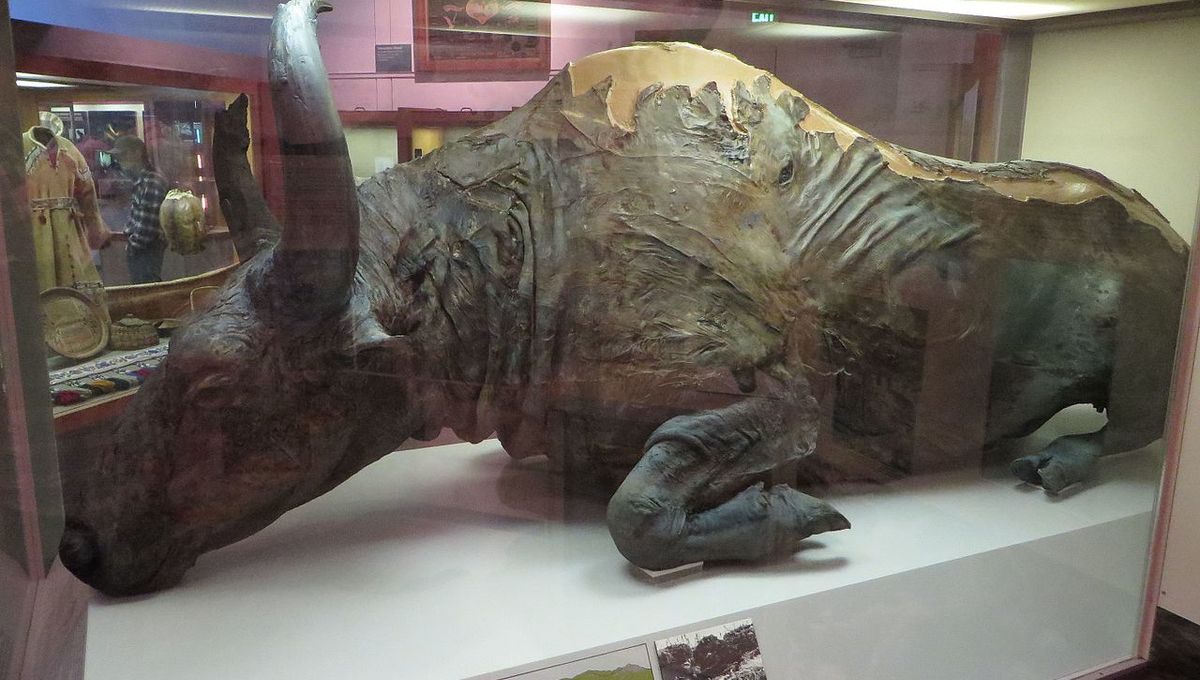
Blue Babe bison lived twice. First, 50,000 years ago, the steppe bison (Bison priscus) wandered Ice Age Alaska until a lion brought it down. Its second life began millennia later, when scientists uncovered its perfectly preserved body from the Alaskan permafrost, where it had lain frozen since that ancient day.
The rest of this article is behind a paywall. Please sign in or subscribe to access the full content.
The remarkably well-preserved bison was first discovered by gold miners in 1979 and handed over to scientists as a rare find, being the only known example of a Pleistocene bison reclaimed from the permafrost. That said, it didn’t stop gastronomically curious researchers from whipping up a batch of Pleistocene-era bison neck stew.
“Strong Pleistocene Aroma”
The unusual dinner party would play out at the Alaska home of palaeontologist Dale Guthrie who was instrumental in the retrieval of Blue Babe from the environment. Initial analyses of the bison’s collagen appeared to indicate the remains were around 36,000 years old, but more modern investigations changed this to 50,000 years.
Blue Babe’s speedy transition into a Pleistocene popsicle after its death meant that its muscle tissue was preserved comparably to that of beef jerky with fat and bone marrow to boot. With so much on offer, the research team decided to follow in the footsteps of Russian scientists who had come before them in introducing a little bit of the findings into an evening meal.
“To climax and celebrate Eirik Granqvist’s [the taxidermist] work with Blue Babe, we had a bison stew dinner for him and for Bjorn Kurten, who was giving a guest lecture…” wrote Guthrie of the event. “A small part of the mummy’s neck was diced and simmered in a pot of stock and vegetables.”
“We had Blue Babe for dinner. The meat was well aged but still a little tough, and it gave the stew a strong Pleistocene aroma, but nobody there would have dared miss it.”
Neck Stew
As for why they opted for stew, “Making neck steak didn’t sound like a very good idea,” Guthrie told Atlas Obscura. “But you know, what we could do is put a lot of vegetables and spices, and it wouldn’t be too bad.”
A bit of culinary wizardry may have rescued the flavor, but nothing could be done to revive the contents of Blue Babe’s abdomen, which had evidently spoiled before the animal first froze all those tens of thousands of years ago. Evidence of predation by lions was found in Blue Babe’s neck where tooth fragments remained, but where they’d trimmed the bison’s neck musculature meant the tissue here froze very quickly and so – even 50,000 years later – when it thawed it was quite fresh.
“When it thawed it gave off an unmistakable beef aroma, not unpleasantly mixed with a faint smell of the earth in which it was found, with a touch of mushroom,” Guthrie wrote. “About a dozen of us gathered… on April 6, 1984, to partake of Bison priscus stew.”
And in case you’re wondering how their constitutions fared after dining on 50,000-year-old meat, it seems they did just fine.
“The taste was delicious, and none of us suffered any ill effects from the meal.”
An earlier version of this article was published in 2022.

Source Link: It Had A "Strong Pleistocene Aroma": In 1984, Scientists Ate A 50,000-Year-Old Bison In A Stew
