• Email Us: [email protected]
  • Contact Us: +1 718 874 1545
  • Skip to main content
  • Skip to primary sidebar

Medical Market Report

  • Home
  • All Reports
  • About Us
  • Contact Us

Kinkajou – A Rainforest Mammal – Rescued From Highway In Washington

July 2, 2024 by Deborah Bloomfield

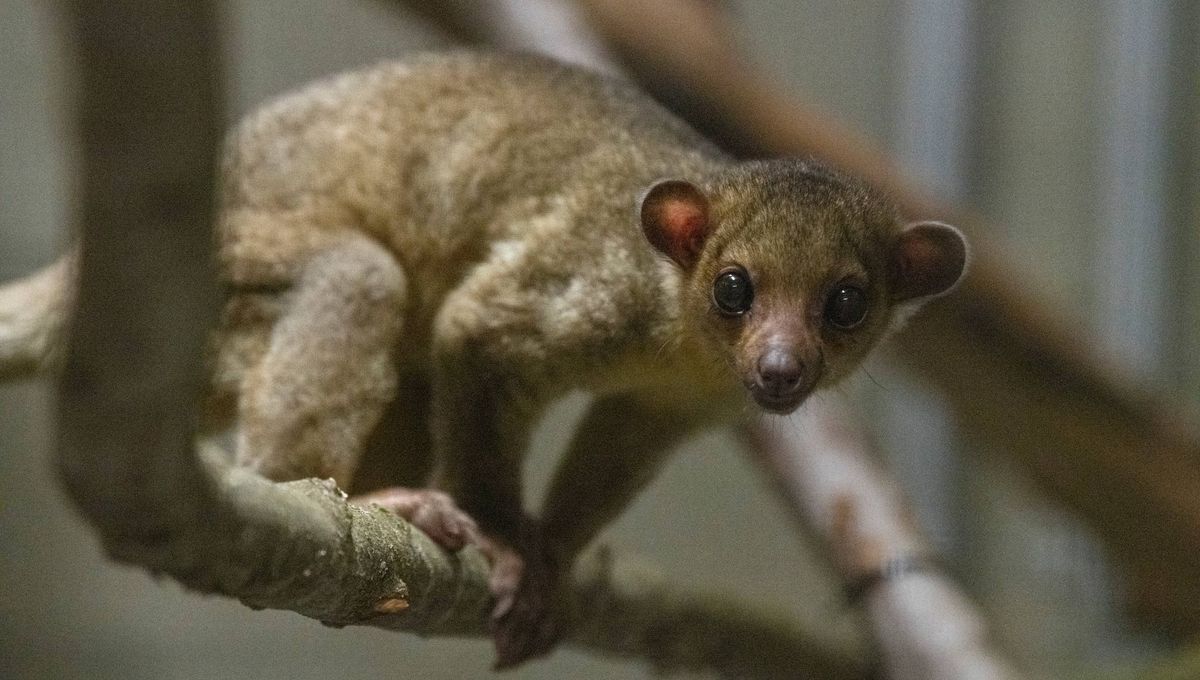
A highway rest stop in Yakima, Washington, had an unusual visitor recently, with a mammal called a kinkajou (Potos flavus) – usually found in the forests of the Neotropics – being found by Interstate 82 in the Pacific Northwest state. The animal was rescued by Washington Department of Fish and Wildlife Police officers on June 23, and is currently being cared for by Point Defiance Zoo & Aquarium (PDZA).

Advertisement

“Why was it at our east Selah Creek Rest Area over the wknd? We have no idea,” Washington State Department of Transportation East posted on X. “We don’t know if it was dropped off or escaped.” The little guy is very much a mystery at this point, with PDZA telling IFLScience: “We do not know yet where he came from.”

Advertisement

The kinkajou “underwent a comprehensive wellness exam on June 27,” PDZA continued. “He has a good appetite and zoo staff are feeding him a full and healthy diet. We are awaiting the results of diagnostic testing, including comprehensive blood work, to get a complete assessment of his health.”

The International Union for Conservation of Nature (IUCN) states that these mammals are found in forests across Surinam, Mexico, Peru, Venezuela, Guatemala, French Guiana, and Brazil – a far cry from a rest stop in Washington. “This young kinkajou’s survival is a testament to the collaborative efforts of state wildlife law enforcement and the zoo, highlighting the dangers of the illegal pet trade,” PDZA said in a statement.

Although the kinkajou is classed as Least Concern by the IUCN, they state that “Potential threats include deforestation, capture for the pet trade and hunting for its meat and pelt.”

ⓘ IFLScience is not responsible for content shared from external sites.

Advertisement

Kinkajous are members of the Procyonidae family, much like raccoons, and are known for their love of honey. They are one of the two carnivores in the world that have a prehensile tail, sharing the honor with the popcorn-scented binturong.

They can also turn their feet backward to help them scurry up and down trees, dubbed a “nice adaptation to have” in a video of an examination of the kinkajou found in Washington posted by PDZA.


The kinkajou was immediately quarantined upon arrival at the zoo. PDZA’s Head Veterinarian Dr Karen Wolf said that the little guy is in “fair health overall” but is “very thin, weighing only 2.5 pounds [1.14 kilograms],” with males of the species usually weighing 1.4 to 4.5 kilograms (3 to 10 pounds).

Advertisement

The zoo is currently working with the Association of Zoos and Aquariums to find this misplaced mammal a forever home.

Deborah Bloomfield
Deborah Bloomfield

Related posts:

  1. ECB to use bond purchases to guide rate expectations, Schnabel says
  2. Mars’ Subsurface Could Be Perfect For Bacteria Taking A Long Nap
  3. America’s First Cowboys Were Likely Enslaved Peoples, New Analysis Reveals
  4. The Star-Nosed Mole’s Snoot Is 100 Times More Sensitive Than Your Fingertips

Source Link: Kinkajou – A Rainforest Mammal – Rescued From Highway In Washington

Filed Under: News

Primary Sidebar

  • Hidden Features In Our Galaxy Discovered By Studying The Milky Way From The Inside Out
  • Why Does My Belly Button Smell?
  • 2,500-Year-Old Chronicle Is Oldest Known Record Of A Total Solar Eclipse And Reveals Some Surprises
  • RIP Claude: San Francisco’s Iconic Albino Alligator Dies Aged 30
  • Nitrous Oxide: Inhaling “Laughing Gas” Could Be Surprisingly Effective For Treating Severe Depression
  • JWST Discovers A Milky Way-Like Spiral Galaxy Where It Shouldn’t Exist
  • World’s Largest Dinosaur Tracksite Has At Least 16,600 Footprints And Sets Many World Records
  • Interstellar Comet 3I/ATLAS Will Make Its Closest Approach To Earth This Month, Just 270 Million Kilometers Away
  • How Does Time Pass On Mars? For The First Time, We Have A Precise Answer
  • Is This How The Voynich Manuscript Was Made? A New Cipher Offers Fascinating Clues
  • An Extremely Rare And Beautiful “Meat-Eating” Plant Has Been Found Miles From Its Known Home
  • Scheerer Phenomenon: Those White Structures You See When You Look At The Sky May Not Be “Floaters”
  • The Science Of Magic At CURIOUS Live: Psychologist Dr Gustav Kuhn On Using Magic To Study The Human Mind
  • Around 5 Percent Of Cancers Are Of “Unknown Primary”. Could A New Blood Test Track Them Down?
  • With Only 5 Years Left In Space, The International Space Station Just Hit A New Milestone
  • 7,000-Year-Old Atacama Mummies May Have Been Created As “Art Therapy”
  • In 1985, A Newborn Underwent Heart Surgery Without Pain Relief Because Doctors Didn’t Think Babies Could Feel Pain
  • Ancient Roman Military Officers Had Pet Monkeys, And The Pet Monkeys Had Pet Piglets
  • Lasting 29 Hours, The World’s Longest Commercial Scheduled Flight Is Set To Take Off This Week
  • What Is Christougenniatikophobia, And What Do I Do About It?
  • Business
  • Health
  • News
  • Science
  • Technology
  • +1 718 874 1545
  • +91 78878 22626
  • [email protected]
Office Address
Prudour Pvt. Ltd. 420 Lexington Avenue Suite 300 New York City, NY 10170.

Powered by Prudour Network

Copyrights © 2025 · Medical Market Report. All Rights Reserved.

Go to mobile version