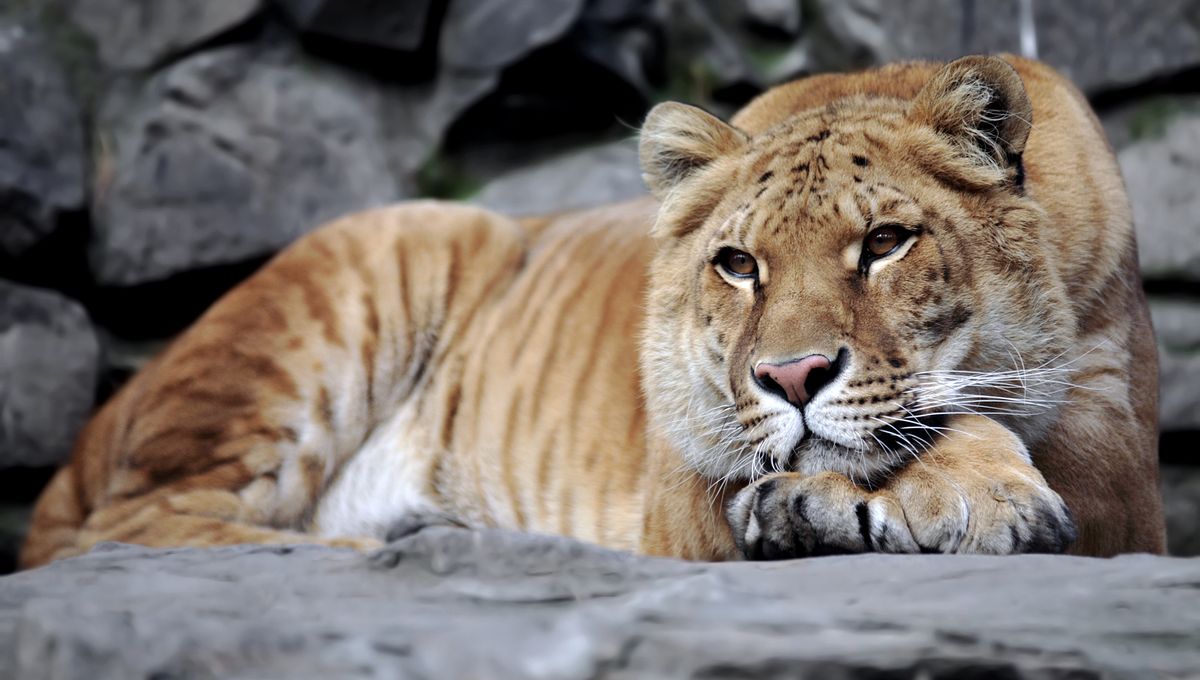
The animal world is full of unusual species, from tarantulas with electric blue hair to deep sea octopuses hidden beneath the waves. While most species stick to breeding habits within their own kind, just occasionally, a set of circumstances will occur that causes a hybrid to be born.
While hybridization in the wild is rare but not impossible, zoos and breeding facilities are more likely to contain animal hybrids between species that would never come into contact with each other in the wild.
In the modern wild world, lions live almost exclusively on the African continent (except for a small population in India), while tigers inhabit ranges across North Asia. Nevertheless, lions and tigers have been bred to create ligers and tigons that display some pretty interesting features of each parent.
However, these species have either been bred accidentally or are part of attracting tourists and money-making schemes, like those made famous by the documentary series Tiger King.
A liger is the hybrid between a male lion and a female tiger, whereas a tigon is the offspring of a male tiger and a female lion. Ligers typically possess features of both lions and tigers, but can be larger than both of their parents and are prone to gigantism. It’s been suggested that this could be because the growth-limiting genes are absent within the hybrid, as they are not passed down from the parents to these offspring.
“With hybrids there’s a much greater chance of the genetics being messed up,” said Luke Hunter, who heads the wild cat conservation organization Panthera, speaking to National Geographic.
While most forms of hybrids are typically sterile, female ligers have been known to be bred with male lions producing a third animal known as a liliger. Many animal rights groups strongly suggest that the practice of breeding these hybrids is unethical and inhumane because of the health issues associated with the practice.
“I can think of no legit excuse for a liger or tigon to exist,” said Luke Dollar, program director for National Geographic Society’s Big Cats Initiative. “If we want to recognize and honor big cats as they naturally occur in the wild, why would we possibly experiment in these completely unnatural and not biologically founded practices?”
Some groups also argue that these animals take up space that could otherwise be used for the conservation of species that need it.
As reported by Big Cat Rescue, Craig Packer, director of the Lion Research Center at the University of Minnesota, said, “In terms of conservation, it’s so far away from anything, it’s kind of pointless to even say it’s irrelevant.”
Speaking of cat conservation, check out the black-footed cat – it might be a vulnerable species, but it’s far deadlier than its lion and tiger (and hybrid) cousins.

Source Link: Ligers and Tigons: The Results Of Big Cat Mashups That Shouldn’t Really Exist
