• Email Us: [email protected]
  • Contact Us: +1 718 874 1545
  • Skip to main content
  • Skip to primary sidebar

Medical Market Report

  • Home
  • All Reports
  • About Us
  • Contact Us

Like Catching A Super Rare Pokémon: Blonde Albino Echnida Spotted In The Wild

November 6, 2025 by Deborah Bloomfield

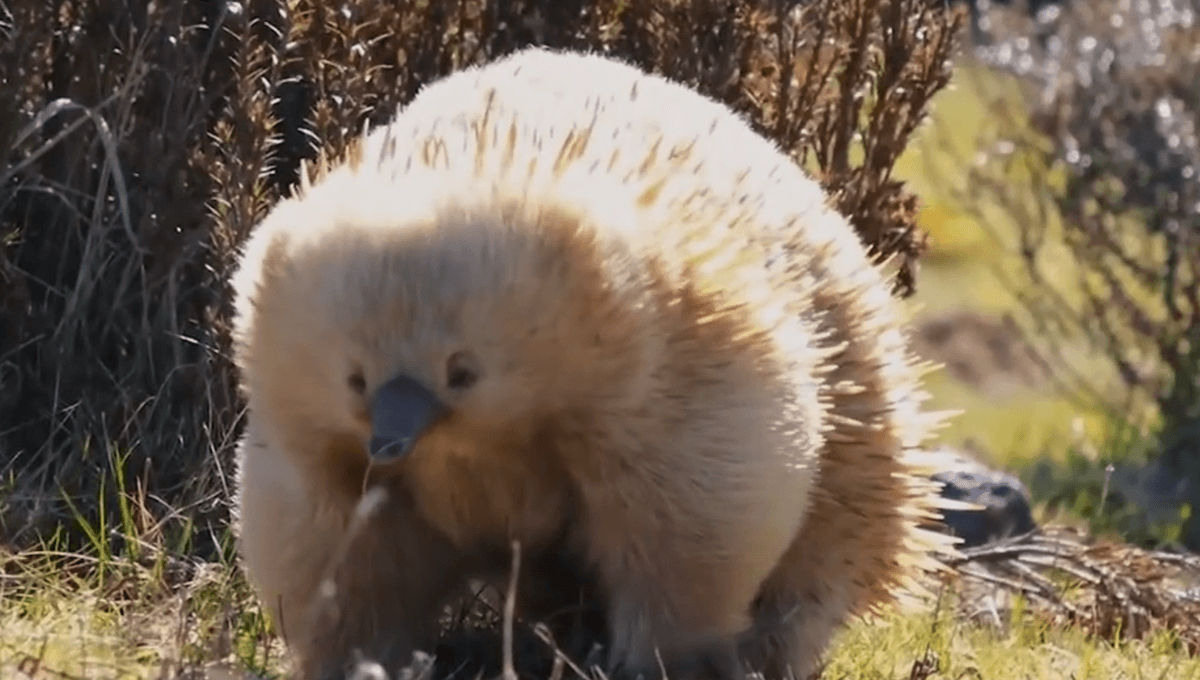
Echidnas are strange little fellas at the best of times, so imagine the surprise when a wildlife filmmaker stumbled upon one with striking white fur and bright blonde spines.

The rest of this article is behind a paywall. Please sign in or subscribe to access the full content.

The extra-unusual individual was recently filmed by Taylor Jamii Film while shooting in the Cradle Mountain National Park of Tasmania, Australia. 

“After hiking and searching without luck for 6+ hours, we had given up on our quest to spot an echidna. Then just as we left the national park feeling defeated by these elusive little creatures, we spotted none other than a rare blonde echidna,” Taylor posted on Instagram.

“I’ve never played Pokémon but if I did, I imagine this is what finding a Mew feels like,” she added.

“Needless to say, I whipped out my zoom lens faster than I ever have in my life, to film this little one rolling around the scrub and eating his dinner. What. A. Day.” 


Echidnas typically have mousey brown fur with lighter colored spines that look like blonde highlights. This one, however, has extremely pale blonde fur, likely caused by a genetic condition, such as albinism or leucism, which affects the production of the natural pigment melanin. 

There are four living species of echidna. In Tasmania, the native species is Tachyglossus aculeatus setosus, a subspecies of the short-beaked echidna that inhabits much of Australia. 

Known for their shy and reclusive behaviour, echidnas look a bit like a spikey porcupine with a long snoot – although they’re even stranger than that. Echidnas are the only other animals that belong to the taxonomic order known as monotremes, comprised of the only living mammals that lay eggs, alongside the platypus. 

Today, all living monotremes are native to Australia and New Guinea, where they’ve preserved their unusual traits in isolation from the rest of the world.

Echidnas also possess a remarkable ability to tolerate high levels of carbon dioxide. Lacking strong offensive claws, they rely on burrowing into soil or sand when threatened. They can remain underground for extended periods, surviving in environments where air is limited and oxygen levels are low.

Even in a land full of extraordinary wildlife, this rare blonde echidna is an exceptional sight. However, it isn’t the first of its kind ever documented. A small handful of other spiny monotremes with albinism or leucism have been photographed over the years, each one stunning the lucky observer who spotted it.

Deborah Bloomfield
Deborah Bloomfield

Related posts:

  1. Honeywell, Wood aim to make sustainable aviation fuel cleaner
  2. Bed-Sharing With Dogs Can Be Dangerous In Winter, Warns Vet
  3. Could Smelling Tears Influence Sexual Arousal? Scientists Have Actually Tested It
  4. Chernobyl Frogs Have Changed Color, And It Could Be What’s Helped Them Survive

Source Link: Like Catching A Super Rare Pokémon: Blonde Albino Echnida Spotted In The Wild

Filed Under: News

Primary Sidebar

  • Astronomers Catch Incredible First Direct Images Of Objects Colliding In Another Star System
  • Billionaire Jared Isaacman Finally Confirmed As Head Of NASA, As Agency Faces Uncertain Future
  • Something Just Crashed Into The Moon – And Astronomers Captured The Whole Event
  • These “Living Rocks” Are Among The Oldest Surviving Life And Are Champion Carbon Dioxide Absorbers
  • Ambitious Iguana “Love Island” For Near-Extinct Reptiles Becomes Epic Conservation Success Story
  • Sol 1,540: NASA Releases Video Of Perseverance Rover’s Record-Breaking Drive On Mars
  • Why Carl Sagan Was Way Ahead Of His Time And The Legacy He Left Behind
  • Why Were Pompeii Victims All Wearing Thick Woolly Cloaks In August?
  • We May Finally Know What Causes These Bizarre Bright Blue Cosmic Flashes
  • What’s The Biggest Rock In The World?
  • There Is A Very Simple Test To See If You Have Aphantasia
  • Bringing Extinct Animals To Life: Is Artificial Intelligence Helping Or Harming Palaeoart?
  • This Brilliant Map Has 3D Models Of Nearly Every Single Building In The World – All 2.75 Billion Of Them
  • These Hognose Snakes Have The Most Dramatic Defense Technique You’ve Ever Seen
  • Titan, Saturn’s Biggest Moon, Might Not Have A Secret Ocean After All
  • The World’s Oldest Individual Animal Was Born In 1499 CE. In 2006, Humans Accidentally Killed It.
  • What Is Glaze Ice? The Strange (And Deadly) Frozen Phenomenon That Locks Plants Inside Icicles
  • Has Anyone Ever Actually Been Swallowed By A Whale?
  • First-Known Instance Of Bees Laying Eggs In Fossilized Tooth Sockets Discovered In 20,000-Year-Old Bones
  • Polar Bear Mom Adopts Cub – Only The 13th Known Case Of Adoption In 45 Years Of Study At Hudson Bay
  • Business
  • Health
  • News
  • Science
  • Technology
  • +1 718 874 1545
  • +91 78878 22626
  • [email protected]
Office Address
Prudour Pvt. Ltd. 420 Lexington Avenue Suite 300 New York City, NY 10170.

Powered by Prudour Network

Copyrights © 2025 · Medical Market Report. All Rights Reserved.

Go to mobile version