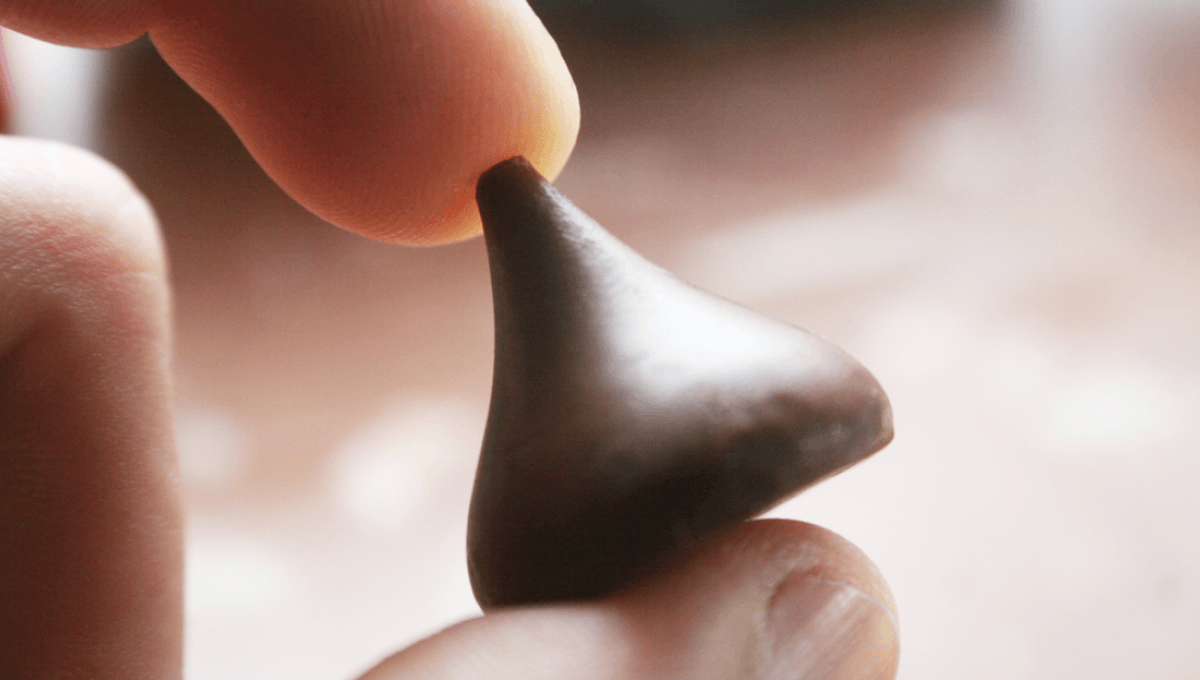
Humans have loved chocolate for millennia. The cacao tree was first domesticated around 5,300 years ago in the upper Amazon region of northwest South America, but it wasn’t until 1847 that the world saw its first true chocolate bar.
The British chocolate company Fry & Sons were the first to work out that you could made an easily mass-produced moldable bar by mixing cocoa powder, sugar, and cocoa butter. Earlier cultures had made solid cacao pastes, but this was the first product chocolate consumers today would recognize as a chocolate bar.
From there, things evolved quickly. A Swiss chocolatier, Daniel Peter, introduced milk chocolate in the 1870s. Since then we’ve made dark chocolate, white chocolate, ruby chocolate, iridescent chocolate, and bars filled with everything from popping candy to gummy bears and Texas BBQ flavoring. If you can imagine it, someone has probably put it in chocolate, but one variety remains more divisive than any other: American chocolate.
People from the United States who have grown up with household names like Hershey’s and Reese’s adore the classics. In fact, a 2020 study found that American chocolate consumers are especially influenced by childhood memories – holiday treats, campfire s’mores, Christmas candies. All sweet, sweet memories, but the same flavor that evokes nostalgia for Americans is the very one that turns the stomachs of many Europeans.
The culprit? Butyric acid.
Why does American chocolate taste like vomit (to some people)?
During the early 20th century, when refrigeration wasn’t reliable, the chocolate brand Hershey’s adopted a milk-stabilization process involving controlled lipolysis. The method kept milk usable for large-scale chocolate production as it traveled across country, but it also created butyric acid as a by-product. Butyric acid is perfectly safe to consume, but it’s the same compound responsible for the smell of rancid butter, Parmesan cheese, and vomit. So, an acquired taste, to say the least.
For Americans, that tangy note became the signature flavor of a childhood favorite. For Europeans raised on creamier chocolates, that same flavor can be… disturbing.
So, are all Europeans living in sweet, chocolate harmony? Not at all. For example, British chocolate uses more sugar and can include vegetable oils in place of cocoa butter – recipe tinkering that some argue means the resulting product isn’t chocolate at all.
What can legally be called “chocolate”?
The legal definition varies by country and region, but usually comes down to the required amount of cocoa solids present. Regulating the content ensures the customer knows what they are getting.
In the European Union, for example, milk chocolate must have at least 25 percent cocoa solids while dark chocolate must have at least 35 percent. The laws are the same in Canada. In the US, however, the FDA stipulates milk chocolate must have at least 10 percent chocolate liquor (which contains both cocoa solids and cocoa butter) while dark chocolate must contain 35 percent chocolate liquor.
With rising global demand and pressures on cacao production, chocolatiers everywhere are adapting. Still, one can’t help but wonder what ancient Amazonians would make of what we’ve done to their precious beans.
So yes, some American chocolate can taste a little strange if you didn’t grow up with it, but have you heard the wild story of America’s government cheese?

Source Link: Like Cheesy Vomit: Why Does American Chocolate Taste So Weird To Europeans?
