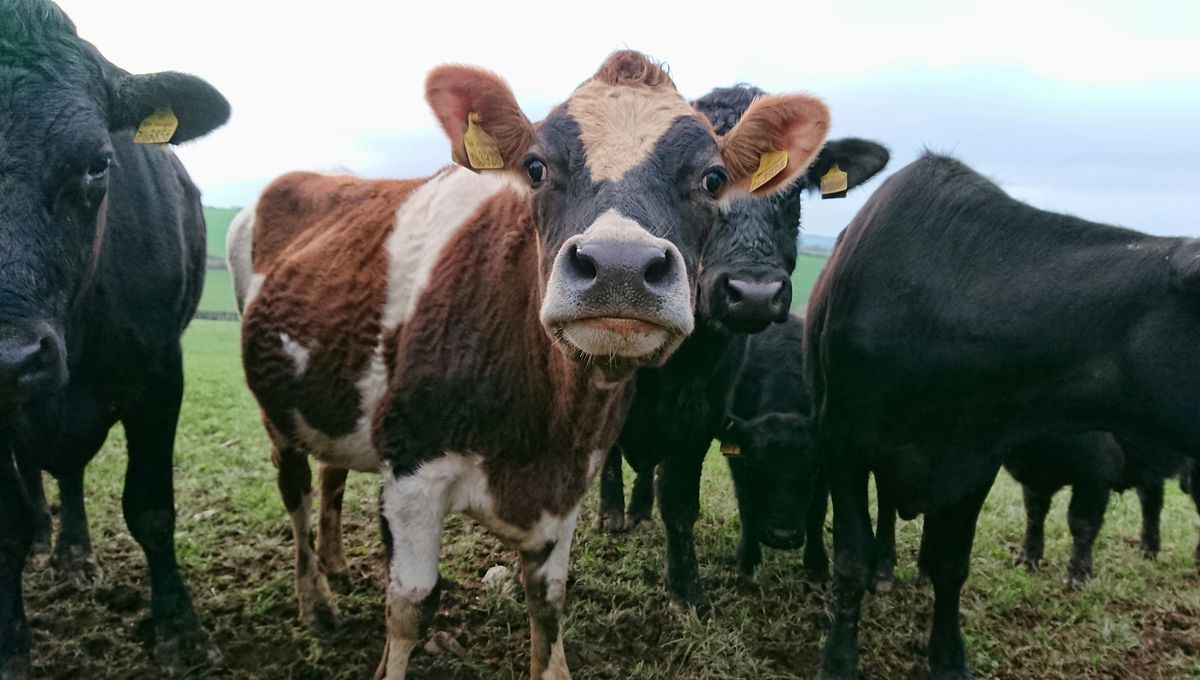
In a world first, Denmark will tax farmers for the greenhouse gas emissions belched out by their cows, pigs, and other livestock.
The agreement was announced on June 24 by the Danish government after months of discussions between politicians, farmers, business leaders, and other parties.
“Agriculture is Denmark’s largest emitter of CO2. It cannot continue. That is why we are the first country in the world to introduce a climate tax and speed up green measures, so that we are more certainly on track to reach the 2030 target. Now there is a lot of work to be done to realize the agreement,” Lars Aagaard, Denmark’s Climate, Energy, and Supply Minister, said in a statement.
Under the agreement, farmers will be taxed 120 Danish kroner (around $17) per ton of carbon dioxide emitted from livestock in 2030, increasing to 300 Danish kroner ($43) per ton in 2035.
The return of proceeds will then be pumped back into the agricultural sector as a “transition support pool” to assist the green transition of the industry.
Under another part of the policy, over 30 billion kroner ($4.3 billion) will be set aside for the conversion of swathes of carbon-rich lowland soil and the planting of 250,000 hectares (6.2 million acres) of forest.
Famous for its cured bacon, Denmark is one of the world’s largest pig meat exporters, as well as a prominent producer of beef and dairy. According to its government, the new agreement hopes to maintain its place as a world leader in agriculture and food production in the 21st century, while being good to the planet.
“Today we are writing a new chapter in Danish agricultural history,” said Minister for Food, Agriculture, and Fisheries, Jacob Jensen. “Denmark is a proud food-producing nation, where we have some of the world’s most skilled farmers, for whom we now ensure a stable framework to continue producing world-class food for many years into the future. With the agreement, we create growth and jobs throughout the country, while taking good care of our climate, environment and nature.”
Livestock are responsible for 14.5 percent of all global greenhouse gases, according to UC Davis. Much of this is generated by the burps of cows, as well as other ruminant animals like goats and sheep.
As these animals digest grass and other plants, a process occurs called “enteric fermentation” that creates methane – a potent greenhouse gas – as a byproduct. The greenhouse gas is then emitted by the animal, from where it enters Earth’s atmosphere and traps heat, contributing to climate change.
While Denmark’s latest announcement doesn’t directly mention methane, it will help to address this problem by targeting carbon dioxide, the primary greenhouse gas that’s also emitted in significant quantities by agriculture.
Many countries around the world are looking to tackle the problem of livestock-related emissions. One often floated idea is a “meat tax” to put levies on high-emission foods like beef and dairy.
Some believe these kinds of policies are almost inevitable in the decades ahead – although they are likely to meet some intense resistance. Earlier this month, New Zealand U-turned on its plan to tax livestock burps due to concerns it could devastate their world-famous farming industry.

Source Link: Livestock Burps Are Set To Be Taxed In Denmark In World First
