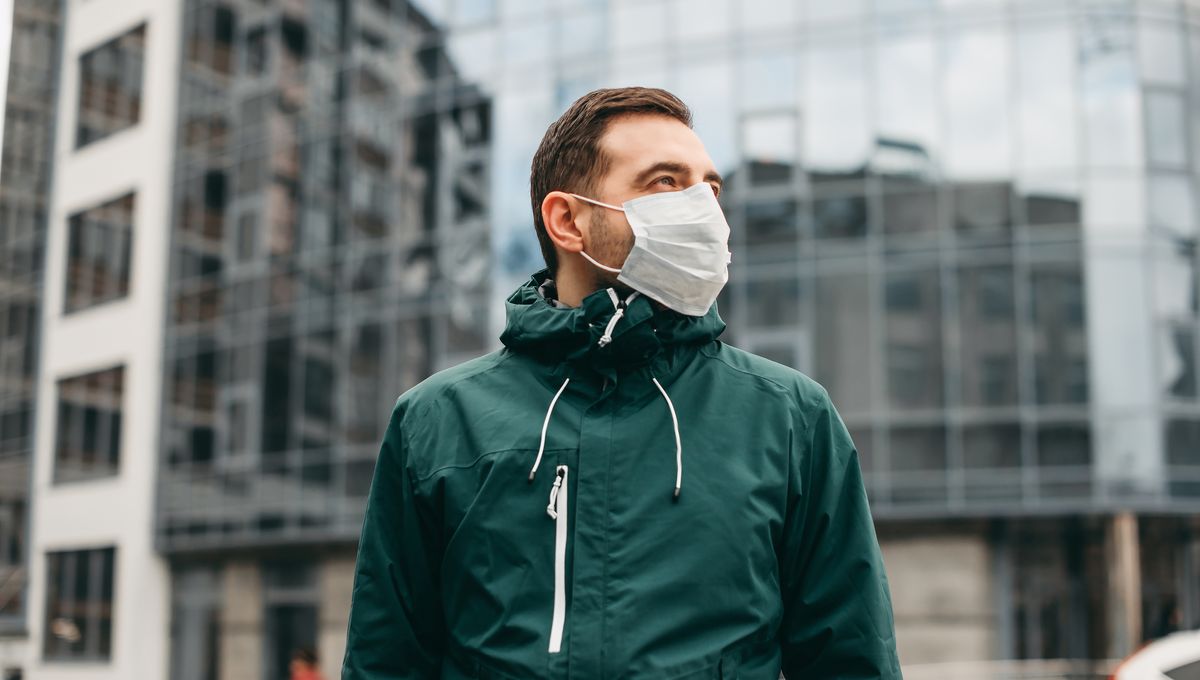
The Royal Society has issued a report examining the effects of various non-pharmaceutical interventions (NPIs) – not vaccines or medications – in reducing the spread of COVID-19, and their results are conclusive: wearing face masks, social distancing, and lockdowns “unequivocally” lowered the spread of the disease.
The aim of the report was to “assess what has been learnt about the effectiveness of the application of non-pharmaceutical interventions” during the pandemic “by assembling and examining evidence from researchers around the world”.
In particular, it looked at six groups of non-pharmaceutical interventions and examined their effectiveness. These included masks and face coverings; social distancing and lockdowns; test and trace initiatives with isolation; international travel restrictions; environmental controls (ventilation and screens); and communications (explaining how these other approaches work).
Although individual interventions showed positive but limited evidence of success when deployed alone, the report found that the positive effects became much more apparent when governments combined them. In addition, the researchers found that these interventions worked best when transmission levels were low, adding to the argument that it is best to try to limit infections during the early phases of a pandemic or as cases start to resurge.
“A common denominator of the evidence from the studies of individual NPIs and from the national case studies is that NPIs were, in general, more effective when the case numbers and the associated transmission intensity of SARS-CoV-2 were lower,” the report’s executive summary states.
“This is because the size of the exposure, and therefore the risk of infection, of uninfected, non-immune people to viral infection is proportional to the number of cases in the community.”
Furthermore, there is evidence that the stringency of measures played an important part in how effective they were. For instance, the use of respirator masks was more effective than surgical masks were, and mandated use proved to be a far better barrier to infection than in contexts of voluntary wearing. Similarly, stricter and longer quarantine measures – such as two-week-long stay-at-home orders – were better than shorter ones.
Social distancing measures were found to be the most effective NPI, according to the report. This was especially valuable for certain subgroups, such as the elderly, who were most at risk from severe cases of the infection. Restrictions on visitors and “cohorting” staff with residents in care homes – where residents and staff were put into specific groups – were identified as good ways to reduce outbreaks and transmission.
In the context of schools, closures and other social distancing measures were associated with lowering COVID cases, but the effectiveness depended on various factors related to the adherence to these measures and the targeted age group of the school children.
Track, trace, and isolate approaches were also found to be effective, especially when countries sought a “zero-COVID” policy. In particular, the UK’s experiment with the track and tracing app tested on the population of the Isle of Wight was associated with a substantial reduction in transmission levels.
Interestingly, the examination of the available evidence on certain border procedures, such as the use of temperature screening before traveling, showed no meaningful effect on reducing the importation and transmission of the virus. Banning entry to a country during the early part of the pandemic had some impact, which quickly diminished as cases rose. But countries that implemented stricter quarantine-at-entry policies had higher levels of success.
Ultimately, the Royal Society’s report is a valuable assessment of the existing evidence on pandemic responses and contains important lessons for not only dealing with future resurgences of COVID-19, but also in our preparations for the next unknown disease. Forewarned is hopefully forearmed.
The full report can be viewed here.

Source Link: Lockdowns, Masks, And Social Distancing "Unequivocally" Help Stop The Spread Of COVID
