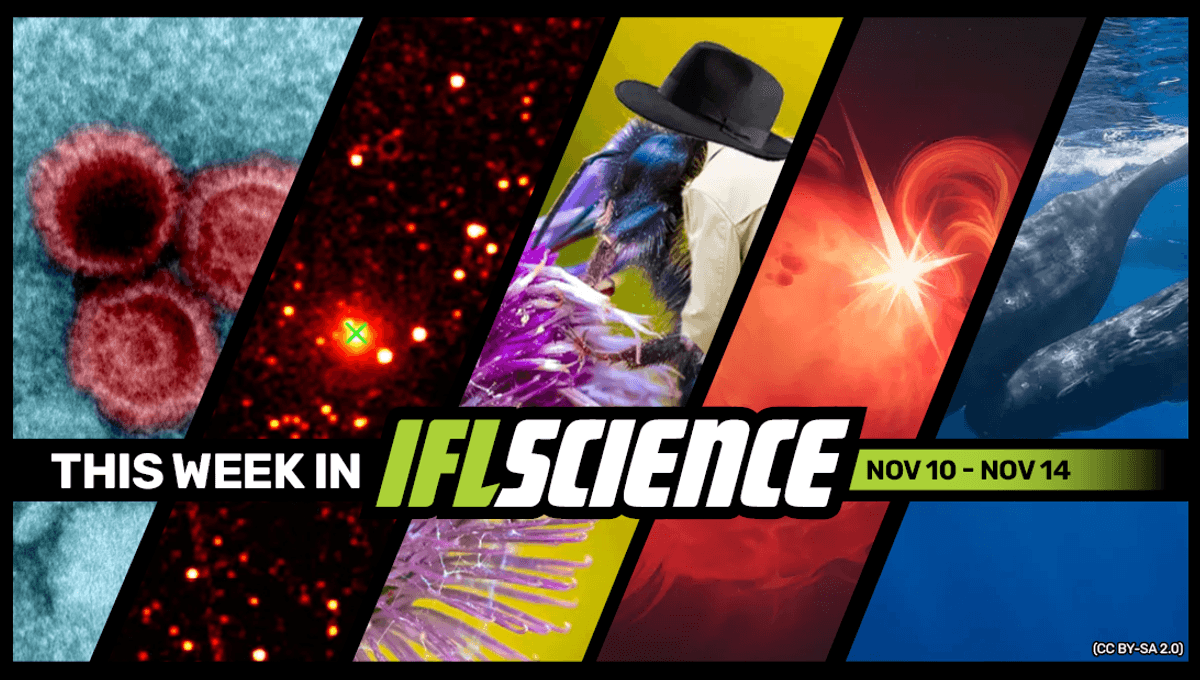
This week, a long-standing mystery of how lupus is linked to the Epstein-Barr virus has been solved, the first radio detection from interstellar object 3I/ATLAS has been observed by astronomers and the first coronal mass ejection from a star that is not our Sun, bumblebees are doing Morse code now, and sperm whales are using single and double vowel sounds in their vocalizations. Finally, the complete scientific guide on how to win Rock, Paper, Scissors every time.
The rest of this article is behind a paywall. Please sign in or subscribe to access the full content.
Create an IFLScience account to get all the biggest science news delivered straight to your inbox every Wednesday and Saturday.
Lupus Linked To Virus That Over 95 Percent Of Us Carry – And Now We Finally Know How
A new study has finally nailed down what links Epstein-Barr virus (EBV) – a pathogen that over 95 percent of adults worldwide have been infected with – to lupus, solving a long-standing mystery. Read the full story here
First Radio Detection Received From Interstellar Object 3I/ATLAS. What Does That Mean?
After two previous failed attempts, astronomers using South Africa’s MeerKAT radio telescope have reported the first radio detection from the interstellar object 3I/ATLAS, taken on October 24, 2025, when the comet was just 3.76 degrees from the Sun in the sky. No, it’s still not aliens. Read the full story here
First-Of-Its-Kind Evidence Shows Bees Can Learn “Morse Code” – Well, Kinda
Which animal would make the best spy? Perhaps pigeons would be a good candidate – they have the relevant experience, after all. Maybe a parrot or cockatoo – they can literally tell you what they’ve overheard, which is surely an advantage. There are, in other words, plenty of potential candidates. But a new study presents an alternative contender: the humble bumble. Read the full story here
For First Time, Astronomers Record A Coronal Mass Ejection From A Star That’s Not Our Sun
Astronomers have detected a radio burst from a massive eruption known as a coronal mass ejection (CME) on an M-type star 133 light-years away. CMEs have been suspected to occur on other stars based on how frequently they occur on the Sun, but this is the first direct evidence we’ve seen of it happening. Unfortunately, the major advance for stellar research makes the prospects for life around the galaxy’s most common type of star slim. Read more here
Vowel Sounds “Thought To Be Unique To Humans” Discovered In Sperm Whales For The First Time
You might’ve heard we’re trying to talk to whales. It sounds crazy, but it’s not so far-fetched, as in recent years we’ve been getting closer and closer to cracking the code of their remarkably complex communications. Now, a groundbreaking discovery has been made through eavesdropping on the conversations of sperm whales. It turns out they use single and double vowel sounds in their vocalizations, sort of like how we might say “did” or “died”. Read more here
TWIS is published weekly on our Linkedin page, join us there for even more content.
Feature of the week:
How To Win At Rock-Paper-Scissors: A Deep Dive Into Manual Warfare
Sometimes, the hardest battles are the simplest ones. Chess may have its drama, Magic can enchant, but few things compare to the pure, raw warfare of Rock, Paper, Scissors. It’s a game that dates back potentially more than two millennia – and yet, even today, people argue about how best to play it. Is it possible to guarantee a win? Can you really math your way to the top, or is it all mental? Would a human ever be able to beat a computer? Read more here
More content:
Have you seen our e-magazine, CURIOUS? Issue 40, November 2025, is available now. This month, we asked, “How Do We Predict The Weather?” – check it out for exclusive interviews, book excerpts, long reads, and more.
PLUS, the We Have Questions podcast – an audio version of our CURIOUS e-magazine column – continues. In episode 14, we ask, “Can Burying Scientists Alive In The Snow Help Us Protect Polar Bears?”
The Big Questions podcast concludes season 5 with a special bonus episode: Searching For Nessie: IFLScience Takes On Cryptozoology.

Source Link: Lupus Linked To Virus That Over 95 Percent Of Us Carry, First Radio Detection Received From Interstellar Object 3I/ATLAS, And Much More This Week
