• Email Us: [email protected]
  • Contact Us: +1 718 874 1545
  • Skip to main content
  • Skip to primary sidebar

Medical Market Report

  • Home
  • All Reports
  • About Us
  • Contact Us

Lyrids: Meteor Shower With History Of Shooting Stars “Falling Like Rain” Peaks Next Week

April 18, 2025 by Deborah Bloomfield

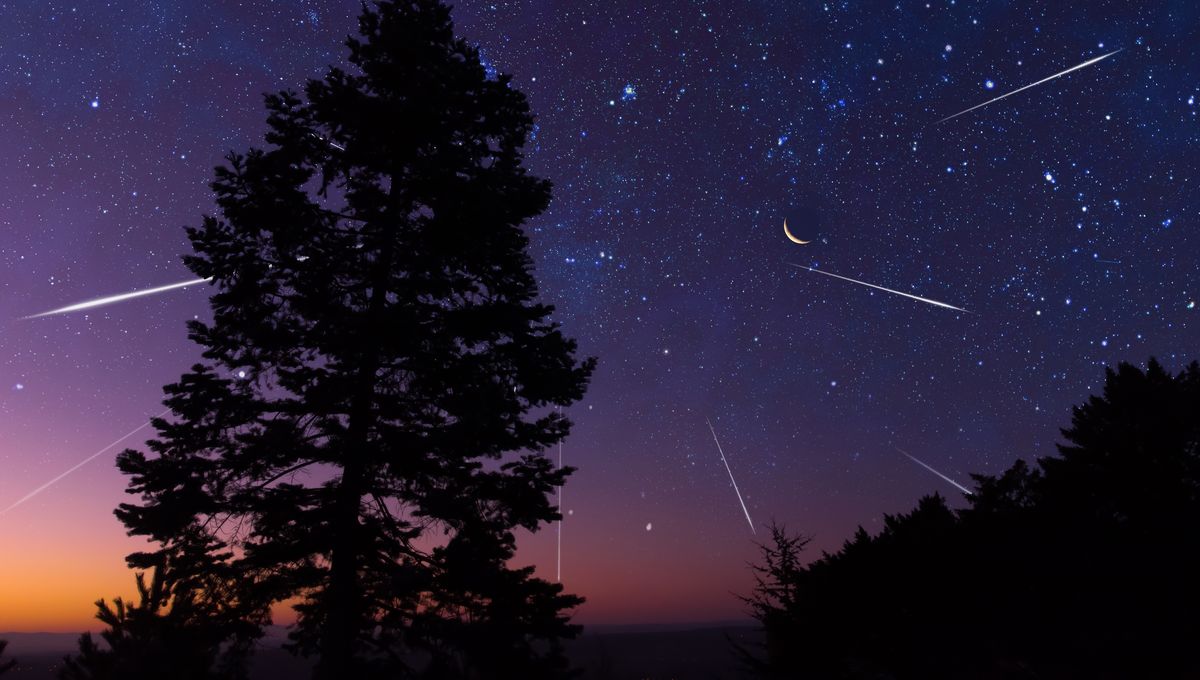
Early next week, the Lyrid meteor shower will have its peak, and the Moon being less than half full will not ruin the spectacle too much. If you’re planning to watch, you won’t need any specialist equipment. In fact, telescopes or binoculars are often a hindrance to catching meteors.  

The peak will be on the night between Monday, April 21 and Tuesday, April 22, and the International Meteor Organization predicts about 18 meteors an hour at the peak, which is a respectable number even though it’s on the smaller side compared to other showers. Just go somewhere dark and allow your eyes about 30 minutes to adjust to reduced light (so no phones!). 

The reason why the Lyrid meteor shower remains famous is its history. It occasionally produces a meteor storm, with several hundred meteors falling per hour – and has done so for millennia. Back in 1803, a journalist in Richmond, Virginia, estimated an hourly rate of an incredible 700 space rocks whizzing across the sky. Over 2,000 years ago, in 687 BCE, the Zuo Zhuan, an ancient Chinese narrative history, described a Lyrid meteor shower where the “stars fell like rain.” Descriptions of the Lyrids are also found in Australian Indigenous astronomy, which goes back many more millennia into the past.

The exact mechanism for the increase in showers is not fully understood. The meteor shower is called the Lyrids as they appear to come from the direction of the Lyra constellation, but meteors are not falling stars. They are tiny fragments of asteroids or comets, debris shed by these objects during their passage across Earth’s orbit.

For the Lyrids, the parent body is Comet C/1861 G1 Thatcher, a long-period comet, going around the Sun every 415 years or so. Despite the shower going back for thousands of years, the comet was only discovered at its last close passage in 1861. Its next one will be in 2276.

The proximity of the comet is not the crucial player in the meteor storm, however. Planets shift the trail of debris, creating overdensities, boosting the flux for one season. The last time it happened was in 1982 with 90 comets per hour, and is expected to happen every 60 years or so. So, we have another 17 years to wait for a particularly good year, but frankly, a lone shooting star is exciting to see so the chance of seeing 18 in an hour is not to be overlooked.

Deborah Bloomfield
Deborah Bloomfield

Related posts:

  1. Russia moves Sukhoi Su-30 fighter jets to Belarus to patrol borders, Minsk says
  2. French senators to visit Taiwan amid soaring China tensions
  3. Thought Unicorns Don’t Exist? Turns Out They Live In A Chinese Cave
  4. Meet Thorin: A Cave-Dwelling Population Of Neanderthals Were Isolated For 50,000 Years

Source Link: Lyrids: Meteor Shower With History Of Shooting Stars “Falling Like Rain” Peaks Next Week

Filed Under: News

Primary Sidebar

  • The Man Who Fell From Space: These Are The Last Words Of Cosmonaut Vladimir Komarov
  • How Long Can A Bird Can Fly Without Landing?
  • Earliest Evidence Of Making Fire Has Been Discovered, X-Rays Of 3I/ATLAS Reveal Signature Unseen In Other Interstellar Objects, And Much More This Week
  • Could This Weirdly Moving Comet Have Been The Real “Star Of Bethlehem”?
  • How Monogamous Are Humans Vs. Other Mammals? Somewhere Between Beavers And Meerkats, Apparently
  • A 4,900-Year-Old Tree Called Prometheus Was Once The World’s Oldest. Then, A Scientist Cut It Down
  • Descartes Thought The Pineal Gland Was “The Seat Of The Soul” – And Some People Still Do
  • Want To Know What The Last 2 Minutes Before Being Swallowed By A Volcanic Eruption Look Like? Now You Can
  • The Three Norths Are Moving On: A Once-In-A-Lifetime Alignment Shifts This Weekend
  • Spectacular Photo Captures Two Rare Atmospheric Phenomena At The Same Time
  • How America’s Aerospace Defense Came To Track Santa Claus For 70 Years
  • 3200 Phaethon: Parent Body Of Geminids Meteor Shower Is One Of The Strangest Objects We Know Of
  • Does Sleeping On A Problem Actually Help? Yes – It’s Science-Approved
  • Scientists Find A “Unique Group” Of Polar Bears Evolving To Survive The Modern World
  • Politics May Have Just Killed Our Chances To See A Tom Cruise Movie Actually Shot In Space
  • Why Is The Head On Beer Often White, When Beer Itself Isn’t?
  • Fabric Painted With Dye Made From Bacteria Could Protect Astronauts From Radiation On Moon
  • There Used To Be 27 Letters In The English Alphabet, Until One Mysteriously Vanished
  • Why You Need To Stop Chucking That “Liquid Gold” Down Your Kitchen Sink
  • Youngest Mammoth Fossils Ever Found Turn Out To Be Whales… 400 Kilometers From The Coast
  • Business
  • Health
  • News
  • Science
  • Technology
  • +1 718 874 1545
  • +91 78878 22626
  • [email protected]
Office Address
Prudour Pvt. Ltd. 420 Lexington Avenue Suite 300 New York City, NY 10170.

Powered by Prudour Network

Copyrights © 2025 · Medical Market Report. All Rights Reserved.

Go to mobile version