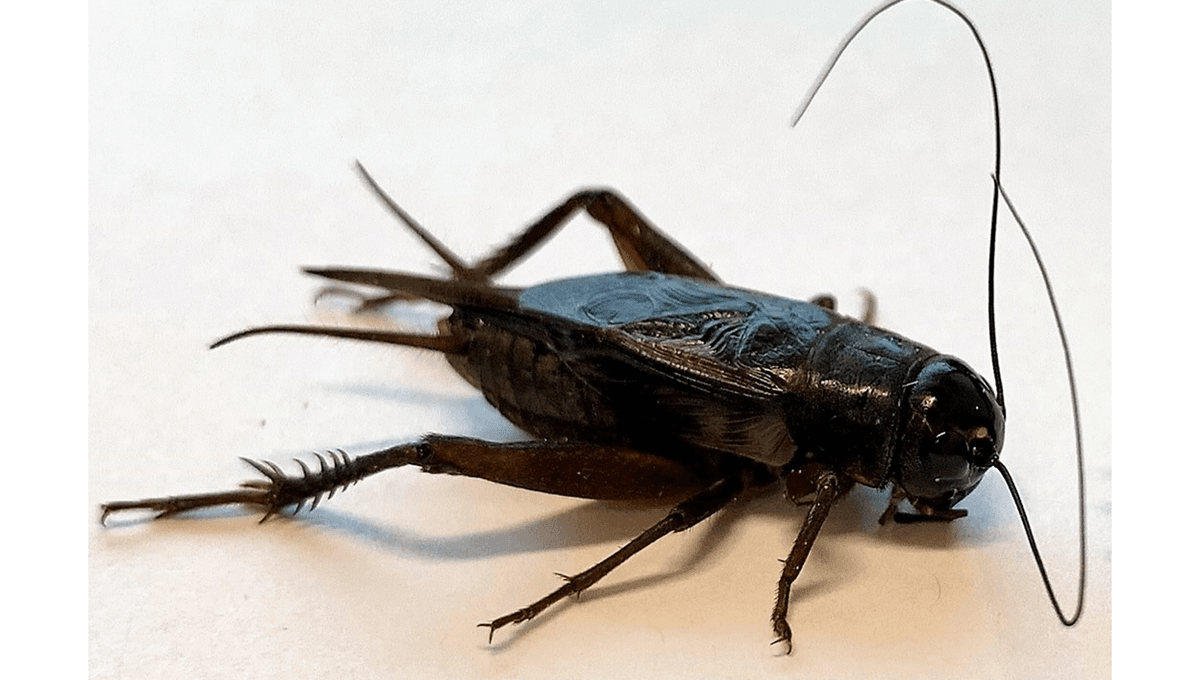
Well-fed male Pacific field crickets (Teleogryllus oceanicus) show sexual interest in both male and female members of their own species – however, when fed a low-quality diet, they lose interest in other males and focus their attention more on females.
Some zoologists have been reported to not record data on their observations of same-sex sexual behavior (SSB). It’s possible such censorship is still occurring, albeit possibly to a lesser extent – but we now know that SSB is extremely common across the animal kingdom (and sometimes queendom). Given that courting and mating can use up a great deal of energy, and sometimes put animals at risk, there is a continuing effort to find evolutionary explanations.
Researchers at the University of Minnesota, St Paul, explored one model, which presents animals as having “mating filters” as to who they make the object of their affections. In this view, a narrow mating filter means focusing one’s energy only on those most likely to help pass on one’s genes.
Too narrow a filter, however, can mean missing out on opportunities – an experience anyone who has used a dating app and made their requirements too specific can relate to. Sometimes it is better to broaden the filters and tolerate matching with someone unsuitable, rather than accidentally exclude the love of one’s life by making age, height or income restrictions too tight. Arguably, the same applies to the sex of potential mates, particularly in a species where sexual dimorphism is low.
To investigate this, Dr Jon Richardson, Isabelle Hoversten, and Professor Marlene Zuk put male crickets on either a high- or low-quality diet and put them in the vicinity of other members of their species. Interest in female T. oceanicus, indicated by producing their distinctive short-range courtship “song”, was unaffected. The song differs from the long-range signal used when no potential mate is in the vicinity. Past research has shown females seldom mate without being wooed by short-range song.
However, males on the high-quality diet also “sang” to other males, something they were much less likely to do when underfed. The authors conclude that when calories are sparse, it’s best to save your energy for the most promising targets for reproduction, so filters get narrowed.
Even on the high-quality diet, not all males chose to court other males. Some preferred to fight, but the proportion of aggressive behavior was unchanged by the diet.
The work is consistent with, although does not prove, a hypothesis that the ancestral condition for animals was to display sexual behavior irrespective of sex, with a focus on those of a different sex coming later in specific circumstances.
“Our results demonstrate the benefits of a mating filters approach to studying SSB — rather than being a mistake or an anomaly in need of special explanation, SSB may be better viewed as a consequence of flexible, condition-dependent changes in mating behavior,” the authors write. It is very unlikely, they argue, that such behavior is maladaptive. Instead, it is the rational choice compared to being too selective and accidentally passing up a good opportunity because you misidentified a potential partner’s sex.
Intriguingly, past research has shown; “Male [cricket]s are more likely to engage in SSB (suggesting that they have broader filters) if they recently interacted with a female,” the authors note. This appears counterintuitive, since one might expect such males to be more tired. The reason is so far unknown.
The authors note the behavior shows similarities with burying beetles, where males; “Males have narrow filters when the costs of SSB are high and broader filters when the costs of SSB are low.”
The authors stress that; “SSB in nonhuman animals should not be conflated with same-sex sexual attraction and same-sex sexual orientation occurring in humans, as both of the latter concepts rely on knowledge of internal states that cannot be assessed in animals.” Moreover, there is evidence some other animals, such as spadefoot toads do the opposite, having narrower filters when in better condition, emphasizing the dangers of applying lessons from a single species to humans. The work also sheds no light on animals that engage in SSB more frequently to different-sex mating behavior.
The work is published in Proceedings of the National Academy of Sciences.

Source Link: Male Crickets More Likely To Try To Woo Other Males When Well-Fed
