A 44-year-old man with treatment-resistant depression (TRD) has achieved what researchers describe as “remission” of his symptoms after undergoing an experimental brain stimulation procedure. This is the only such case that has been reported to date, and the findings are still awaiting peer-review; but for a condition where the options for patients are severely limited, the study offers some hope of new avenues to explore.
After living with psychiatric illnesses, including depression and PTSD, for many years and experiencing his first panic attacks when he was just a kindergartner, the patient in this study had been hospitalized numerous times. The authors write that he had endured “one protracted depressive episode without distinct periods of remission for 31 years.”
They describe his medical history as “remarkable” – he has tried at least 19 different medications and undergone electroconvulsive therapy (ECT) three times. While this treatment can be effective in some cases, in this patient it unfortunately left him with cognitive impairment.
Ultimately, the patient had experienced suicidal ideation and made attempts to take his own life. It’s thought that around a third of patients with major depressive disorder will progress to TRD, as in this case, and that is a strong risk factor for suicidality.
The researchers, based primarily at the University of Minnesota, enrolled the patient in a study to evaluate, for the first time, a form of minimally invasive brain stimulation called personalized adaptive cortical electro-stimulation (PACE).
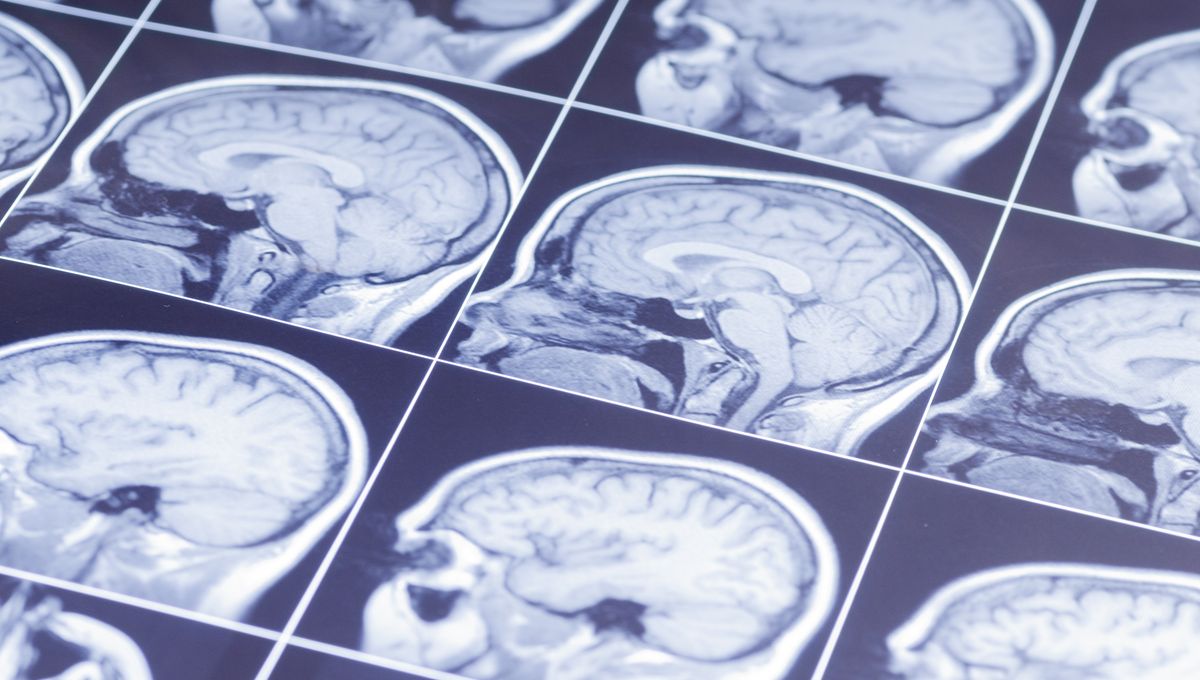
First, a process called precision functional mapping was carried out. This uses functional magnetic resonance imaging (fMRI) to map the patient’s specific brain activity – what the authors call a “brainotype” – so that the brain stimulation can be targeted most effectively.
“[The patient’s] salience network was highly atypical,” the authors write. This is a suite of brain regions that have been extensively studied since their discovery was reported in a 2007 paper. It’s difficult to summarize all the known functions of the salience network; it’s thought to play a vital role in our ability to identify and pay attention to important signals from our environment.
“In [this patient], the salience network was expanded to cover 12.4 percent of the cortical surface area, a four-fold enlargement compared to healthy controls,” the authors continued. This enlargement has previously been linked to depression, so it’s not a totally surprising finding.
Armed with their “brainotype” map, the team could then perform surgery to implant four electrodes in the optimal places on the patient’s brain, two in each hemisphere at the boundaries where the salience network was encroaching on other networks. After recovery, it was time to start stimulation.
When the default mode network (DMN) was stimulated, the result was instantaneous and striking. In the patient’s own words, he felt overwhelming joy. “It feels nice. So weird to feel. It is so emotional,” he reported, breaking down in tears.
Stimulation of other electrodes led to feelings of calm and relaxation, while another stimulation pattern actually induced anxiety in the patient, showing that not every result will be positive, and stimulation must be carefully adapted for each individual.
This optimization happened during monthly visits with the team. Within seven weeks of treatment, the patient’s suicidal ideation had completely gone away. After four months, his mood had improved by 59 percent on standardized test. The improvements were sustained for at least 30 months.
“PACE provided [the patient] with the longest stretch of wellness he had experienced in his adult life,” the authors write.
“In psychiatry, we don’t have cures, but this is probably the closest we can get,” first author Ziad Nahas told Gizmodo.
For this individual, this is a transformative result, but it’s important to remember that these are the results from just one patient. The authors have set the goal of conducting a larger double-blind clinical trial in the future. Every case of TRD is different, which is why there is so much hope resting on the personalization element of PACE treatment – something that’s missing from conventional ECT.
The paper is awaiting peer review, and much more evidence will be needed before PACE could ever be approved for use more widely as a clinical treatment. TRD is a gnarly scientific problem to solve, and this approach is one among many research avenues being explored, but many will be watching with fascination to see if the life-changing benefits achieved here can be replicated in more patients.
The preprint has been posted to PsyArXiv.
If you or someone you know is struggling, help and support are available in the US via the 988 Suicide & Crisis Lifeline, which can be contacted by dialing 988. In the UK and Ireland, the Samaritans can be contacted on 116 123. International helplines can be found at SuicideStop.com.

Source Link: Man With 31-Year History Of Depression Feels “Overwhelming Joy” After Experimental Brain Stimulation
