• Email Us: [email protected]
  • Contact Us: +1 718 874 1545
  • Skip to main content
  • Skip to primary sidebar

Medical Market Report

  • Home
  • All Reports
  • About Us
  • Contact Us

Measuring The Speed Of Electricity By Electrocuting A Mile Of Monks

June 19, 2023 by Deborah Bloomfield

As great as things like “ethics” are for the health of volunteers and subjects, it has put an end to stories of people finding out about the effects of anesthesia by mashing each other’s testicles, or learning about the velocity of electricity by electrocuting a kilometer of monks.

Jean-Antoine Nollet was a clergyman and physicist with a somewhat eclectic resume. In 1748, he discovered osmosis, after taking a sealed pig’s bladder filled with wine and placing it in water, and in that same busy year he invented the electroscope. He was also prone to slightly wackier experiments, including one where he suspended a small boy from the ceiling by silk cords, electrically charged him and allowed people to go near him to produce sparks.

Advertisement

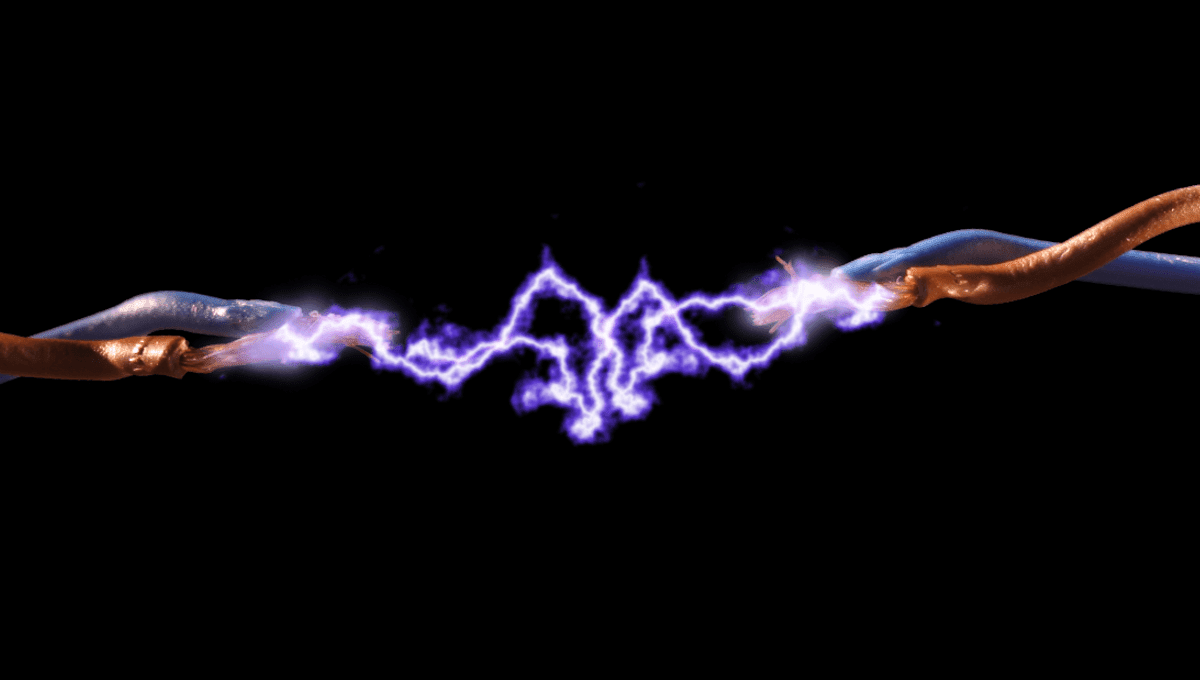
On this slightly goofier side was his experiment with the speed of electricity. In 1746, Nollet gathered 200 Carthusian monks and made them form a circle around 1.6 kilometers (1 mile) long. The monks held brass poles in each hand connecting them, before Nollet completed the circuit by hooking the monks up to an electrically charged Leyden jar. 

Nollet’s plan was simple. He would be able to measure the velocity of electricity by watching the monks get electrocuted as the charge passed around the circuit – like a wave at a football game, but it’s monks convulsing and jumping as electricity shoots through their bodies. 

Unfortunately for Nollet, but great for humanity, electrical charge moves a lot faster than he anticipated. The monks experienced the shock virtually simultaneously, and Nollet concluded that electrical charge moves with “unlimited rapidity”. In other words, he electrocuted 200 people to discover the speed of electricity was “fast”.

We now know that, depending on the material it is going through, electromagnetic waves propagate at 270,000 kilometers (167,770 miles) per second, around 90 percent the speed of light. The individual electrons, meanwhile, move slowly at around 0.02 centimeters (0.008 inches) per second. None of these calculations were conducted in monks.

Deborah Bloomfield
Deborah Bloomfield

Related posts:

  1. Australia central bank to stick with tapering plans, or maybe not
  2. MLB roundup: Angels put crimp in Mariners’ playoff hopes
  3. Police Claim Woman Attacked Them With Angry Bees During An Eviction
  4. Why Do Airplane Window Shades Have To Be Up During Takeoff And Landing?

Source Link: Measuring The Speed Of Electricity By Electrocuting A Mile Of Monks

Filed Under: News

Primary Sidebar

  • Astronomers Catch Incredible First Direct Images Of Objects Colliding In Another Star System
  • Billionaire Jared Isaacman Finally Confirmed As Head Of NASA, As Agency Faces Uncertain Future
  • Something Just Crashed Into The Moon – And Astronomers Captured The Whole Event
  • These “Living Rocks” Are Among The Oldest Surviving Life And Are Champion Carbon Dioxide Absorbers
  • Ambitious Iguana “Love Island” For Near-Extinct Reptiles Becomes Epic Conservation Success Story
  • Sol 1,540: NASA Releases Video Of Perseverance Rover’s Record-Breaking Drive On Mars
  • Why Carl Sagan Was Way Ahead Of His Time And The Legacy He Left Behind
  • Why Were Pompeii Victims All Wearing Thick Woolly Cloaks In August?
  • We May Finally Know What Causes These Bizarre Bright Blue Cosmic Flashes
  • What’s The Biggest Rock In The World?
  • There Is A Very Simple Test To See If You Have Aphantasia
  • Bringing Extinct Animals To Life: Is Artificial Intelligence Helping Or Harming Palaeoart?
  • This Brilliant Map Has 3D Models Of Nearly Every Single Building In The World – All 2.75 Billion Of Them
  • These Hognose Snakes Have The Most Dramatic Defense Technique You’ve Ever Seen
  • Titan, Saturn’s Biggest Moon, Might Not Have A Secret Ocean After All
  • The World’s Oldest Individual Animal Was Born In 1499 CE. In 2006, Humans Accidentally Killed It.
  • What Is Glaze Ice? The Strange (And Deadly) Frozen Phenomenon That Locks Plants Inside Icicles
  • Has Anyone Ever Actually Been Swallowed By A Whale?
  • First-Known Instance Of Bees Laying Eggs In Fossilized Tooth Sockets Discovered In 20,000-Year-Old Bones
  • Polar Bear Mom Adopts Cub – Only The 13th Known Case Of Adoption In 45 Years Of Study At Hudson Bay
  • Business
  • Health
  • News
  • Science
  • Technology
  • +1 718 874 1545
  • +91 78878 22626
  • [email protected]
Office Address
Prudour Pvt. Ltd. 420 Lexington Avenue Suite 300 New York City, NY 10170.

Powered by Prudour Network

Copyrights © 2025 · Medical Market Report. All Rights Reserved.

Go to mobile version