• Email Us: [email protected]
  • Contact Us: +1 718 874 1545
  • Skip to main content
  • Skip to primary sidebar

Medical Market Report

  • Home
  • All Reports
  • About Us
  • Contact Us

Meet The Kagu: Rare, Flightless, And With An Unusual Feature Seen In No Other Bird

April 10, 2025 by Deborah Bloomfield

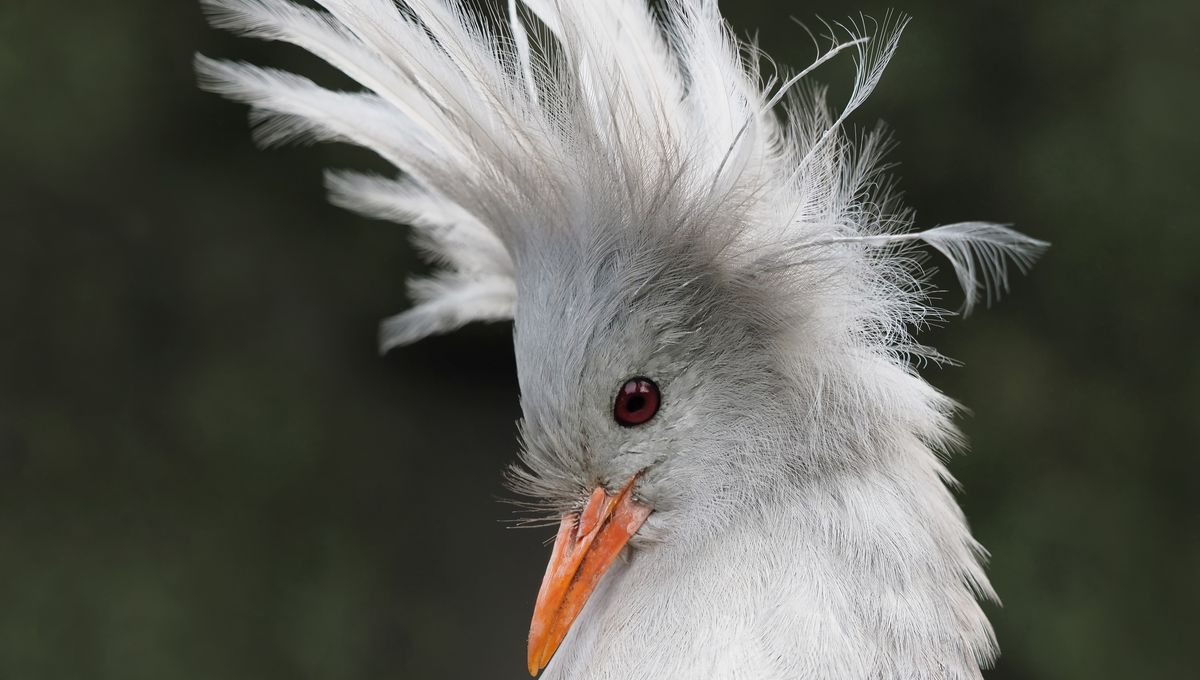
Look carefully enough, and there are ghosts to be found in the forests of New Caledonia. Well, kinda – they’re actually kagus. Known by those native to the island territory as the “ghost of the forest”, these flightless birds are not only an emblem of the archipelago, but also bear a curious feature found in no other known species of bird.

The feature in question is their nasal corns, flap-like structures made out of skin that cover a kagu’s nostrils. Kagus, or cagous, even get part of their scientific name, Rhynochetos jubatus, from this unique trait; the genus, Rhynocetos, stems from the Greek words for “nose” and “corn”.

It’s thought that kagus have these nasal corns to stop dirt and other debris from getting into their nose as they go about foraging through the leaf litter on the forest floor, or poking into rocks in search of delicious goods such as insects, snails, and lizards.


Unfortunately, this peculiar, but very helpful feature, is at risk of disappearing from birds entirely. That’s not because there’s a chance that evolution is about to ditch it, but because kagus are an endangered species – and they’ve reached that point as a result of human activity.

In fact, the fate of kagus once looked even more dire. Back in the late 1800s – around the time that Europeans began to settle on the archipelago – they ended up on the brink of extinction due to those seeking their crest feathers, which made a popular decorative addition to hats.

While that fashion trend thankfully came to an end, kagus have continued to face threats, with predation by dogs and other introduced animals, as well as habitat loss, all causing numbers to decline. Currently, it’s estimated that there are just 600 to 2,000 of these birds remaining.

There is, however, some hope. Conservationists have been working for decades to ensure the survival of the species, with breeding programs and efforts to tackle predators. The kagu might not be out of the woods just yet, but that work now appears to be paying off. Jean-Marc Meriot, who manages the Rivière Bleue park, told the Guardian that there were around 60 kagus living in the park in 1984; in 2024, there are estimated to be more than 1,000.

“We now have forest areas with new pairs of cagous,” said Meriot. “The cagou population is doing very well, it is constantly expanding and things couldn’t be better.”

Deborah Bloomfield
Deborah Bloomfield

Related posts:

  1. Mexico urges U.S. to invest in region to stem migration
  2. Struggling Laschet attacks rival on economy as German vote looms
  3. Twitter’s Top Bosses Have Been Purged After Musk’s Takeover
  4. The Last Of Us: Why Making Fungal Vaccines Is So Challenging

Source Link: Meet The Kagu: Rare, Flightless, And With An Unusual Feature Seen In No Other Bird

Filed Under: News

Primary Sidebar

  • The Science Of Magic: Find Out More In Issue 41 Of CURIOUS – Out Now
  • People Sailed To Australia And New Guinea 60,000 years ago
  • How Do Cells Know Their Location And Their Role In The Body?
  • What Are Those Strange Eye “Floaters” You See In Your Vision?
  • Have We Finally “Seen” Dark Matter? Mysterious Ancient Foot May Be From Our True Ancestor, And Much More This Week
  • The Unexpected Life Hiding Out in the Great Pacific Garbage Patch
  • Scientists Detect “Switchback” Phenomenon In Earth’s Magnetosphere For The First Time
  • Inside Your Bed’s “Dirty Hidden Biome” And How To Keep Things Clean
  • “Ego Death”: How Psychedelics Trigger Meditation-Like Brain Waves
  • Why We Thrive In Nature – And Why Cities Make Us Sick
  • What Does Moose Meat Taste Like? The World’s Largest Deer Is A Staple In Parts Of The World
  • 11 Of The Last Spix’s Macaws In The Wild Struck Down With A Deadly, Highly Contagious Virus
  • Meet The Rose Hair Tarantula: Pink, Predatory, And Popular As A Pet
  • 433 Eros: First Near-Earth Asteroid Ever Discovered Will Fly By Earth This Weekend – And You Can Watch It
  • We’re Going To Enceladus (Maybe)! ESA’s Plans For Alien-Hunting Mission To Land On Saturn’s Moon Is A Go
  • World’s Oldest Little Penguin, Lazzie, Celebrates 25th Birthday – But She’s Still Young At Heart
  • “We Will Build The Gateway”: Lunar Gateway’s Future Has Been Rocky – But ESA Confirms It’s A Go
  • Clothes Getting Eaten By Moths? Here’s What To Do
  • We Finally Know Where Pet Cats Come From – And It’s Not Where We Thought
  • Why The 17th Century Was A Really, Really Dreadful Time To Be Alive
  • Business
  • Health
  • News
  • Science
  • Technology
  • +1 718 874 1545
  • +91 78878 22626
  • [email protected]
Office Address
Prudour Pvt. Ltd. 420 Lexington Avenue Suite 300 New York City, NY 10170.

Powered by Prudour Network

Copyrights © 2025 · Medical Market Report. All Rights Reserved.

Go to mobile version