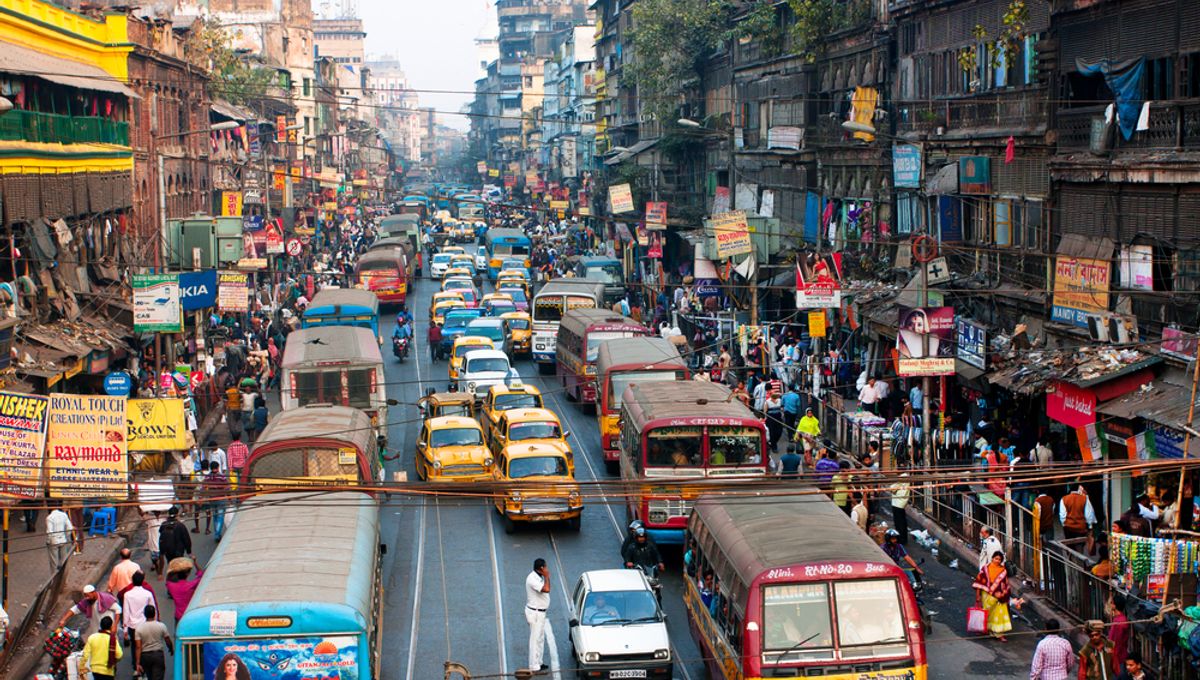
India is on track to overtake China as the world’s most populous country by mid-2023. Roughly before the end of June, India’s population is projected to be 1.4286 billion, compared with China’s 1.4257 billion, according to new estimates from the United Nations (UN).
The data comes from a new report by the United Nations Population Fund (UNFPA) called “8 Billion Lives, Infinite Possibilities.”
It’s not possible to put an exact date on when China will lose its place as the most populous nation, especially considering how India’s census only takes place every 10 years and the data is notoriously foggy.
It’s also worth noting that the UN data on China’s population does not include the two Special Administrative Regions – Hong Kong and Macau, which together have more than 8 million people – or Taiwan, an island that is governed independently but Beijing believes is rightfully a province of China.
Nevertheless, it’s a widely acknowledged trend that China’s population is slowly declining and India’s is continuing to rise with the two sets of populations on the brink of crossing imminently.
The world’s population tipped 8 billion people on November 15, 2022. Over half of those people live in the Asia and Pacific region and over a third live in China and India combined.
Among the insights in the new report, the UN argues that “population anxiety” is on the rise globally, with many countries expressing concern that their population is getting too large. Likewise, it notes that governments are becoming increasingly aware of population, adopting policies aimed at raising, lowering, or maintaining fertility rates.
The report took aim at “alarmist rhetoric” that has surrounded these worries, especially politicians and public figures stoking fears about “population booms” that will run their country dry of resources.
In actuality, the situation is much more nuanced and varied across the world. Two-thirds of people are now living in “low fertility contexts”, while just eight countries will account for half the projected growth in population by 2050. Within this current century, we’re expected to see the first decline in global population since the Black Death of the 14th century, as per some estimates.
The report argues we should see the world population reaching 8 billion as a success story that shows more and more people are living longer and healthier lives than before. Furthermore, it contends that it’s an indication that levels of women’s empowerment and reproductive autonomy have improved – and, in turn, enhanced the planet.
“The relationship between reproductive autonomy and healthier lives is an uncontested truth”, Dr Natalia Kanem, UNFPA’s Executive Director, wrote in her foreword to the report.
“As women are empowered to make choices about their bodies and lives, they and their families thrive – and their societies thrive as well,” she added.
“In high-fertility countries, empowerment through education and family planning, is known to yield enormous dividends in the form of economic growth and human capital development,” Kanem continued.
“That is why UNFPA is calling for expanded efforts to realize bodily autonomy and support sexual and reproductive health and rights for all — the foundation for full equality, dignity and opportunity.”

Source Link: Most Populated Nation Set To Change By Mid-2023 As "Population Anxiety" Increases
