• Email Us: [email protected]
  • Contact Us: +1 718 874 1545
  • Skip to main content
  • Skip to primary sidebar

Medical Market Report

  • Home
  • All Reports
  • About Us
  • Contact Us

Mother Orca Seen Carrying Dead Calf Once Again On Washington Coast

September 16, 2025 by Deborah Bloomfield

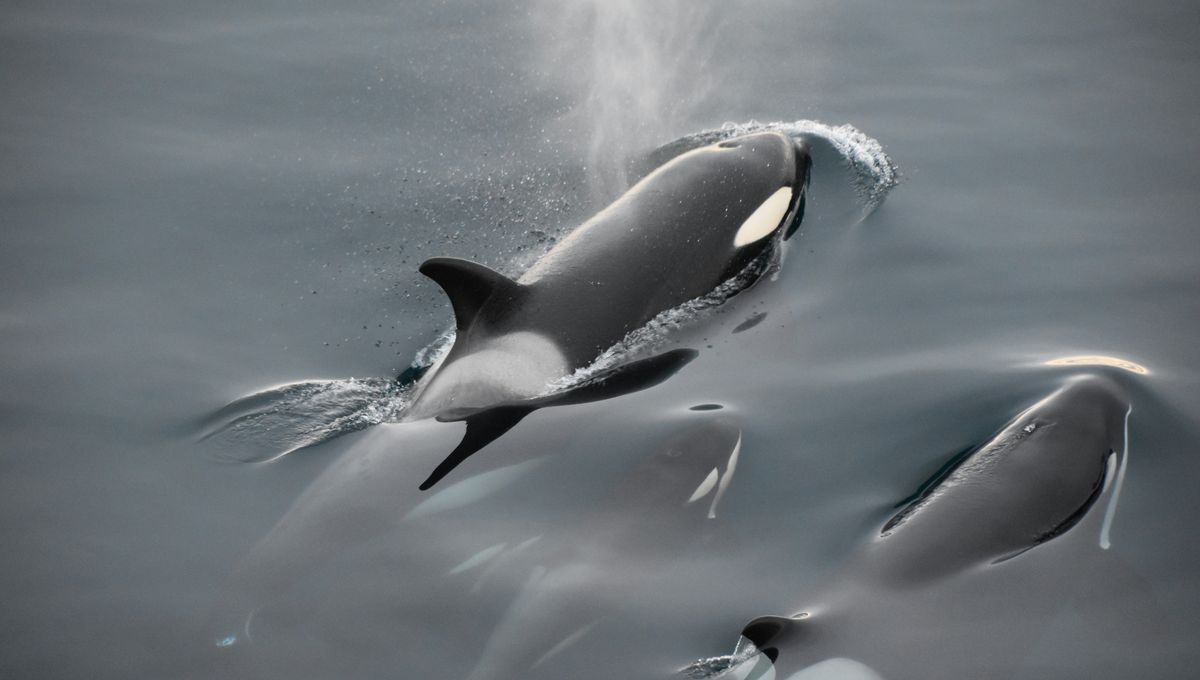
In the waters off Washington State, a mother orca has been seen pushing her dead newborn calf, seemingly in mourning. It isn’t the first time this grieving behavior has been documented in this killer whale pod, a population that’s imperiled with an uncertain future. 

The rest of this article is behind a paywall. Please sign in or subscribe to access the full content.

The Center for Whale Research was alerted to the situation in Rosario Strait on Friday morning, September 12. Upon approaching the orca that afternoon, researchers confirmed an orca known as Alki, or J36, was pushing a deceased neonate with an umbilical cord still attached. 

“Based on the size of the calf, we estimate that the calf was either full term or near full term. It is unclear if this was a stillbirth or if the calf died shortly after birth. Based on when we last observed J36, this calf would have been born within the last 3 days,” CWR said in a social media post.

ⓘ IFLScience is not responsible for content shared from external sites.

The orca is a member of J-pod, one of the three pods of southern resident orcas that live in the northeast Pacific Ocean. The Southern Resident killer whale population has been in steady decline for decades. After reaching a peak of 98 individuals in 1995, their numbers fell to 78 by July 2000. A brief period of moderate growth followed, with the population climbing to 89 in 2006. 

Since then, however, the trend has been downward. The whales have shown no signs of recovery, with only 74 individuals remaining as of December 2020. The main suspects in their decline are pollution, ocean noise, and a lack of consistently available salmon to prey upon.

Tragedies like this are not new for J-pod. In December 2024, another female, Tahlequah (J35), was seen carrying her dead calf, J61. Tahlequah had captured worldwide attention in 2018 for a similar display of behavior, carrying her calf for 17 days across more than 1,610 kilometers (1,000 miles) of ocean.

The unusual behavior is often interpreted as mourning, or at least something akin to mourning. Orcas are known to be highly intelligent and deeply social animals, prone to stress and depression when their tightly knit family bonds are disrupted. For Southern Resident killer whales, every birth is vital to the survival of their dwindling population, and every death is a devastating blow.

Similar behavior has been noted in other highly intelligent species. Chimpanzees have been recorded holding onto the remains of their deceased offspring for months, refusing to let go. It’s also known that elephants will sometimes sniff, pick up, and even bury the remains of their dead, releasing cries as they do.

It’s all too easy to anthropomorphize behavior like this, but it raises profound questions about how some animals process loss, life, and death.

Deborah Bloomfield
Deborah Bloomfield

Related posts:

  1. EU to attend U.S. trade meeting put in doubt by French anger
  2. Soccer-West Ham win again, Leicester and Napoli falter
  3. Research Reveals Simple Technique to Detect Lies
  4. Geologists Conclude We Are Not Living In The Anthropocene – For Now

Source Link: Mother Orca Seen Carrying Dead Calf Once Again On Washington Coast

Filed Under: News

Primary Sidebar

  • US Just Killed NASA’s Mars Sample Return Mission – So What Happens Now?
  • Art Sleuths May Have Recovered Traces Of Da Vinci’s DNA From One Of His Drawings
  • Countries With The Most Narcissists Identified By 45,000-Person Study, And The Results Might Surprise You
  • World’s Oldest Poison Arrows Were Used By Hunters 60,000 Years Ago
  • The Real Reason You Shouldn’t Eat (Most) Raw Cookie Dough
  • Antarctic Scientists Have Just Moved The South Pole – Literally
  • “What We Have Is A Very Good Candidate”: Has The Ancestor Of Homo Sapiens Finally Been Found In Africa?
  • Europe’s Missing Ceratopsian Dinosaurs Have Been Found And They’re Quite Diverse
  • Why Don’t Snorers Wake Themselves Up?
  • Endangered “Northern Native Cat” Captured On Camera For The First Time In 80 Years At Australian Sanctuary
  • Watch 25 Years Of A Supernova Expanding Into Space Squeezed Into This 40-Second NASA Video
  • “Diet Stacking” Trend Could Be Seriously Bad For Your Health
  • Meet The Psychedelic Earth Tiger, A Funky Addition To “10 Species To Watch” In 2026
  • The Weird Mystery Of The “Einstein Desert” In The Hunt For Rogue Planets
  • NASA Astronaut Charles Duke Left A Touching Photograph And Message On The Moon In 1972
  • How Multilingual Are You? This New Language Calculator Lets You Find Out In A Minute
  • Europa’s Seabed Might Be Too Quiet For Life: “The Energy Just Doesn’t Seem To Be There”
  • Amoebae: The Microscopic Health Threat Lurking In Our Water Supplies. Are We Taking Them Seriously?
  • The Last Dogs In Antarctica Were Kicked Out In April 1994 By An International Treaty
  • Interstellar Comet 3I/ATLAS Snapped By NASA’s Europa Mission: “We’re Still Scratching Our Heads About Some Of The Things We’re Seeing”
  • Business
  • Health
  • News
  • Science
  • Technology
  • +1 718 874 1545
  • +91 78878 22626
  • [email protected]
Office Address
Prudour Pvt. Ltd. 420 Lexington Avenue Suite 300 New York City, NY 10170.

Powered by Prudour Network

Copyrights © 2026 · Medical Market Report. All Rights Reserved.

Go to mobile version