• Email Us: [email protected]
  • Contact Us: +1 718 874 1545
  • Skip to main content
  • Skip to primary sidebar

Medical Market Report

  • Home
  • All Reports
  • About Us
  • Contact Us

NASA Continues Plans To Create A Moon Time Zone For Future Lunar Explorers

October 2, 2024 by Deborah Bloomfield

Time passes at different rates for different observers, depending on their relative speeds and their proximity to (and strength of) nearby gravitational fields. This doesn’t normally figure into your everyday calculations. If you want to meet someone next Tuesday, you don’t need to worry about your clocks being all that different – unless, in the intervening days, one of you spends that time flying around at relativistic speeds, or on a planet or moon with vastly different gravity.

Advertisement

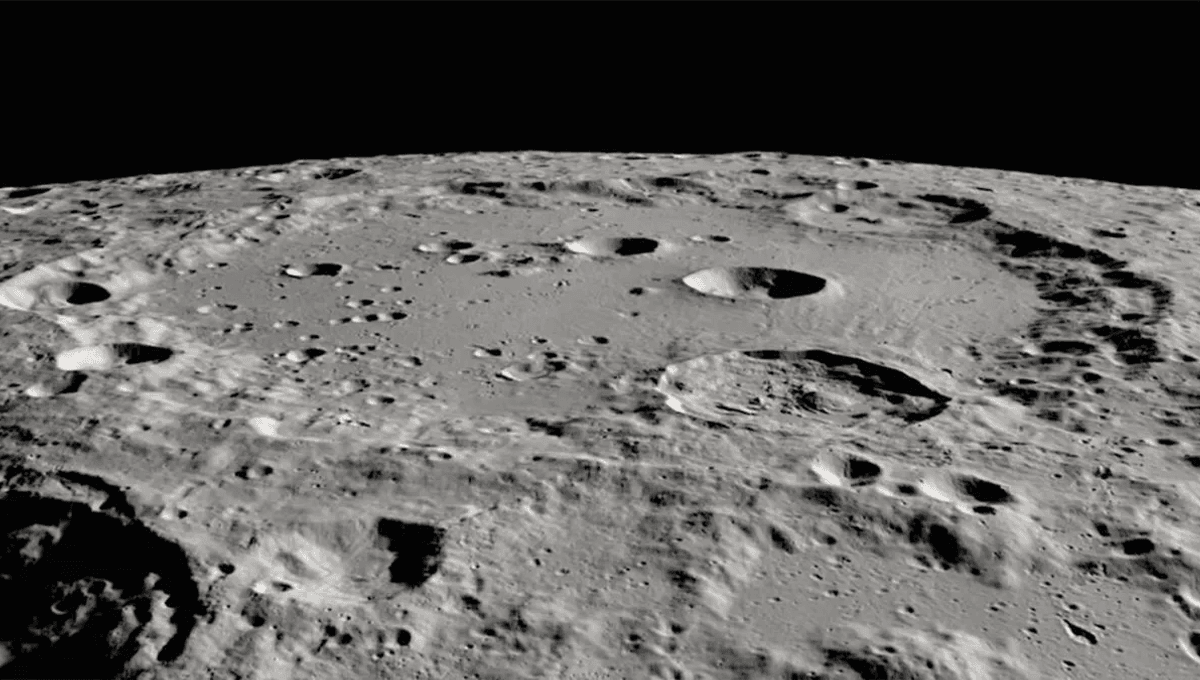
This is a problem for NASA and other space agencies, however, as humanity increases its activity on the lunar surface once again, with a goal of eventually establishing bases on the Moon. 

Currently, there is no agreed time zone on the Moon. Uncrewed missions generally use the time corresponding to the craft’s country of origin, while the crewed Apollo missions used Ground Elapsed Time (GET), counting from the moment of launch. As the Moon becomes more full (of robots, and then, fingers crossed, humans) this could pose some problems that the US hopes to overcome by establishing a Coordinated Lunar Time.

Following a directive from the White House in April, NASA is pressing ahead with plans to create the lunar time zone. They plan to determine the time using a weighted average of atomic clocks placed on the Moon, though where these clocks should be placed is still a subject of analysis at NASA. The team is also looking into what mathematical model would be best suited for establishing the coordinated lunar time.

Attempting to estimate the difference in ticks between the Moon and the Earth, recent work has found that time on the lunar surface ticks by at 0.0000575 seconds faster than on the surface of the Earth per day, though other estimates have come up with slightly different figures. For ease of calculation, it would take around 100,000 days (or about 274 years) for someone on the Moon to age 5.75 seconds more than somebody on Earth. That might not sound like a lot, but it could be a nightmare for space missions.

“For something traveling at the speed of light, 56 microseconds is enough time to travel the distance of approximately 168 football fields,” Cheryl Gramling, lead on lunar position, navigation, timing, and standards at NASA Headquarters in Washington explained in a statement. “If someone is orbiting the Moon, an observer on Earth who isn’t compensating for the effects of relativity over a day would think that the orbiting astronaut is approximately 168 football fields away from where the astronaut really is.”

Advertisement

Which, if you’re trying to co-ordinate a lift home, would be somewhat less than ideal.

Deborah Bloomfield
Deborah Bloomfield

Related posts:

  1. Cricket-Manchester test likely to be postponed after India COVID-19 case
  2. EU to attend U.S. trade meeting put in doubt by French anger
  3. Soccer-West Ham win again, Leicester and Napoli falter
  4. Was Jesus A Hallucinogenic Mushroom? One Scholar Certainly Thought So

Source Link: NASA Continues Plans To Create A Moon Time Zone For Future Lunar Explorers

Filed Under: News

Primary Sidebar

  • US Just Killed NASA’s Mars Sample Return Mission – So What Happens Now?
  • Art Sleuths May Have Recovered Traces Of Da Vinci’s DNA From One Of His Drawings
  • Countries With The Most Narcissists Identified By 45,000-Person Study, And The Results Might Surprise You
  • World’s Oldest Poison Arrows Were Used By Hunters 60,000 Years Ago
  • The Real Reason You Shouldn’t Eat (Most) Raw Cookie Dough
  • Antarctic Scientists Have Just Moved The South Pole – Literally
  • “What We Have Is A Very Good Candidate”: Has The Ancestor Of Homo Sapiens Finally Been Found In Africa?
  • Europe’s Missing Ceratopsian Dinosaurs Have Been Found And They’re Quite Diverse
  • Why Don’t Snorers Wake Themselves Up?
  • Endangered “Northern Native Cat” Captured On Camera For The First Time In 80 Years At Australian Sanctuary
  • Watch 25 Years Of A Supernova Expanding Into Space Squeezed Into This 40-Second NASA Video
  • “Diet Stacking” Trend Could Be Seriously Bad For Your Health
  • Meet The Psychedelic Earth Tiger, A Funky Addition To “10 Species To Watch” In 2026
  • The Weird Mystery Of The “Einstein Desert” In The Hunt For Rogue Planets
  • NASA Astronaut Charles Duke Left A Touching Photograph And Message On The Moon In 1972
  • How Multilingual Are You? This New Language Calculator Lets You Find Out In A Minute
  • Europa’s Seabed Might Be Too Quiet For Life: “The Energy Just Doesn’t Seem To Be There”
  • Amoebae: The Microscopic Health Threat Lurking In Our Water Supplies. Are We Taking Them Seriously?
  • The Last Dogs In Antarctica Were Kicked Out In April 1994 By An International Treaty
  • Interstellar Comet 3I/ATLAS Snapped By NASA’s Europa Mission: “We’re Still Scratching Our Heads About Some Of The Things We’re Seeing”
  • Business
  • Health
  • News
  • Science
  • Technology
  • +1 718 874 1545
  • +91 78878 22626
  • [email protected]
Office Address
Prudour Pvt. Ltd. 420 Lexington Avenue Suite 300 New York City, NY 10170.

Powered by Prudour Network

Copyrights © 2026 · Medical Market Report. All Rights Reserved.

Go to mobile version