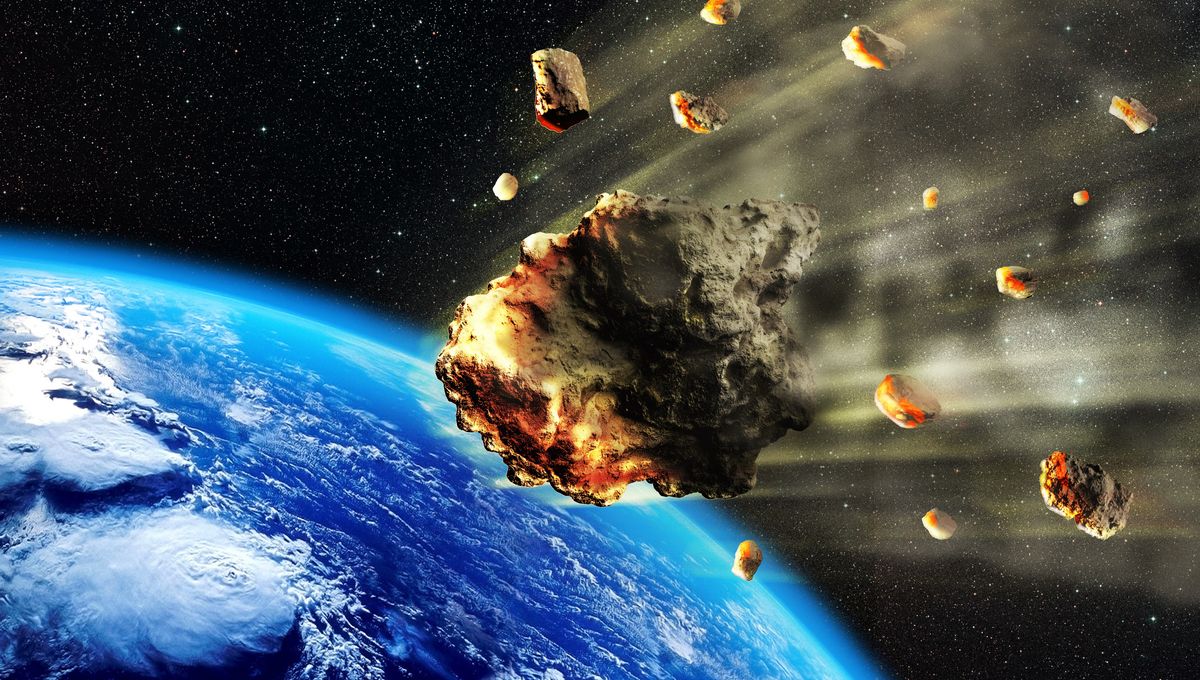
For many years, NASA, together with national and international partners, has been conducting tabletop exercises on what it would be like if an asteroid were to be on a collision course with our planet. Sometimes the Earth was saved, and sometimes it wasn’t. But there have always been lessons to learn. The latest one is no different with respect to the moral, but the setup and the lessons speak to a more complex reality we’d have to contend with.
Some of the previous simulations started with an asteroid that had a small chance of hitting our planet, and it grew over the simulated time until it spelled doom for either a small or a large area of Earth. Discussions of on-the-ground preparedness and evacuation possibilities, as well as missions to deflect and study the asteroid, were key as the threat of the asteroid loomed ever closer. New York City and Europe were lost in two of the exercises.
This year, the challenges were different. Thanks to NASA’s DART, we know we can deflect an asteroid. But NASA and its partners had to face uncertainty and bureaucracy. The exercise began with the discovery of an asteroid with a 72 percent chance of hitting the Earth in 14 years. The asteroid had never been seen before but the observations did not allow for calculation of its exact orbit, its composition, or its size. And the asteroid was about to stop being visible from Earth for seven months as it went behind the Sun.
From the initial observations, the asteroid could have been between 60 and 800 meters (197 to 2,625 feet) across. It could hit anywhere between the west coast of Mexico and Virginia or between Portugal and Saudi Arabia. If it were to hit, there would be a 45 percent chance that no people would be affected, but a 28 percent chance that at least 100,000 people would be.
“The uncertainties in these initial conditions for the exercise allowed participants to consider a particularly challenging set of circumstances,” Lindley Johnson, planetary defense officer emeritus at NASA Headquarters in Washington, said in a statement. “A large asteroid impact is potentially the only natural disaster humanity has the technology to predict years in advance and take action to prevent.”
It became clear that if this scenario were coming to pass, the political realities would limit immediate action. While stakeholders would need to gather as much knowledge about the object as possible, they believe that it would be unlikely that funding would be forthcoming. Misinformation and disinformation would have to be dealt with, and there is no clear structure or strategy of who’d be leading the effort and how.
A full report will be published in the next few months, but the summary slides paint a fascinating and concerning picture. There are many gaps in how we would realistically deal with such a scenario. Decision-making processes, timely international coordination, clear, effective, and accurate communication, and more are lacking in a realistic scenario. Even the extremely successful DART is called into question. Could we do it again? Should we also test alternatives?
The work shows just how important these exercises are. There is no known asteroid threat to Earth, but if one were to appear, we ought to be prepared. This is providing guidance to build that preparedness.
NASA is also going ahead with its new Near-Earth Object Surveyor mission, an infrared telescope whose target is exactly those dangerous dark asteroids that risk impacting our planet. This instrument will allow us to discover most of the city-killer space rocks. The current launch for it is scheduled for June 2028.

Source Link: NASA’s Latest Asteroid Impact Exercise Sees How We Could Fail To Protect The Earth
