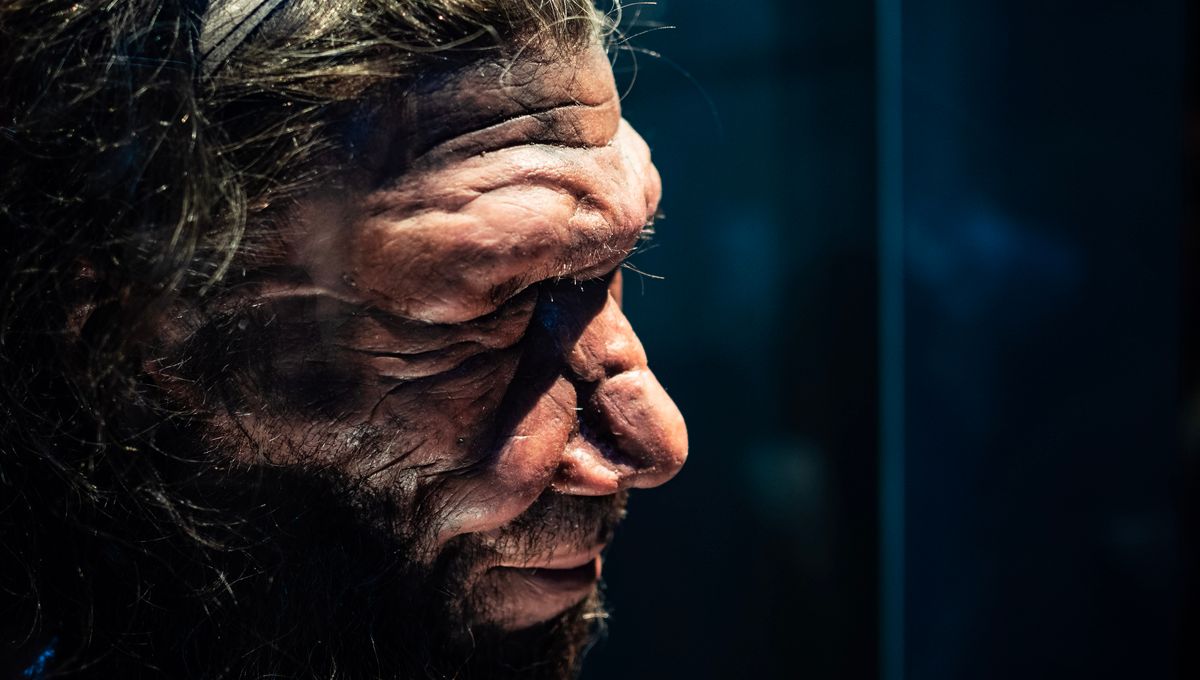
When modern humans migrated out of Africa around 75,000 years ago, they hooked up with Neanderthals and rampantly interbred with them, leaving a genetic legacy that still lives on today in most people of European descent. However, it turns out, the Neanderthal genome was already seeded with the DNA of Homo sapiens at this point in time, suggesting they had previously bred with a now-extinct lineage of early modern humans.
To reach these findings, scientists at the University of Pennsylvania compared Neanderthal genomes with a diverse collection of genomes from modern populations in sub-Saharan Africa.
Most Neanderthal-modern human interbreeding is thought to have occurred in Eurasia, so it would be unexpected to find hints of African ancestry in the mix. Nevertheless, that’s exactly what they found: numerous sub-Saharan populations contain bits of DNA that resemble Neanderthal DNA. In fact, up to 6 percent of the Neanderthal genome appears to have been inherited from modern humans.
It remains unclear how these genomes became intertwined. Perhaps some people migrated to Eurasia, bred with Neanderthals, then returned to Africa. Conversely, it’s possible that ancestors of Neanderthals bred with an early population of Homo sapiens in Africa.
“Discovering this ancient lineage of modern humans is really exciting for future research because it gives us a different lens to look at human evolution,” Daniel Harris, first study author and a postdoctoral research fellow in the Perelman School of Medicine at the University of Pennsylvania, said in a statement. “Because we don’t have DNA sequences from modern human fossils from that long ago, identifying these sequences will shed light on very early modern human evolution in Africa.”
The story of humans is one of extensive interbreeding with close ancestors. Just as there was prolific romping between Neanderthals and Homo sapiens, Denisovans bred with Neanderthals, and Homo sapiens bred with Denisovans. What a strange love triangle.
These relationships were not always advantageous though. This new study highlights how most of the modern human DNA was located in non-coding regions of the Neanderthal genome. This, the researchers say, suggests that natural selection was effectively trying to weed out the modern human genes from the Neanderthal genome, as they were detrimental to fitness.
“A Neanderthal allele might work great in Neanderthals, but you plop it into a modern human genome and it causes problems. Both modern humans and Neanderthals slowly rid themselves of the alleles of the other group,” explained Alexander Platt, a senior research scientist in the Perelman School of Medicine and another of the study’s first authors.
“In the almost 500,000 years between the ancestors of Neanderthals splitting off from the ancestors of modern humans and these other modern humans being reintroduced to Neanderthal populations, we had become such different organisms that, although we were still able to interbreed quite readily, the hybrids didn’t work so well, which means we were very far along the path to becoming distinct species,” Platt added.
The study is published in the journal Current Biology.

Source Link: Neanderthals Interbred With An Unknown Lineage Of Modern Humans Long Ago
