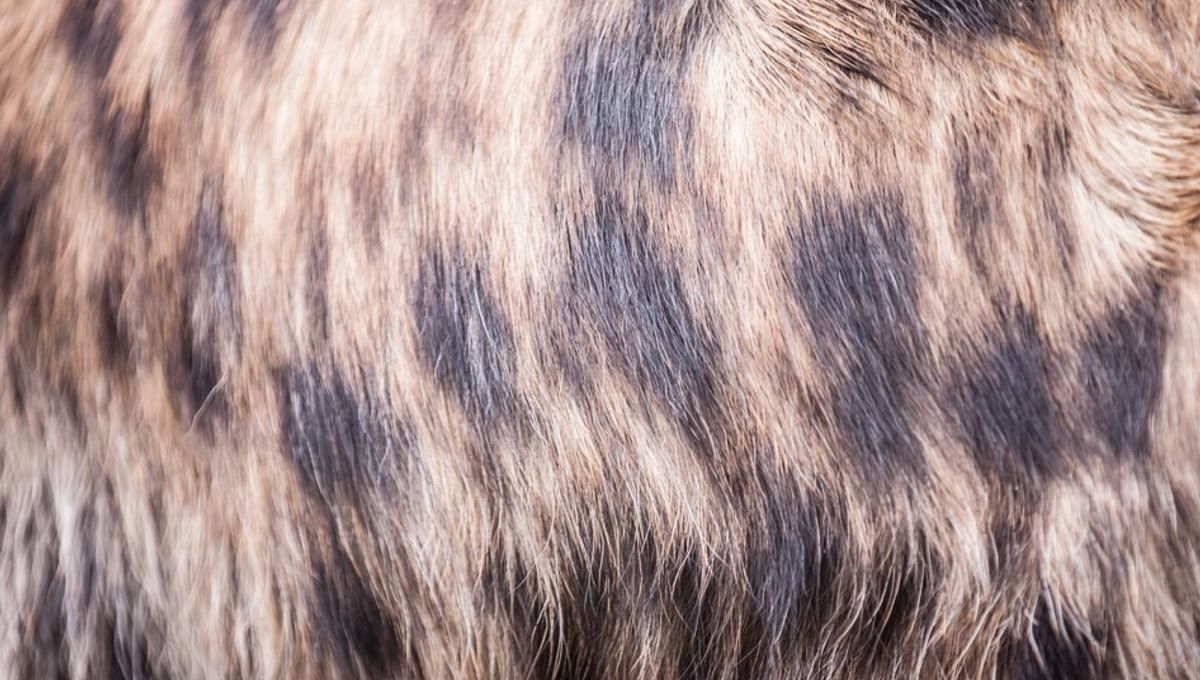
Neanderthals living near what is now Madrid may have worn hyena pelts to stay warm in the frosty Iberian mountains. Until now, it was largely assumed that the extinct hominids mostly wore the skins of herbivorous mammals such as deer or bovines, yet new findings suggest that the Neanderthal wardrobe may also have included the furs of dangerous carnivores.
Evidence for this risky prehistoric fashion comes from the Navalmaíllo Rock Shelter, which was first discovered in 2002 and has been identified as a Neanderthal hunting camp. In a layer of soil previously dated to between 66,000 and 83,000 years ago, researchers have discovered the remains of numerous plant-eating animals that show clear signs of having been butchered and skinned by the site’s archaic human occupants.
Within this assemblage, researchers also found a hyena paw bone bearing markings that might have been made by Neanderthal tools, but could equally be the result of biting or trampling by other animals. To determine how these defects were produced, the authors of a new study used an artificial intelligence (AI) algorithm capable of distinguishing between man-made bone modifications and those resulting from non-anthropogenic causes.
“All the marks have been identified as cut marks by the algorithm,” write the researchers, indicating that the bones were indeed processed by Neanderthal stone tools. More specifically, they found that “the marks of the hyena phalanx recovered at [Navalmaíllo] can be related to the skinning activity of the animal due to their position and orientation.”
Crucially, the bone itself does not appear to have been cracked open to access the marrow, suggesting that the hyena was only used for its pelt and was not eaten by the Neanderthals of Navalmaíllo. According to the study authors, hyena fur may have been sought out in response to the icy conditions at the hunting camp, which sits 1,100 meters (3,600 feet) above sea level.
“This site is located in an area where the use of fire in combination with skins as cloths or as bed covers could be key in order to survive,” write the researchers.
Until recently, the archaeological record contained scant evidence for Neanderthals using carnivorous animals for either food or clothing, although a study published last year revealed that the ancient humans hunted cave lions in Germany. There are also three other examples of hyena remains being found at Neanderthal sites, although this is the first to suggest that the animal was used exclusively for its pelt.
Hyena bones found at another Neanderthal cave in Spain, for instance, show signs of having been butchered for meat. Meanwhile, a particularly intriguing discovery in France involving modified hyena bones has been interpreted as a symbolic item, with some scholars speculating that the marks on the bones might represent a numerical notation system.
Returning to the evidence from Navalmaíllo, the study authors write that “the specific use of a carnivore pelt could also have a symbolic component in the Neanderthal universe; a feature that is currently highly debated. However, the evidence that we have so far in Navalmaíllo Rock Shelter does not allow us to assess this possibility.”
“Thus, it seems more likely that the use of the hyena pelt was mainly opportunistic.”
The study is published in the journal Quaternary Science Reviews.

Source Link: Neanderthals May Have Skinned Hyenas And Used Their Fur To Stay Cosy
