• Email Us: [email protected]
  • Contact Us: +1 718 874 1545
  • Skip to main content
  • Skip to primary sidebar

Medical Market Report

  • Home
  • All Reports
  • About Us
  • Contact Us

Near-Earth “Asteroid” Spotted By Astronomers Turns Out To Be Elon Musk’s Car

January 27, 2025 by Deborah Bloomfield

A near-Earth “asteroid” recently spotted by astronomers poring through telescope data has turned out to be Elon Musk’s car.

ADVERTISEMENT GO AD FREE

On January 2, the International Astronomical Union’s Minor Planet Center announced the discovery of a new asteroid. The object was dubbed 2018 CN41 after the year and month when the telescope observations took place. The “asteroid” has an eccentric orbit, which qualified it as a Near-Earth Object (NEO), taking it within the Moon’s orbit at a distance less than 240,000 kilometers (150,000 miles) from Earth. 

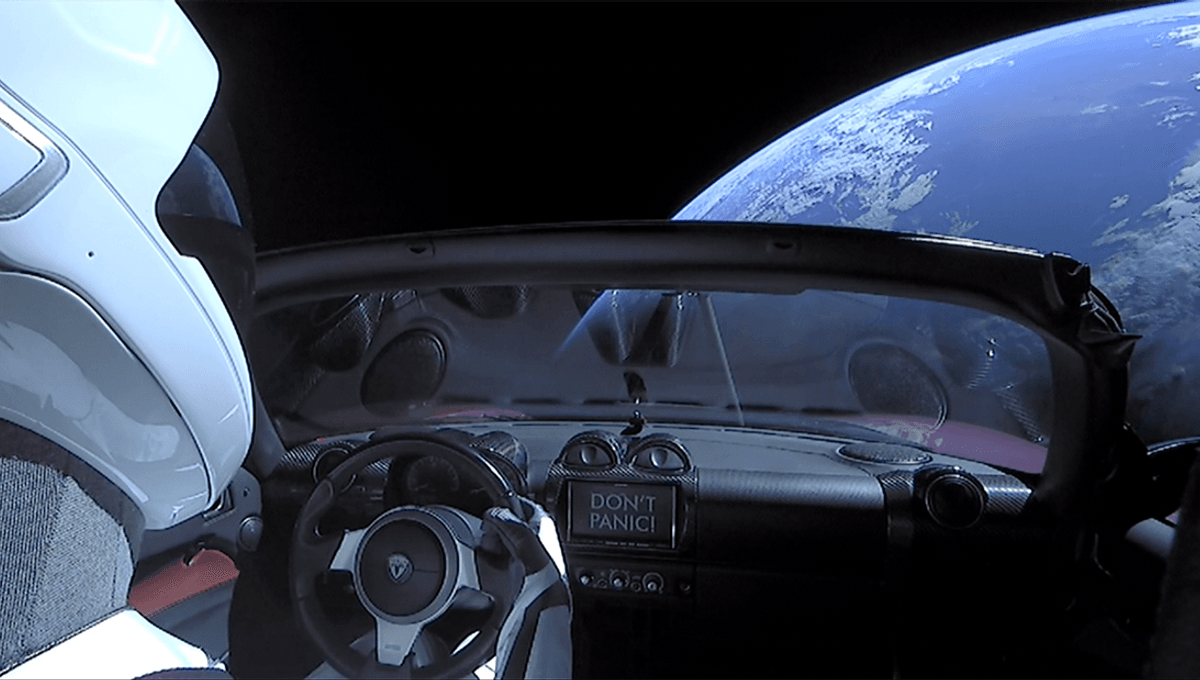
While still undisputedly an object near Earth, the Minor Planet Center issued a correction the following day after they confirmed it was in fact Elon Musk’s own Tesla Roadster, which he famously launched into space in February 2018, attached to the Falcon Heavy Upper stage booster.

“The designation 2018 CN41, announced in MPEC 2025-A38 on Jan 2, 2025 UT, is being deleted. The object was reported through the identifications pipeline as a 3-nighter linkage found in the isolated tracklet file and more tracklets were linked in the ITF, leading to a small object on a heliocentric NEO orbit,” the Minor Planet Center said in a correction.

“The next day it was pointed out the orbit matches an artificial object 2018-017A, Falcon Heavy Upper stage with the Tesla roadster. The designation 2018 CN41 is being deleted and will be listed as omitted.”

This happens from time to time, with newly spotted objects turning out to be already-known objects. In 2007, for instance, a newly spotted object turned out to be the European Space Agency’s Rosetta spacecraft.

The Tesla Roadster, which Elon Musk drove personally prior to launch, is now on an orbit that crosses the orbit of Mars and Earth.

ADVERTISEMENT GO AD FREE


Keeping an eye on the car isn’t exactly astronomers’ most pressing concern, but a few have tried to calculate the fate of the vehicle, and whether it poses a threat to Earth. In 2018, one paper did just this, finding that it has a reasonable chance of hitting Earth eventually.

Looking at the car’s orbit, and potential close encounters that could adjust its trajectory, the team calculated that the car has roughly a 22 percent probability of hitting Earth, a 12 percent chance of colliding with Venus, and about the same probability of hitting the Sun as hitting Venus. Fortunately for Musk, this will happen on a timescale of millions of years, and is unlikely to affect Tesla stock prices.

The car will make another close approach in 2047 at about 5 million kilometers (3.1 million miles). Beyond 100 years, repeat close encounters with the planets make long-term predictions of the car’s chaotic orbit “impossible”. 

Deborah Bloomfield
Deborah Bloomfield

Related posts:

  1. Cricket-Manchester test likely to be postponed after India COVID-19 case
  2. EU to attend U.S. trade meeting put in doubt by French anger
  3. Soccer-West Ham win again, Leicester and Napoli falter
  4. Lacking Company, A Dolphin In The Baltic Is Talking To Himself

Source Link: Near-Earth "Asteroid" Spotted By Astronomers Turns Out To Be Elon Musk's Car

Filed Under: News

Primary Sidebar

  • The Man Who Fell From Space: These Are The Last Words Of Cosmonaut Vladimir Komarov
  • How Long Can A Bird Can Fly Without Landing?
  • Earliest Evidence Of Making Fire Has Been Discovered, X-Rays Of 3I/ATLAS Reveal Signature Unseen In Other Interstellar Objects, And Much More This Week
  • Could This Weirdly Moving Comet Have Been The Real “Star Of Bethlehem”?
  • How Monogamous Are Humans Vs. Other Mammals? Somewhere Between Beavers And Meerkats, Apparently
  • A 4,900-Year-Old Tree Called Prometheus Was Once The World’s Oldest. Then, A Scientist Cut It Down
  • Descartes Thought The Pineal Gland Was “The Seat Of The Soul” – And Some People Still Do
  • Want To Know What The Last 2 Minutes Before Being Swallowed By A Volcanic Eruption Look Like? Now You Can
  • The Three Norths Are Moving On: A Once-In-A-Lifetime Alignment Shifts This Weekend
  • Spectacular Photo Captures Two Rare Atmospheric Phenomena At The Same Time
  • How America’s Aerospace Defense Came To Track Santa Claus For 70 Years
  • 3200 Phaethon: Parent Body Of Geminids Meteor Shower Is One Of The Strangest Objects We Know Of
  • Does Sleeping On A Problem Actually Help? Yes – It’s Science-Approved
  • Scientists Find A “Unique Group” Of Polar Bears Evolving To Survive The Modern World
  • Politics May Have Just Killed Our Chances To See A Tom Cruise Movie Actually Shot In Space
  • Why Is The Head On Beer Often White, When Beer Itself Isn’t?
  • Fabric Painted With Dye Made From Bacteria Could Protect Astronauts From Radiation On Moon
  • There Used To Be 27 Letters In The English Alphabet, Until One Mysteriously Vanished
  • Why You Need To Stop Chucking That “Liquid Gold” Down Your Kitchen Sink
  • Youngest Mammoth Fossils Ever Found Turn Out To Be Whales… 400 Kilometers From The Coast
  • Business
  • Health
  • News
  • Science
  • Technology
  • +1 718 874 1545
  • +91 78878 22626
  • [email protected]
Office Address
Prudour Pvt. Ltd. 420 Lexington Avenue Suite 300 New York City, NY 10170.

Powered by Prudour Network

Copyrights © 2025 · Medical Market Report. All Rights Reserved.

Go to mobile version