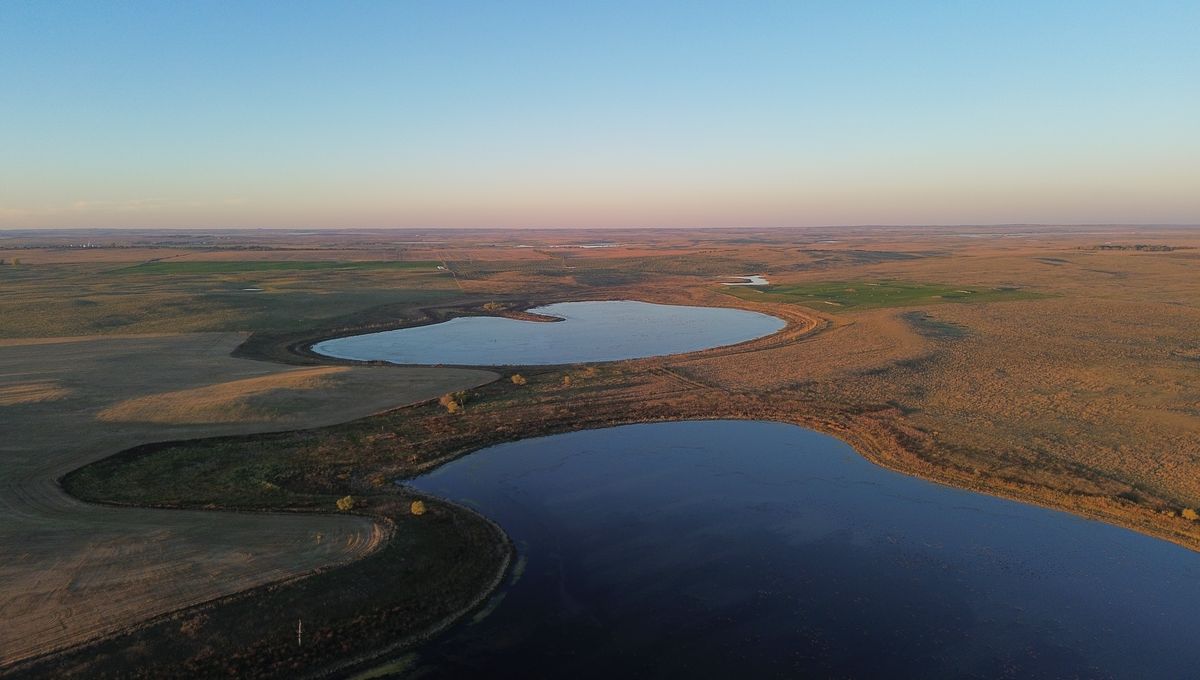
A recent Supreme Court ruling has seen calls for clarification after a study found that it could result in nearly all of the nontidal wetlands in the conterminous USA being stripped of federal protections.
The ruling in question was over Sackett v. Environmental Protection Agency, a case that concerned the scope of the 1972 Clean Water Act (CWA). This act brought wetlands within the extent of the “waters of the United States” or WOTUS, which are federally protected in order to restore or maintain their quality.
However, in May 2023, the Supreme Court ruled in the majority that the CWA only covers “wetlands that are ‘indistinguishable’ from [streams, oceans, rivers, and lakes]” such that “the wetland has a continuous surface connection with that water, making it difficult to determine where the ‘water’ ends and the ‘wetland’ begins.”
This new definition, argues Adam Gold – who manages Climate Resilient Coasts and Watersheds in North Carolina and Virginia for the Environmental Defense Fund – in a new study, is “notably narrower than all previous interpretations” and “ignores robust scientific evidence showing the ecologic importance of wetlands.”
“Additionally, the court’s use of vague and subjective language creates unclear federal jurisdiction requirements for wetlands, and this raises the unresolved question posed by Justice Kavanaugh in his concurring opinion: How wet must a wetland be to have federal protections?”
That’s what Gold sought to find out.
The researcher looked to flood frequency to measure “wetness” and found that if the definition only included geographically isolated wetlands that also aren’t excluded for being too “dry”, then around 6.9 million hectares (17 million acres), or around 19 percent, of nontidal wetland would no longer be federally protected.
At the other end of the spectrum, however, when the definition requires that a wetland must be permanently flooded to be classed as WOTUS, nearly all 36.4 million hectares (90 million acres) of nontidal wetland in the US would now be considered unprotected.
The consequences of this could be significant, “given the importance of wetland ecosystems and their myriad beneficial downstream effects,” writes Gold.
“A loss of federal protection for a wetland would leave state-level protections, which vary greatly across the country, as the main backstop to prevent wetland degradation and loss.”
With this in mind, Gold highlights the need to clarify the details of the definition set out in the Supreme Court ruling and concludes “with the hope that a greater understanding of [its] potential impacts will inform public discussion and response.”
The study is published in Science.

Source Link: Nearly 36 Million Hectares Of US Wetlands Could Be Stripped Of Federal Protections
