Non-melanoma skin cancers (NMSCs) are among the most commonly diagnosed cancers around the globe, with an estimated 2-3 million cases each year. Sadly, this number has been creeping up over the past few years and is projected to continue growing within Sun-exposed aging populations. Innovative technologies are increasingly being used to treat cancers, and one fairly new treatment – already approved in some countries – has recently had impressive 12-month outcomes from NMSC patients from around the world published.
What is NMSC?
NMSC starts in the top layer of the skin, and there are two main types: squamous cell carcinoma (SCC) and basal cell carcinoma (BCC). The difference in name refers to the location where they develop; squamous cells are found in the upper layer of the epidermis, and basal cells are found in the lower part of the epidermis.
One of the main causes of NMSC is exposure to ultraviolet (UV) light, either from the Sun or sunbeds. As such, NMSC lesions are often found in areas that are exposed to the elements, for example ears, face, neck, and shoulders.
NMSC lesions are marks on the skin that have a range of shapes and appearances. They are often slow-growing, and metastases – secondary tumors that spread from the places where they first formed – are rare. Despite this, NMSC can be painful, disfiguring, and invasive.
Current treatment options
There are several ways to treat these lesions and the choice is generally determined by location, any specific lesion risk factors, prior treatments, and the patient’s underlying health status. Currently, the gold standard for many lesions is surgery, where the physician excises the tumor. Other treatment options include cryotherapy, curettage, immunotherapy, topical and systemic retinoids, chemotherapy, and radiotherapy.
Each treatment has its own advantages and disadvantages. For example, while surgery has a great overall cure rate, and although often simple, sometimes it cannot be performed due to the tumor’s location or patient comorbidities. Surgery can also be traumatic, leaving undesirable cosmetic and functional results, or requiring significant downtime. Cryotherapy and curettage are fast and simple to perform, but efficacy varies substantially, and it may not be suitable for many types of NMSC. Current NMSC radiotherapy options have high efficacy rates of 90-95 percent, but they require multiple daily sessions, which can be tiring and impractical for the patient.
An emerging technology that is increasingly being harnessed for a range of cancers (not just NMSC) is radioisotope-based therapy. This approach involves the use of therapeutic radioisotopes (α, pure β, or β/γ emitters) to precisely and painlessly target cancer cells with a high dose of radiation, destroying them while healthy cells receive a low dose or no radiation, minimizing side effects. One innovative NMSC treatment that harnesses the therapeutic power of radioisotopes is Rhenium-SCT® (Skin Cancer Therapy).
What is Rhenium-SCT®?
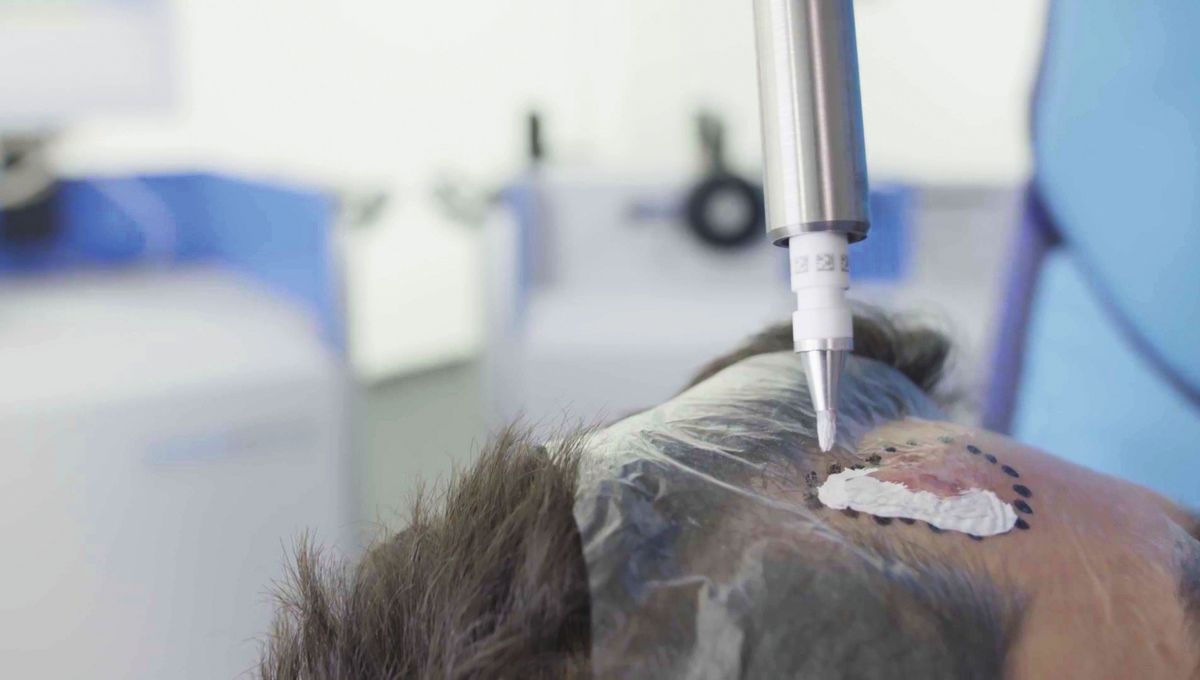
Rhenium-SCT is a single-session radiotherapy approach that has been used successfully to treat certain NMSC for a number of years. It works by using a radioisotope-based paste (in this case, rhenium-188) that can be painted onto complex shaped lesions. Rhenium-188 emits ß-radiation that only penetrates up to 3 millimeters into the skin, making it suitable for targeting shallow lesions in a single session.
During the procedure, the specialist outlines the lesion, places adhesive foil over the area, and paints radioactive paste onto the foil. The treatment time is calculated based on lesion depth and activity applied – it can last anywhere from 20 to 180 minutes. After treatment, the foil is removed, and the patient can return to normal daily activities.
Clinicians may consider this treatment over surgery in certain cases, such as when the patient may not tolerate surgery, or when lesions occur in complex anatomic areas, like the ears, nose, lips, or in areas where surgery could lead to tissue loss.
Rhenium-SCT is currently approved and offered in select clinics in Australia, Europe, New Zealand, South Africa, and the UK for treating shallow BCC and SCC lesions that don’t have perineural invasion (PNI).
The results of the EPIC-Skin study
The EPIC-Skin study is a global, multicenter investigation evaluating Rhenium-SCT for NMSC treatment. A 12-month interim analysis has now been published in a peer-reviewed journal, which adds to previous studies investigating its efficacy, safety, cosmesis, and quality of life, this time in a global cohort.
A total of 140 patients participated, with a combined number of 185 lesions. After confirming eligibility, each patient received a single treatment targeting the lesion (plus a 5-millimeter boundary).
The study reported a 97.3 percent overall response rate and a 94.1 percent complete response rate – meaning the complete disappearance of disease after treatment. The Australian cohort had a 100 percent complete response rate with longer follow-up underway.
The research team also assessed the cosmesis score (the cosmetic appearance of a body part). They asked patients and clinicians on a quantifiable scale – and both reported favorable outcomes. Patients also reported improved quality of life and patients in the study reported no pain or discomfort during the procedure.
Ongoing research continues to explore new approaches in cancer care. New technologies are being created that are giving alternative routes of treatment for patients who want them, with the EPIC-Skin study adding to the growing body of research exploring new ways to manage NMSCs. Treatments like Rhenium-SCT may not replace the gold standard of surgery currently, but they offer a glimpse into how future care could look: more targeted and less invasive.
The study is published in Advances in Radiation Oncology.
This article is an advert and includes sponsored material. Read our transparency policy for more information.
The content of this article is not intended to be a substitute for professional medical advice, diagnosis, or treatment. Always seek the advice of qualified health providers with questions you may have regarding medical conditions.

Source Link: New Non-Invasive Option For Treating Non-Melanoma Skin Cancer In A Single Session
