• Email Us: [email protected]
  • Contact Us: +1 718 874 1545
  • Skip to main content
  • Skip to primary sidebar

Medical Market Report

  • Home
  • All Reports
  • About Us
  • Contact Us

NOAA Forecast Doubles Odds Of A Big Atlantic Hurricane Season In 2023

August 11, 2023 by Deborah Bloomfield

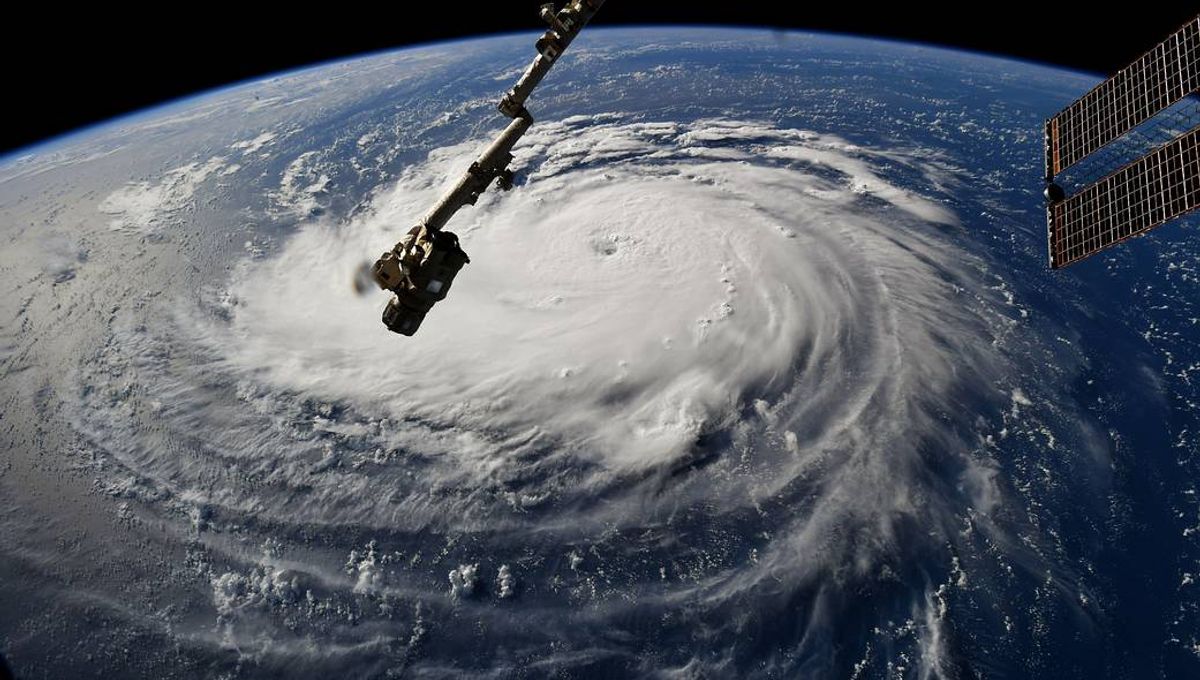
The National Oceanic and Atmospheric Administration (NOAA) has updated its forecast for the ongoing 2023 Atlantic hurricane season, ramping up its predictions from a near-normal level of activity to an above-normal level of activity.

The latest update was announced by NOAA’s Climate Prediction Center on August 10. 

Advertisement

Its previous forecast in May predicted just a 30 percent chance of an above-normal level of activity, but the latest review suggests the likelihood is now 60 percent. The chances of near-normal activity have decreased to 25 percent, down from the 40 percent in the May forecast. 

This essentially means that NOAA is expecting there be to 14 to 21 named storms, six to 11 hurricanes, and two to five major hurricanes. 

The May forecast was surprising as it was the first time in eight years that NOAA predicted a “near-normal” hurricane season. Given the obscenely warm summer we’re currently seeing in the Northern Hemisphere, the update isn’t massively surprising. 

We’re currently in the El Niño warm phase of the El Niño-Southern Oscillation (ENSO) cycle, a pattern of climate fluctuations in the Pacific Ocean that typically weakens the hurricane activity over the Atlantic. However, paired with this, we’re also seeing record-warm Atlantic sea surface temperatures, which NOAA says could “counterbalance” the impact of El Niño.

Advertisement

“The main climate factors expected to influence the 2023 Atlantic hurricane activity are the ongoing El Nino and the warm phase of the Atlantic Multi-Decadal Oscillation, including record-warm Atlantic sea surface temperatures,” Matthew Rosencrans, lead hurricane season forecaster with NOAA’s Climate Prediction Center, said in a statement. 

“Considering those factors, the updated outlook calls for more activity, so we urge everyone to prepare now for the continuing season,” explained Rosencrans. 

The North Atlantic tropical storm season usually runs from June to November, with peak activity occurring from late August through September. 

Mounting evidence is indicating that climate change is making hurricanes wetter, windier, longer, and all the more damaging. One major factor is that warming temperatures slow the movement of hurricanes across the planet, meaning they can “hover” over one place for longer, raising the risk of destruction. 

Advertisement

If the climate crisis is making hurricanes more common, which appears to be the case at the moment, then perhaps it will soon be time to reconsider what exactly is a “normal hurricane season.” 

In the meantime, let’s stay safe out there.

“NOAA urges everyone in vulnerable areas to have a well-thought-out hurricane plan and stay informed through official channels as this season progresses,” NOAA concluded in its announcement. 

Deborah Bloomfield
Deborah Bloomfield

Related posts:

  1. Israeli minister says Iran giving militias drone training near Isfahan
  2. French watchdog chief calls for ban on ‘payment for order flow’ in EU stock market
  3. What Would Happen To Humanity If All Microbes Suddenly Disappeared?
  4. IFLScience The Big Questions: How Is Climate Change Affecting Polar Bear Populations?

Source Link: NOAA Forecast Doubles Odds Of A Big Atlantic Hurricane Season In 2023

Filed Under: News

Primary Sidebar

  • This Unusual Plant Might Be One Of Evolution’s “Weirdest Experiments”
  • In 1940, A Dog Investigated A Hole In A Tree And Discovered A Vast Cave Filled With Ancient Human Artwork
  • “Time Is Not Broken”: US Officials Work To Correct Time, After Discovering It Is 4.8 Microseconds Out
  • The Evolutionary Reason Why Rage Bait Affects Us – And How To Deal With It This Holiday Season
  • Whales Living To 200 May Actually Be The Norm – There’s A Sad Reason Why We Don’t Know Yet
  • IFLScience The Big Questions: Can Magic Be Used As A Tool In Science?
  • Sheep And… Rhinos? There’s A Very Cute Reason You See Them Hanging Out Together
  • Why Does The Latest Sunrise Of The Year Not Fall On The Winter Solstice?
  • Real Or Fake Christmas Trees: Which Is Better For The Environment?
  • “Cosmic Dipole Anomaly” Suggests That Our Universe May Be “Lopsided”, Seriously Challenging Our Understanding Of The Cosmos
  • Which Animals Mate For Life?
  • Why Is Rainbow Mountain So Vibrantly Colorful?
  • “It’s An Incredible Feeling”: Salty Air Bubbles In 1.4-Billion-Year-Old Crystals Reveal Secrets Of Earth’s Early Atmosphere
  • These Were Some Of The Most Significant Scientific Experiments Of 2025
  • Want To Know What 2026 Has In Store? The Mesopotamians Have A Tip, But You’re Not Going To Like It
  • Can Woolly Bear Caterpillars Predict Winter Weather? No – But They Do Have A Clever Way To Survive The Freeze
  • Is Showering More Hygienic Than Bathing – What Does The Science Say?
  • Why Is Christmas Called Xmas?
  • Stardust Didn’t Reach The Solar System The Way We Thought, So How Did It Get Here?
  • This Might Be The First Time We’ve Ever Seen A Gravitational Wave Event Gravitationally Lensed
  • Business
  • Health
  • News
  • Science
  • Technology
  • +1 718 874 1545
  • +91 78878 22626
  • [email protected]
Office Address
Prudour Pvt. Ltd. 420 Lexington Avenue Suite 300 New York City, NY 10170.

Powered by Prudour Network

Copyrights © 2025 · Medical Market Report. All Rights Reserved.

Go to mobile version