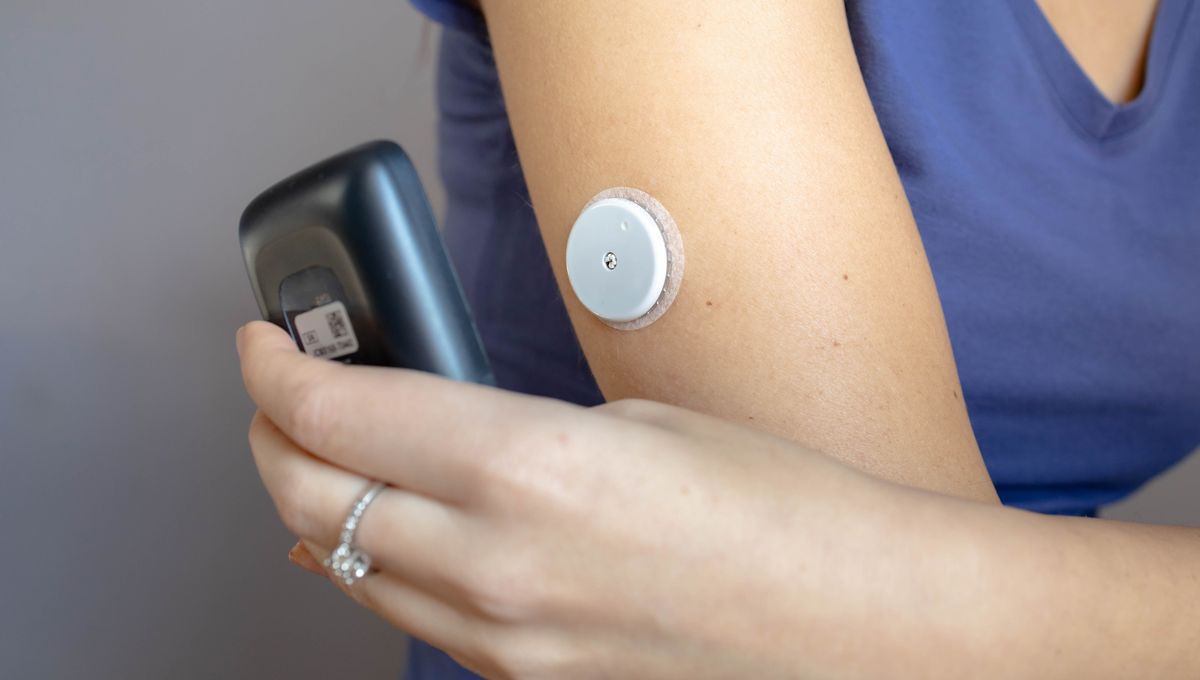
Have you ever seen people wearing a white plastic disc on their arm and wondered what they are? Well, they are biosensors, and often they are continuously monitoring a person’s glucose levels. They are used by some people with diabetes, however, some people without diabetes are using them for metabolic health reasons.
What is blood glucose and insulin?
When you eat food, it is broken down into components including the sugar glucose, which then enters the bloodstream and nudges the pancreas into action to release insulin. Insulin is a vital hormone that helps blood sugar enter cells so it can be used for energy, and it also waves a flag to the liver to tell it to store the glucose for later use.
When the glucose makes its way into our cells, it causes the levels in the bloodstream to decrease. This in turn signals that the insulin should decrease as well. When these levels decrease, then this signals the liver to release the stored glucose – so even if you haven’t had a yummy snack in a while, it allows blood sugar to stay relatively stable.
In people with diabetes, however, this system is a bit topsy-turvy, as the body either does not make any insulin anymore or the body becomes resistant to the effects of insulin. Often, people with diabetes need to monitor their blood sugar levels to ensure that they remain level or to determine if they need to take action.
What is continuous glucose monitoring?
There was once a time when the only way for those with diabetes to determine their blood sugar levels was to do a finger-prick test. Nowadays, technology has advanced so that there is also a system called continuous glucose monitoring, or CGM.
CGM is a real-time monitoring system that allows people to see if their glucose levels are too high or too low. This sensor is usually attached to an area of the body (like the tummy or arm), left on the body for days at a time, and can sense how much glucose is in the fluid under the skin. This fluid is called interstitial fluid.
The sensor is linked with a receiver, and this is often connected to a phone. Every few minutes the CGM tells the receiver the glucose levels. For some types of CGM, if you are diabetic, it can be linked up to an insulin pump which can then help maintain a stable glucose level.
These monitors can help tell people if they have high blood sugar, and if they are diabetic, if they need extra insulin, or if they have low blood sugar and need a sugary snack.
How are people “biohacking” with them?
A person’s metabolic health depends on what your body can digest and absorb without causing abnormal spikes in blood sugar, insulin, inflammation, or blood fat. These big spikes can contribute to long-term effects on your health, like blood pressure, weight, body fat, and waist circumference.
So, even when someone does not have diabetes, CGM can be used for detecting these abnormal glucose blood sugar spikes. People are using the vast amount of data that comes from these monitors to learn how different food types affect the different glycemic loads, and in turn, helping to improve nutritional and physical behavior. These monitors also have the added benefit of showing people what stress is doing to their body, or what lack of sleep may do.
People are using these monitors as not everyone responds to food the same way, so not a one-size-fits-all situation. Some people have trouble with blood sugar after eating certain foods, but for other people, they would be fine.
All “explainer” articles are confirmed by fact checkers to be correct at time of publishing. Text, images, and links may be edited, removed, or added to at a later date to keep information current.
The content of this article is not intended to be a substitute for professional medical advice, diagnosis, or treatment. Always seek the advice of qualified health providers with questions you may have regarding medical conditions.

Source Link: Non-Diabetic People Are Using Glucose Monitors To Track Metabolic Health
