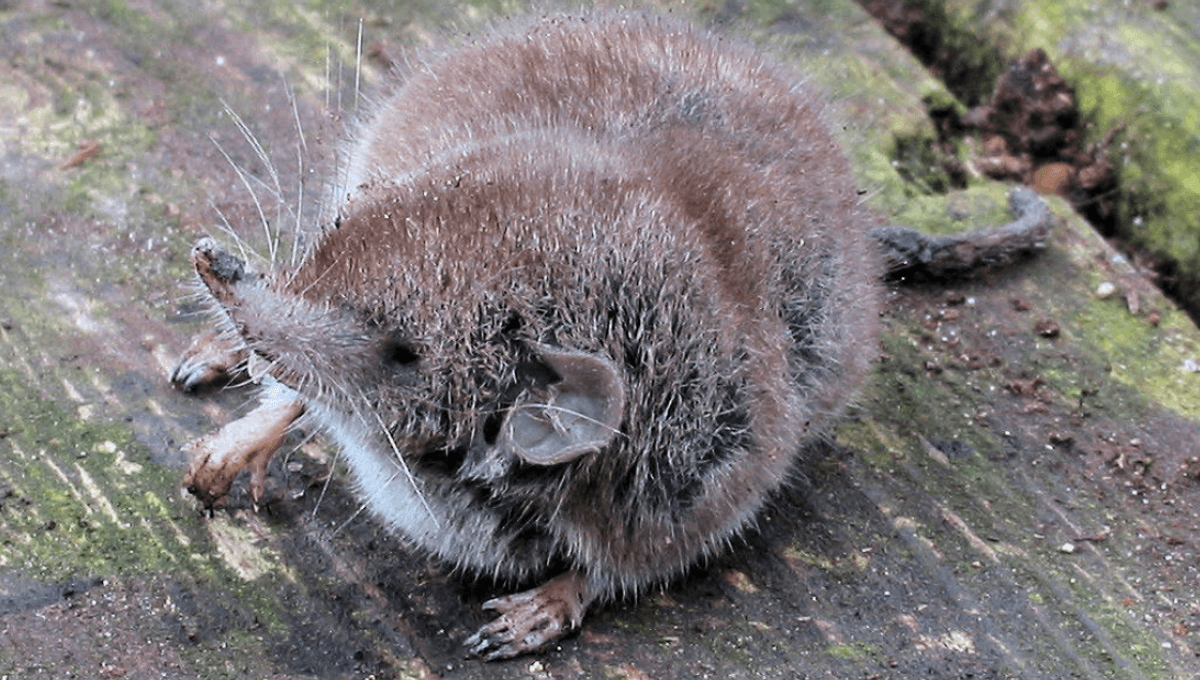
The International Union for the Conservation of Nature (IUCN) has declared that the Christmas Island shrew (Crocidura trichura) has been moved into the Extinct category. Once common across Christmas Island, it’s not been seen for 40 years.
The rest of this article is behind a paywall. Please sign in or subscribe to access the full content.
Christmas Island, Australia, is home to several unique species not found anywhere else on Earth. There are the charismatic Christmas Island crabs that make an epic annual migration to spawn, and the otherworldly Abbott’s booby. As of October 2025, however, it’s officially down one shrew.
Though it was just a small shrew, it once had a big impact on the soundscape of Christmas Island. European naturalists visiting in the 1890s noted how “this little animal is extremely common all over the island, and at night its shrill squeak, like the cry of a bat, can be heard on all sides.” But then the arrival of another mammal changed everything.
The Christmas Island shrew is thought to be at least the third mammal species to go extinct on the island as a direct result of the introduction of invasive black rats by humans around 100 years ago. It joins the native bulldog and Maclear’s rats, which may have been affected by parasites called trypanosomes carried by black rats.
The introduction of the Asian wolf snake in the 1980s may have added extra pressure, and is thought to be responsible for the loss of the Christmas Island pipistrelle and several native reptiles.
The loss of the Christmas Island shrew adds to a worrying trend in Australia, having lost 39 species since 1788, representing around 10 percent of all its land mammal species. It’s hard to know when a species is truly lost, especially when dealing with small, elusive creatures, but such updates are an important reminder that we have to act now to prevent further extinctions while we wait for evidence to the contrary.
“The shrew’s loss is a reminder of the enormity of the challenge of preventing further extinctions, of the diverse ways these losses can happen, of the need to seize opportunities to protect rare species, and of the importance of a national and political commitment to prevent extinction,” writes Professor of Conservation Biology at Charles Darwin University John Woinarski for The Conversation.
“I hope the Christmas Island shrew is not extinct; after all it has defied previous calls of its demise. Perhaps somewhere, a small furtive family of shrews are hanging on, elusive survivors, secure in the knowledge of their own existence and waiting to prove the pessimists wrong.”
The IUCN Red List update named five other species also being moved to the Extinct category, including the slender-billed curlew (Numenius tenuirostris), a migratory shorebird last recorded in Morocco in 1995. Will we ever see them again? Well, it depends on your definition of de-extinction.

Source Link: Officially Gone: After 40 Years MIA, Australia’s Only Shrew Has Been Declared "Extinct"
