• Email Us: [email protected]
  • Contact Us: +1 718 874 1545
  • Skip to main content
  • Skip to primary sidebar

Medical Market Report

  • Home
  • All Reports
  • About Us
  • Contact Us

Oldest Known Intact Polyene Pigments Found In 12-Million-Year-Old Snail Shells

April 9, 2024 by Deborah Bloomfield

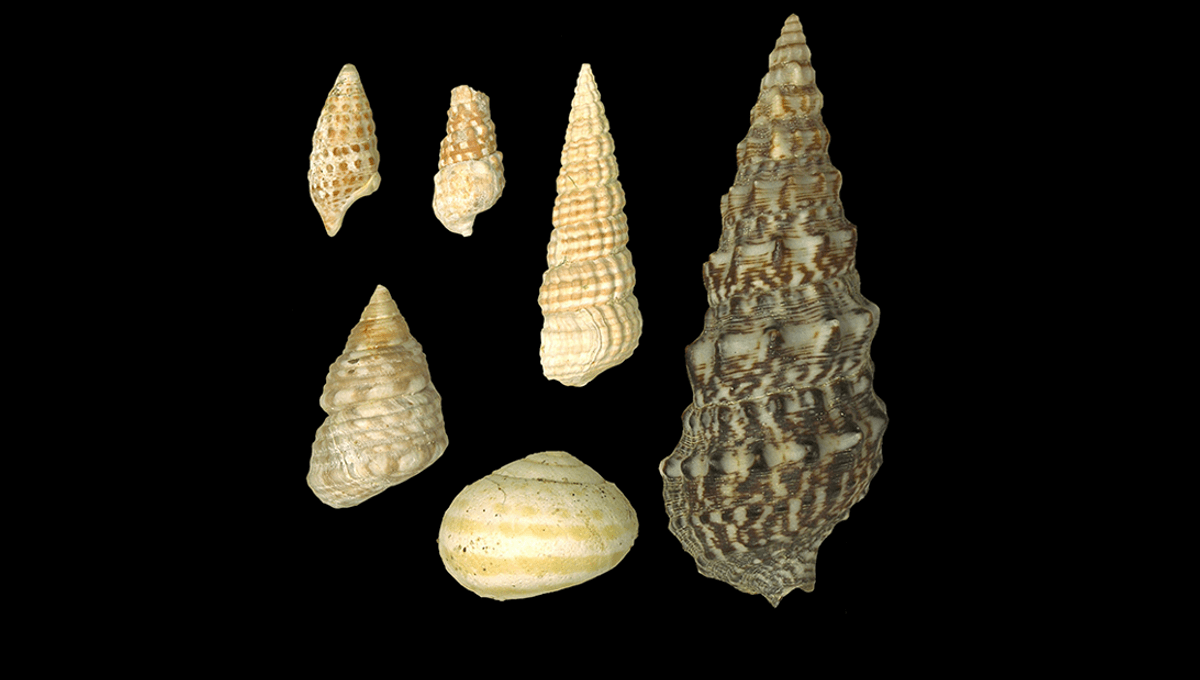
Colors in the natural world can come in just about every possible shade, from the bright blues of a peacock’s tail feathers to the glow of an animal under ultraviolet light. Now researchers have found some of the earliest traces of the pigments that help produce the pretty colors in snail shells and they are around 12 million years old.

The snail shells – which belong to the family Cerithioidea – were found on the border between Austria and Hungary and date back to the Middle Miocene, when the area was at the edge of a tropical sea. While the shells did exhibit some red coloration, the team wasn’t sure what had caused it.

Advertisement

“It was unclear whether the patterns of reddish color were from the original shell or were formed by later processes in the sediment,” explained Professor Mathias Harzhauser at the Natural History Museum Vienna, who was involved in the discovery, in a statement.

Polyene pigments are found in abundance across the animal world and are involved in most red, yellow, and orange colors. However, they are particularly vulnerable to oxidation and because of this, do not preserve well in the fossil record. 

The team decided to test whether these fossil shells contained such polyene pigments, particularly in four species, including Pithocerithium rubiginosum, several specimens of which have distinct red coloration.

To find out more about the pigments present in the shells, the team used a technique known as Raman spectroscopy, which involves irradiating samples from the shells with laser light. The light can then be used to identify chemical compounds. 

Advertisement

The analysis revealed the presence of intact polyene pigments, which represents the first time this has been found in the fossil record.

“Normally, after such a long period of time, the best we can hope for is that there are traces of degradation products of these chemicals. If degraded, however, these compounds would be devoid of color. So, it was really surprising to discover these pigments, preserved almost intact, in fossils that are twelve million years old,” said study lead Dr Klaus Wolkenstein.

The team highlighted that this technique is especially non-destructive to the samples and might be useful for further screening to look for these pigments in other fossil specimens. 

The study is published in Palaeontology.

Deborah Bloomfield
Deborah Bloomfield

Related posts:

  1. HPE signs multi-billion dollar NSA computing deal
  2. U.S. chipmaker Micron forecasts first-quarter revenue below estimates
  3. Epic Fossilized Fight Proves Sometimes It Was Mammals Hunting Dinosaurs
  4. The 2024 Total Eclipse Will Likely Coincide With The Solar Maximum

Source Link: Oldest Known Intact Polyene Pigments Found In 12-Million-Year-Old Snail Shells

Filed Under: News

Primary Sidebar

  • How Many Senses Do Humans Have? It Could Be As Many As 33
  • 6 Astronomical Events To Look Forward To If You Live Long Enough
  • Atmospheric Rivers Have Shifted Toward Earth’s Poles Over The Past 40 Years, Bringing Big Weather Changes
  • Is It Time To Introduce “Category 6” Hurricanes?
  • At The Peak Of The Ice Age, Humans Built Survival Shelters Out Of Mammoth Bones
  • The World’s Longest Continuously Erupting Volcano Has Been Spewing Lava For At Least 2,000 Years
  • Rare Flat-Headed Cat Rediscovered In Thailand Following First Confirmed Sighting In Almost 30 Years
  • Don’t Pour Oil Down The Drain, There’s A Very Clever Way To Get Rid Of It
  • People Around The World Are Drinking Less Alcohol
  • Is It Better To Have One Long Walk Or Many Short Ones?
  • Where Is The World’s Largest Christmas Tree?
  • In A Monumental Scientific Effort, The Human Genome Has Been Mapped Across Time And Space In Four Dimensions
  • Can This Electronic Nose “Smell” Indoor Mould?
  • Why Does The Earth’s Closest Approach To The Sun Take Place During Winter?
  • 2025 Was The Year Humanity Got Closer Than Ever To Finding Alien Life
  • Kilauea Has Officially Been Erupting For A Year – You Can Watch Its Latest Spectacular Lava Fountains Live
  • Meet The Ladybird Spider, A “Red-Colored Oddball” With Features Never Seen Before
  • Breakthrough Listen Searched Interstellar Object 3I/ATLAS For Technosignatures During Its Closest Approach To Earth
  • “Miracle” Rhinoceros Calf’s Chonky Weight Gain Offers Hope For Species
  • Would You Swap Your Festive Feast For Something Plant-Based Or Lab-Grown?
  • Business
  • Health
  • News
  • Science
  • Technology
  • +1 718 874 1545
  • +91 78878 22626
  • [email protected]
Office Address
Prudour Pvt. Ltd. 420 Lexington Avenue Suite 300 New York City, NY 10170.

Powered by Prudour Network

Copyrights © 2025 · Medical Market Report. All Rights Reserved.

Go to mobile version