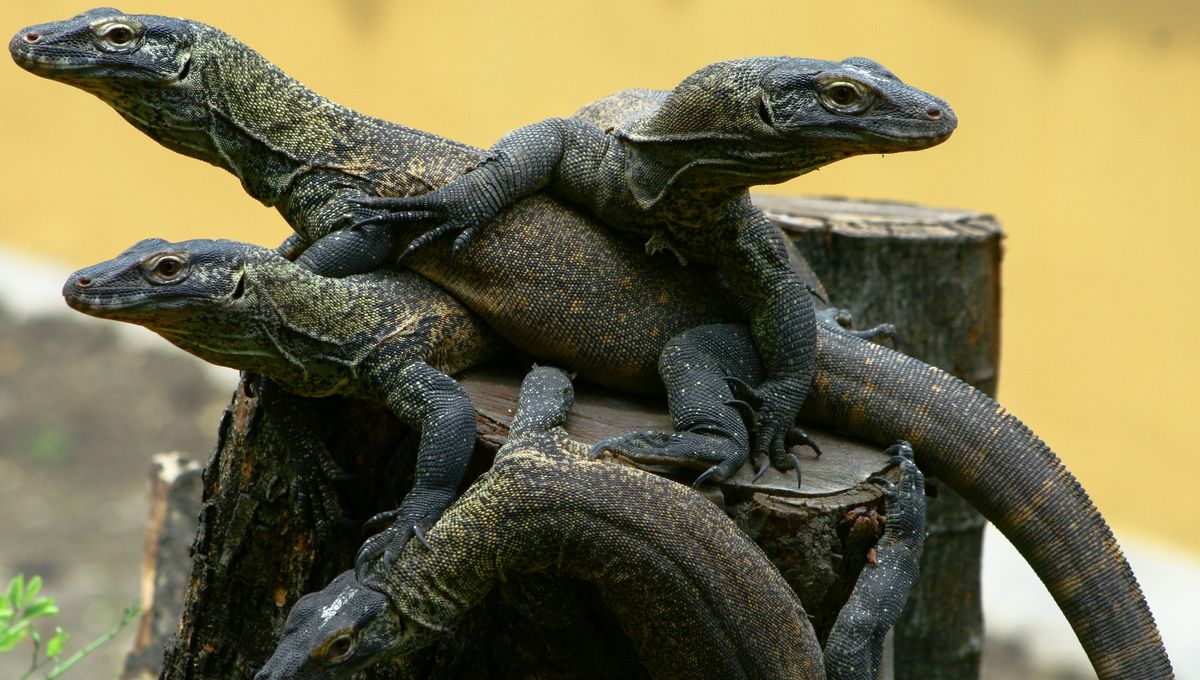
In school, you were probably taught that to make a baby you need an egg cell and a sperm cell – and if we’re talking about human reproduction then you would be correct. However, in the wider animal kingdom, this isn’t necessarily the case. Plenty of animals reproduce asexually, and a select few experience what’s known as parthenogenesis, aka “virgin” births.
What is parthenogenesis?
The word parthenogenesis literally means “virgin creation” in Greek. It is a form of asexual reproduction whereby an embryo develops without the need for an egg’s fertilization. Because of this, the body must compensate for the missing genes not provided by the absent sperm.
To kick things off, females must produce an egg that starts to develop into an embryo without any outside input. This can happen in a couple of ways. First, in a version of parthenogenesis called automixis, the egg can merge with cells called polar bodies, which are leftovers from the egg production process. This generates offspring that are similar to the mother but not exact clones. They are generally all female.
Alternatively, parthenogenesis in plants can occur by apomixis, which involves reproductive cells duplicating their chromosomes via mitosis. In this case, offspring are genetically identical to their parent.
What triggers parthenogenesis in the first place is not fully understood, but it’s thought to be linked to environmental stresses in some cases.
How rare is parthenogenesis?
It may surprise you, but virgin births in the animal kingdom are not all that rare. For small invertebrates, such as bees and tardigrades, parthenogenesis is actually relatively common. And, while it’s definitely not the norm among vertebrates, it’s not as rare as you might think either. In fact, it’s been observed in over 80 taxa.
The phenomenon is also known to occur in plants and algae.
What types of animals reproduce by parthenogenesis?
Various insects, fish, reptiles, and even birds have been found to undergo parthenogenesis.
Females of some species, including some lizards and snakes, exclusively reproduce through asexual means. These are known as obligate parthenogens.
Then there are species that experience spontaneous parthenogenesis, generally reproducing sexually but occasionally throwing out a curveball and giving asexual reproduction a try. This is best documented in animals in captivity.
Most recently, a female stingray in a North Carolina aquarium became pregnant with no male stingray involvement. Despite claims of a “shark-ray hybrid”, this is most likely a case of spontaneous parthenogenesis. Similar examples have been observed in zoo crocodiles and various species of aquarium sharks, among other animals.
Parthenogenesis has even been induced artificially in some species that would otherwise reproduce sexually – fruit flies, for example. Parthenogenic mice have also been made in the lab.
However, without this helping hand, mammals are incapable of parthenogenesis.
Parthenogenesis in humans
It will come as little surprise then that humans are not able to reproduce by parthenogenesis. As with all mammals, an important genetic process called imprinting throws a spanner in the works.
Imprinting involves specific markers, sort of like a molecular stamp, which are inherited from our parents and can affect how certain genes are expressed. Some genes may be switched on, and others off, by this process. If we were to only have one parent, as is the case during parthenogenesis, some essential genes wouldn’t get activated at all, rendering offspring unviable.
That said, occasionally, spontaneous parthenogenetic development of an oocyte can occur, which is thought may result in the formation of a teratoma in the ovary – but definitely not a little parthenogenetic prince or princess.
All “explainer” articles are confirmed by fact checkers to be correct at time of publishing. Text, images, and links may be edited, removed, or added to at a later date to keep information current.

Source Link: Parthenogenesis: What Is A "Virgin" Birth?
