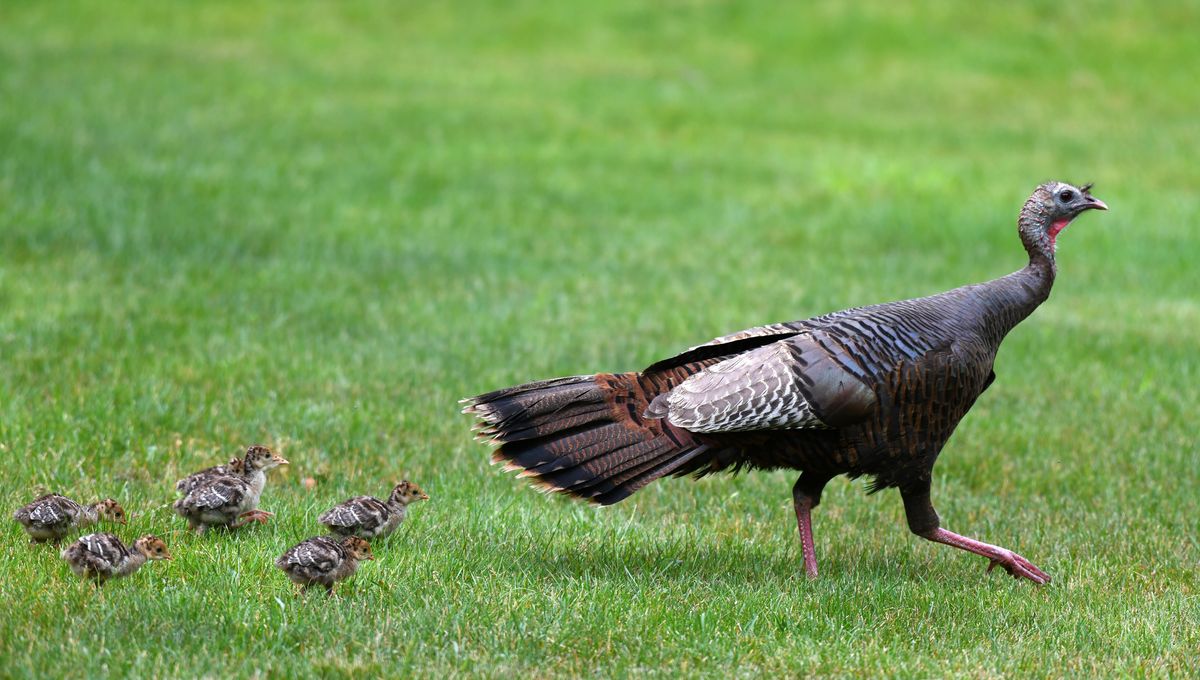
While many of us might associate turkeys with Thanksgiving or Christmas meals, they are actually remarkable birds capable of high-speed runs, possessing over 5,000 feathers, and a whole repertoire of noises beyond gobbling. But do you know what a baby turkey is called?
The rest of this article is behind a paywall. Please sign in or subscribe to access the full content.
Adult male turkeys – which are much bigger than females, standing 1.2 meters (4 feet) tall and weighing up to 11 kilograms (24 pounds) – are called toms, and the females are known as hens. In the wild, nesting season for these birds starts in the late spring, and the females build their nests at ground level. Typically, around 10 to 12 eggs are laid, which will take around one month to hatch.
Once those eggs hatch, for the next four weeks of a young domestic turkey’s life, they are known as a poult. The term “poult” seems to be more commonly used for domesticated birds, while “chick” is used interchangeably between wild and domesticated turkeys.
These are young birds that still rely on their mother for protection and can’t yet fly. Once they reach about 5 weeks old, they are able to seek protection in trees. Poults typically eat insects, but as they get older, their diet expands to seeds, grasses, berries, acorns, and even frogs and lizards.
There are more names for the adults too; juvenile males become jakes before they are known as toms, and young females can be known as jennys. A group of turkeys is called a flock, though some suggest the collective noun “rafter”.
Given the consumption of turkey meat during key events across the US and the wider world, it might seem strange that we don’t often eat turkey eggs. The reason for this is simply that it is not financially worth it to farmers.
Chickens require less space, food, and mature faster and are able to produce eggs at a faster rate. Turkey eggs, while reportedly said to taste similar, can only be laid after 24-32 hours, and turkeys take several months to reach the age of sexual maturity. Add to this the additional space and feed needs of a large female turkey, and you start to understand the cost breakdown. Turkey eggs are at least pretty normal-tasting though, compared to the “somewhat fishy” flavors of a penguin egg.
The wild turkey (Meleagris gallopavo) is something of a comeback success story, having increased in numbers by a significant amount in North America. There were once thought to be just 30,000 turkeys left in the wild, but now they number around 6.5 million in the United States alone.
If you already knew about poults, take it one step further and find out what a baby anteater is called.

Source Link: People Are Just Learning What A Baby Turkey Is Called
