• Email Us: [email protected]
  • Contact Us: +1 718 874 1545
  • Skip to main content
  • Skip to primary sidebar

Medical Market Report

  • Home
  • All Reports
  • About Us
  • Contact Us

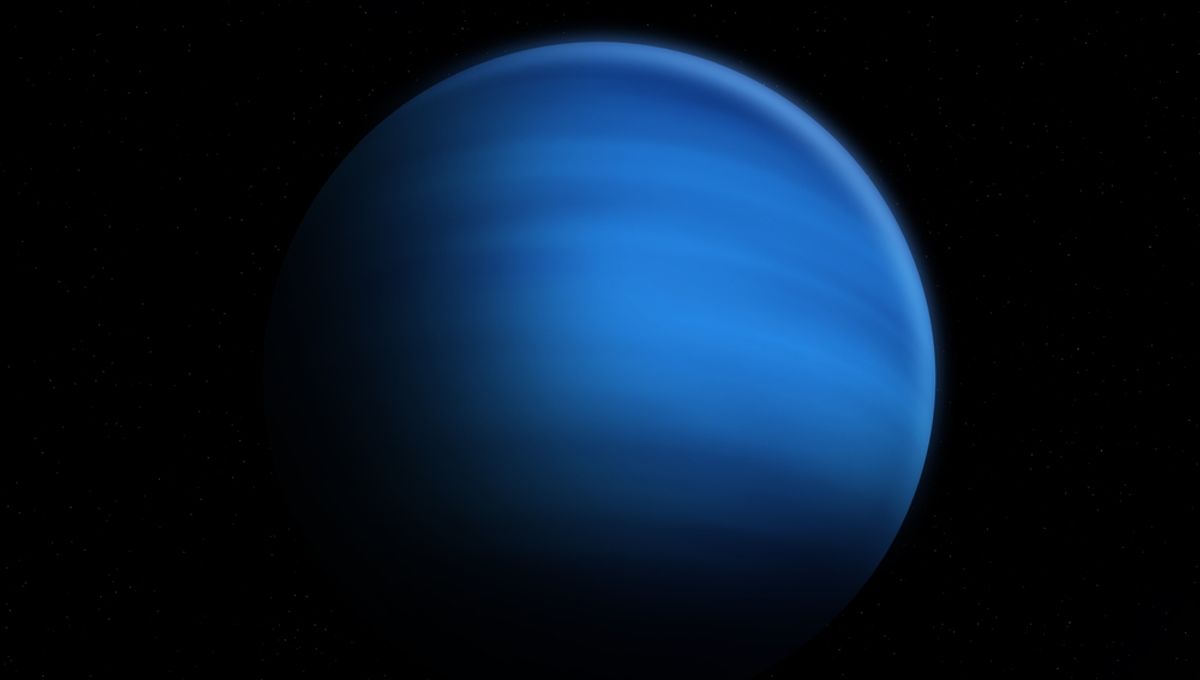
People Are Surprised To Learn That The Closest Planet To Neptune Turns Out To Be Mercury

December 6, 2025 by Deborah Bloomfield

If you are anything like us you probably memorized the order of the planets in the Solar System back in school, and the older among you may still feel compelled to include Pluto even though it was downgraded a whole 19 years ago.

The rest of this article is behind a paywall. Please sign in or subscribe to access the full content.

So, which is the closest planet to Earth? Well if you said Venus – according to one way of measuring the distance – you are incorrect. If you said Mars, you are even more incorrect, with the correct answer being Mercury.

While Mercury is the innermost planet in the Solar System, on average it spends more time closer to Earth than Venus does.

“As it turns out, by some phenomenon of carelessness, ambiguity, or groupthink, science popularizers have disseminated information based on a flawed assumption about the average distance between planets,” a team wrote in a 2019 commentary on the topic. “Using a mathematical method that we devised, we determine that when averaged over time, Earth’s nearest neighbor is in fact Mercury.”

The team ran a simulation calculating the position of the eight planets over the course of 10,000 years, which tracked the distance between each pair of planets.

In fact, the team worked out that Mercury was, on average, the closest planet to all other planets in the Solar System.

“We noticed that the distance between two orbiting bodies is at a minimum when the inner orbit is at a minimum,” the authors explained. “That observation results in what we call the whirly-dirly corollary (named after an episode of the cartoon Rick and Morty): For two bodies with roughly coplanar, concentric, circular orbits, the average distance between the two bodies decreases as the radius of the inner orbit decreases.”

“In fact,” they added, “Mercury is even the closest planet to Neptune.”

The commentary was published in Physics Today.

An earlier version of this article was published in 2023.

Deborah Bloomfield
Deborah Bloomfield

Related posts:

  1. Slower growth, high inflation make awkward reading for Bank of England
  2. Austria’s Kurz says stepping down as chancellor
  3. People Are Sharing The Most Random Facts They Know, And They’re Brilliant
  4. Large, Bright, And Gold: Get Ready For The Biggest Supermoon Of The Year

Source Link: People Are Surprised To Learn That The Closest Planet To Neptune Turns Out To Be Mercury

Filed Under: News

Primary Sidebar

  • Inhaling “Laughing Gas” Could Treat Severe Depression, Live Seven-Arm Octopus Spotted In The Deep Sea, And Much More This Week
  • People Are Surprised To Learn That The Closest Planet To Neptune Turns Out To Be Mercury
  • The Age-Old “Grandmother Rule” Of Washing Is Backed By Science
  • How Hero Of Alexandria Used Ancient Science To Make “Magical Acts Of The Gods” 2,000 Years Ago
  • This 120-Million-Year-Old Bird Choked To Death On Over 800 Stones. Why? Nobody Knows
  • Radiation Fog: A 643-Kilometer Belt Of Mist Lingers Over California’s Central Valley
  • New Images Of Comet 3I/ATLAS From 4 Different Missions Reveal A Peculiar Little World
  • Neanderthals Used Reindeer Bones To Skin Animals And Make Leather Clothes
  • Why Do Power Lines Have Those Big Colorful Balls On Them?
  • Rare Peek Inside An Egg Sac Reveals An Adorable Developing Leopard Shark
  • What Is A Superhabitable Planet And Have We Found Any?
  • The Moon Will Travel Across The Sky With A Friend On Sunday. Here’s What To Know
  • How Fast Does Sound Travel Across The Worlds Of The Solar System?
  • A Wonky-Necked Giraffe In California Lived To 21 Against The Odds
  • Seal Finger: What Is This Horrible Infection That Makes Your Hand Swell Like A Balloon?
  • “They Usually Aren’t Second Tier”: When Wolves Adopt Pups From Rival Packs
  • The Road To New Physics Beyond Our Knowledge Might Pass Through Neutrinos
  • Flu Season Is Revving Up – What Are The Symptoms To Look Out For?
  • Asteroid Bennu Was Missing Just One Ingredient Needed To Kickstart Life – We just Found It
  • Rare Core Samples Provide “Once In A Lifetime” Opportunity To Study The Giant Line That Slices Through Scotland
  • Business
  • Health
  • News
  • Science
  • Technology
  • +1 718 874 1545
  • +91 78878 22626
  • [email protected]
Office Address
Prudour Pvt. Ltd. 420 Lexington Avenue Suite 300 New York City, NY 10170.

Powered by Prudour Network

Copyrights © 2025 · Medical Market Report. All Rights Reserved.

Go to mobile version