Around 2012, a 32-year-old man presented to medical professionals with an unusual habit: he had taken to eating glass. This may sound like something a stage magician would do to shock their audience, but there was no performance here. For the previous 10 years, the man, who had no prior history of psychiatric conditions, increasingly found himself craving glass.
He told psychiatrists that he would constantly keep pieces of the substance in his mouth during the day and eventually chew and swallow them. Once this was done, he would become restless and irritable until he could put another piece in his mouth again, forcing him to consistently seek out new sources to satisfy his cravings.
After psychiatric assessment, medical staff conducted radiological imaging and MRI scans of the man’s brain and found lesions that may have accounted for his odd behavior.
The case of the glass-eating man is unusual, but not unheard of. It is an example of a condition known as pica, whereby someone eats non-food substances that have no nutritional value.
The term is derived from Pica pica, the Latin name for the brown-billed magpie, which was believed to gather and eat various objects that caught its interest.
There’s almost no limit to the types of non-food items people with pica may consume. It could be things like soil, clay, or paint, or other substances including shampoo, paper, chalk, soap, uncooked rice, sponges, foams, grass, leaves, pencils, buttons, coins, stones, cigarette ends, clothing, nails, or – as we’ve seen – glass.
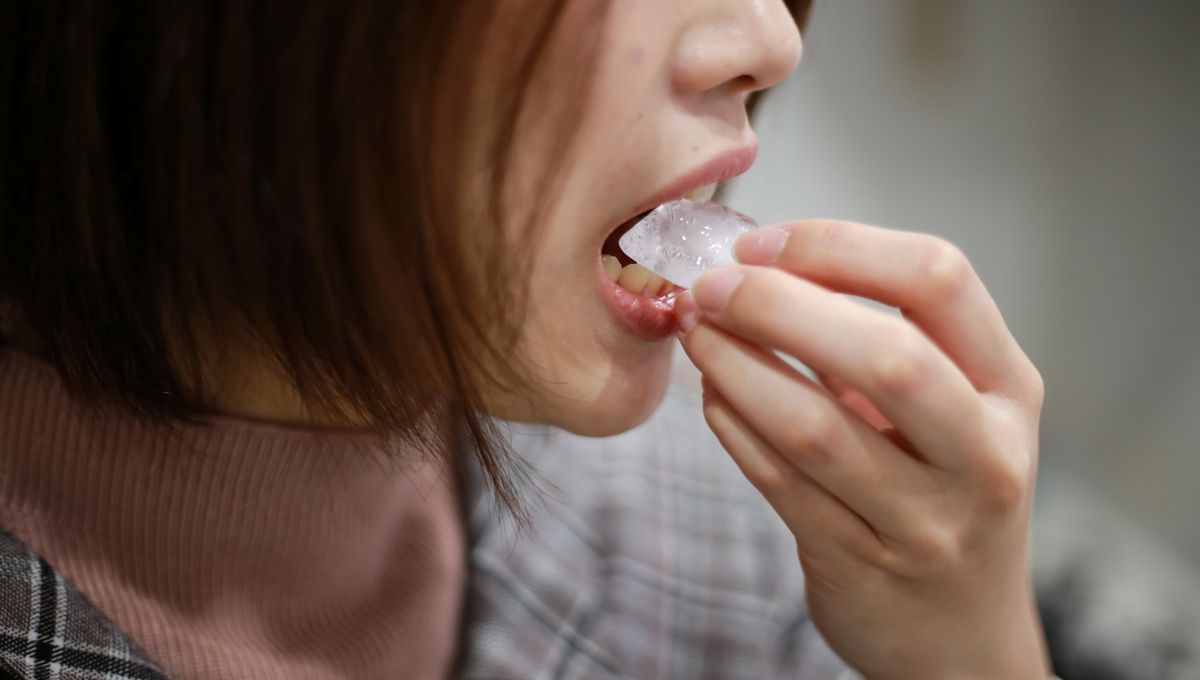
In many cases, there are specific names for the types of objects people eat. For instance, soil-eating is referred to as “geophagy”; eating a large amount of ice consistently for several months is known as “pagophagia”; and eating the heads of burnt matches is called “cautopyreiophagia”. If someone eats more than one unusual substance, this can be referred to as “polypica”.
The idea of eating strange things may be something we associate with small children or toddlers who put things in their mouths, but that behavior is deemed to be part of a natural developmental process.
Pica, in contrast, is a compulsive and persistent craving for objects or substances that lasts much longer (beyond at least one month) and is not consistent with a person’s natural development or cultural practice – some cultures, primarily in the Global South, have clay-eating traditions that are largely practiced for short periods of time by young girls or during pregnancy.
These clays have a high and varied mineral content, which may help address certain deficiencies. However, the practice also carries a risk of soil-transmitted infections. A 2025 paper reported on a study conducted in Ethiopia, which found that geophagy during pregnancy was associated with parasitic infections.
How prevalent is pica?
While pica is most prevalent among children aged between 18 months and 6 years, it has been documented in people of all age groups, and is not limited to any race, gender, or geographic region.
It is not known exactly how many people experience this condition across the world, and there’s probably a good reason for this: although pica has been recorded in medical traditions since antiquity, its manifestation in a person who otherwise lacks any clear signs of underlying mental health issues can be a source of embarrassment. At the same time, other cultural or social influences can make people reluctant to report their behavior.
Despite this, existing research has found some patterns. In 2018, a Swiss study of 1,430 children showed that around 10 percent reported pica behavior on a questionnaire, while a 2016 meta-analysis revealed that nearly 28 percent of pregnant people had reported experiencing the condition.
Pica may also be associated with intellectual disabilities in some cases.
What causes pica?
Given the complex nature of this condition, it will probably come as no surprise that there is no one cause.
In children, studies have linked pica to various social and economic factors, as well as psychological ones. Growing up in poverty, stress, child neglect and abuse, and even maternal deprivation can trigger pica behavior in children.
Iron deficiency has also been identified as a potential cause in both children and adults, with the UK National Health Service’s advice page for iron deficiency anemia listing “wanting to eat non-food items, such as paper or ice” as examples of a less common symptom.
At the same time, as with the case of the man who ate glass, certain neurological pathologies can also produce pica behaviors.
Depending on the substance being consumed, pica can range from being largely harmless (in the short term at least) to potentially life-threatening. The condition can lead to intestinal blockages or perforations due to the buildup of undigestible substances or objects, or even poisoning from consuming toxic substances – such as lead-based paint or paint chips.
As well as the risk of infection mentioned above in relation to geophagy, malnutrition is also a possible outcome of prolonged pica.
There is no single treatment for pica, given its diverse causes. However, treatment will usually involve removing the desired object or substance from the patient’s environment while also finding ways to address the underlying psychological, physiological, or neurological factors.
Pica may strike us as a strange behavior, but it is clearly one that is far more common than many of us may assume. It therefore deserves further study while those experiencing it are encouraged to seek medical help without shame.
The content of this article is not intended to be a substitute for professional medical advice, diagnosis, or treatment. Always seek the advice of qualified health providers with questions you may have regarding medical conditions.

Source Link: Pica: The Disorder That Makes People Crave And Eat The Inedible
