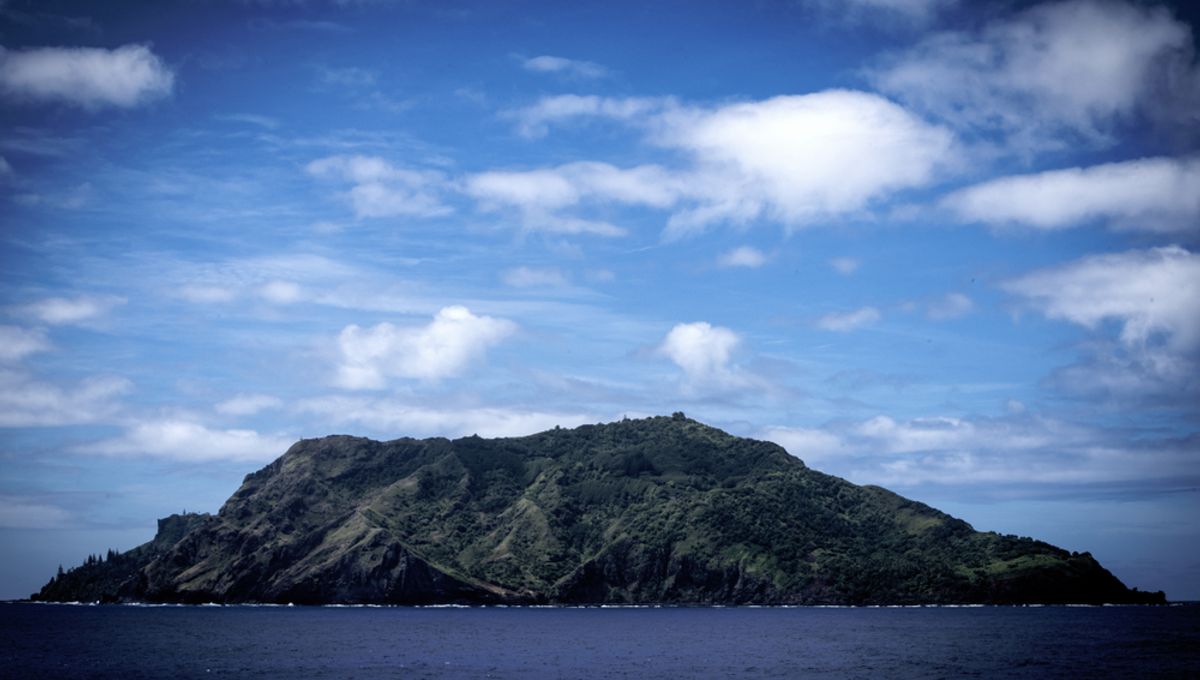
Could you survive on a remote, deserted island, 5,500 kilometers (3,400 miles ) from any large body of land in either direction? In all likelihood, the answer is no – but one group of sailors were forced to make one of the world’s most remote islands their home after a mutiny, and their descendants live there to this day.
To most, the Pitcairn Islands seem entirely uninhabitable, with huge volcanic formations jutting out and almost no feasible place to dock a boat. Sat in the middle of the South Pacific Ocean, these islands are exactly the type most people think of when talking about a desert island, the likes of which Tom Hanks would profess his love to a football and inhabitants would write “SOS” in the sand, hoping for a rescue that never comes.
There are four Pitcairn islands, with a combined land mass of just 18 square miles (47 square kilometers), but only one – Pitcairn Island – is inhabited. These 55 inhabitants make up one of the most remote populations on Earth.
How they got there is quite the story, one so wild that it has in fact been featured in multiple movies. British naval captain William Bligh, a supposedly tyrannical leader, set off aboard the HMS Bounty on an ambitious voyage – on just a small cutter, Bligh and an inexperienced crew of 46 were to sail to Tahiti to obtain breadfruit saplings, before traversing the south Pacific and reaching the Caribbean, where the breadfruit was wanted in an attempt to solve a dwindling food supply for plantation slaves. The voyage would be arduous, and 33-year-old Bligh was thought to have enough experience to complete the journey – particularly due to his close relationship with the Master’s Mate Fletcher Christian, whom he had known for years.
Due to the designation of the vessel, the Bounty had a very small crew and Bligh was the only commissioned officer aboard. With no guards to prevent a mutiny, the ship was ripe for the taking.
One night, while two-thirds of the crew slept, Fletcher Christian (in true friendship style) led 18 crewmembers in a mutiny, seizing Bligh. At the sight of their captain bound and captured, the rest of the crew quickly surrendered without fighting, despite outnumbering the mutineers almost two-to-one.
Bligh and his loyalists were thrown in a lifeboat with minimal supplies and cast adrift, far from land, around Tahiti. Despite having no charts or advanced navigation tools, Bligh successfully made it home to England, surpassing all odds, though not at the cost of many of his crew’s lives.
As for the mutineers, they faced a different challenge. They couldn’t return to English colonies for fear of capture, so they began searching for a home nearby. After months of searching, they discovered a remote volcanic island around 1,350 miles (2,170 kilometers) from Tahiti. The mutineers and 19 Tahitians they met on their voyage settled on what is now Pitcairn Island.
Now, 200 years on, Pitcairn Island has a tiny population, barely changed from the original landing party. Visitors are scarce, with no airport and docking challenges for most vessels. It has the bare minimum of necessary utilities, with a school that has just three residents and teaches the New Zealand pre-school and primary curriculum, a health clinic, post office, store, and a few cultural buildings.
Children are usually sent to overseas boarding schools in New Zealand to receive education beyond what is available on the island, and there is just one link from the island to the outside world. This ship, a dual-purpose vessel called the MV Silver Supporter, travels from the “nearby” (if you consider over 1,000 miles close) islands of Tahiti and Mangareva to Pitcairn Island, carrying a whopping 12 passengers on the two-day voyage to the remote spot once a month.
Pitcairn Island now makes a living selling whale-watching and dark sky excursions to visitors, advertising an adventurous and unforgettable experience to those seeking something a little different. It also sells its famous honey, which supposedly has a distinct flavor, and the tiny island remains almost self-sufficient, much like the mutineers that landed there so many years ago.

Source Link: Pitcairn Island: The Most Remote Island In The World, And The Wild Story Of Its Inhabitants
