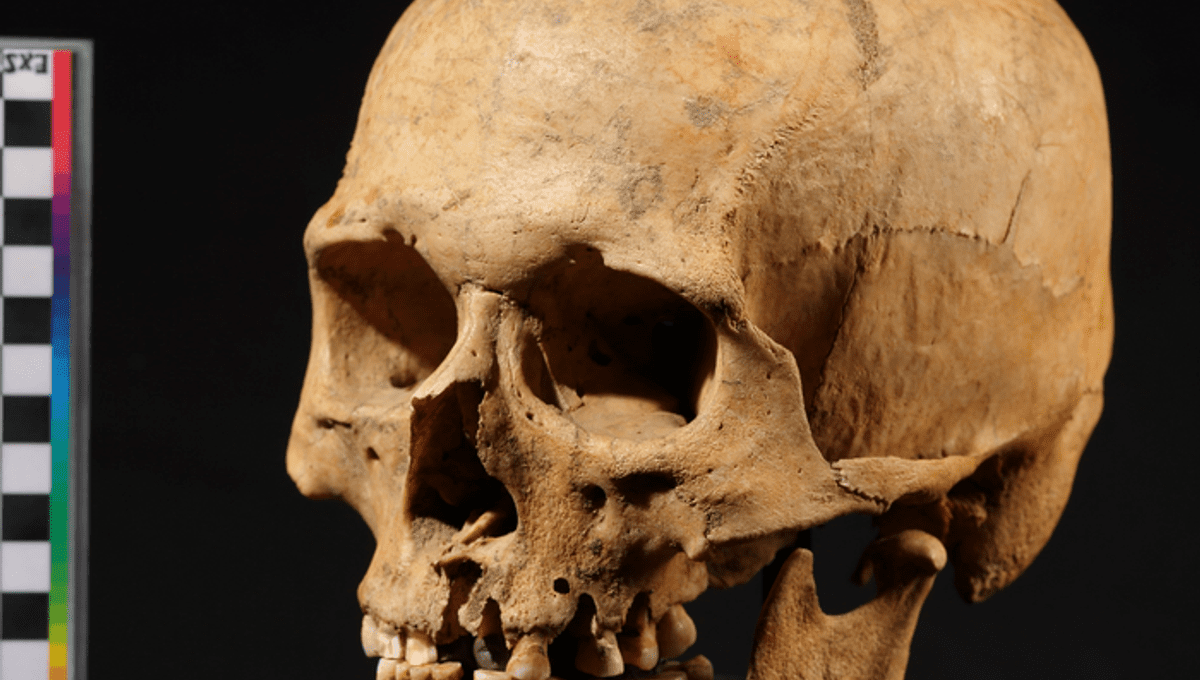
Genetic analysis has unveiled a previously unknown group of people who lived in Siberia during the last Ice Age around the borders of modern-day Russia, China, Mongolia, and Kazakhstan. It appears this mysterious group of people also had links to the multiple waves of humans who made the daring journey to North America.
By the looks of things, some people actually migrated back in the “opposite” direction from North America to North Asia via the Bering Sea. This ancient legacy of the Americas still lives on in some people currently living in northeastern Siberia.
To reach their findings, scientists led by the Max Planck Institute for Evolutionary Anthropology analyzed the genomes of ten individuals who lived in the Altai region of southern Siberia around 7,500 years ago. Paired with this, they looked at the genetic makeup of Eurasian and Native American populations in the present day.
Their data revealed the Altai hunter-gatherers had a “unique gene pool” that indicates they were descendants of two key groups that lived in this part of Eurasia at the time: the paleo-Siberians and the Ancient North Eurasian (ANE) people.
“We describe a previously unknown hunter-gatherer population in the Altai as early as 7,500 years old, which is a mixture between two distinct groups that lived in Siberia during the last Ice Age,” Cosimo Posth, senior study author from the University of Tübingen in Germany, said in a statement.
“The Altai hunter-gatherer group contributed to many contemporaneous and subsequent populations across North Asia, showing how great the mobility of those foraging communities was,” he added.
One of the ancient individuals from Nizhnetytkesken in Altai also had Ancient Northeast Asian (ANA) ancestry, showing this lineage spread around 1,500 kilometers (932 miles) farther to the west than previously appreciated. Furthermore, they found links between Neolithic people in Russian Far East and the Jōmon hunter-gatherers who lived in the Japanese archipelago.
In other words, the genetic analysis indicates that this vast patch of Northern Asia, southern Siberia, and North America was home to highly connected groups as early as 10,000 years ago.
“The finding that surprised me the most is from an individual dated to a similar period as the other Altai hunter-gatherers but with a completely different genetic profile, showing genetic affinities to populations located in the Russian Far East,” added Ke Wang, a lead author of the study from Fudan University, China. “Interestingly, the Nizhnetytkesken individual was found in a cave containing rich burial goods with a religious costume and objects interpreted as possible representation of shamanism.”
“His grave goods appear different than other local archeological contexts implying mobility of both culturally and genetically diverse individuals into the Altai region,” she explained.
Another fascinating discovery was that many people must have migrated back from North America to North Asia, perhaps over the last 5,000 years.
Researchers can’t quite agree on when people first stepped foot in the Americas. While most estimates say humans were on the continent 15,000 years ago, others argue there’s evidence of humans here as old as 30,000 years ago.
Regardless of when exactly they first reached the Americas, it does appear that some of the people “turned around” and came back to Eurasia. This was shown by modern-day people living in northeastern Siberia whose genetic make-up shows strong evidence of Native American-related geneflow.
Altogether, the hunter-gatherers of Altai highlight that this special corner of Eurasia harbored highly connected groups as early as 10,000 years ago who traveled colossal distances, back and forth, across the continents.
“This suggests that human migrations and admixtures were the norm and not the exception also for ancient hunter-gatherer societies,” added Posth.
The study is published in the journal Current Biology.

Source Link: Previously Unknown Group Of People In Prehistoric Siberia Found By DNA
