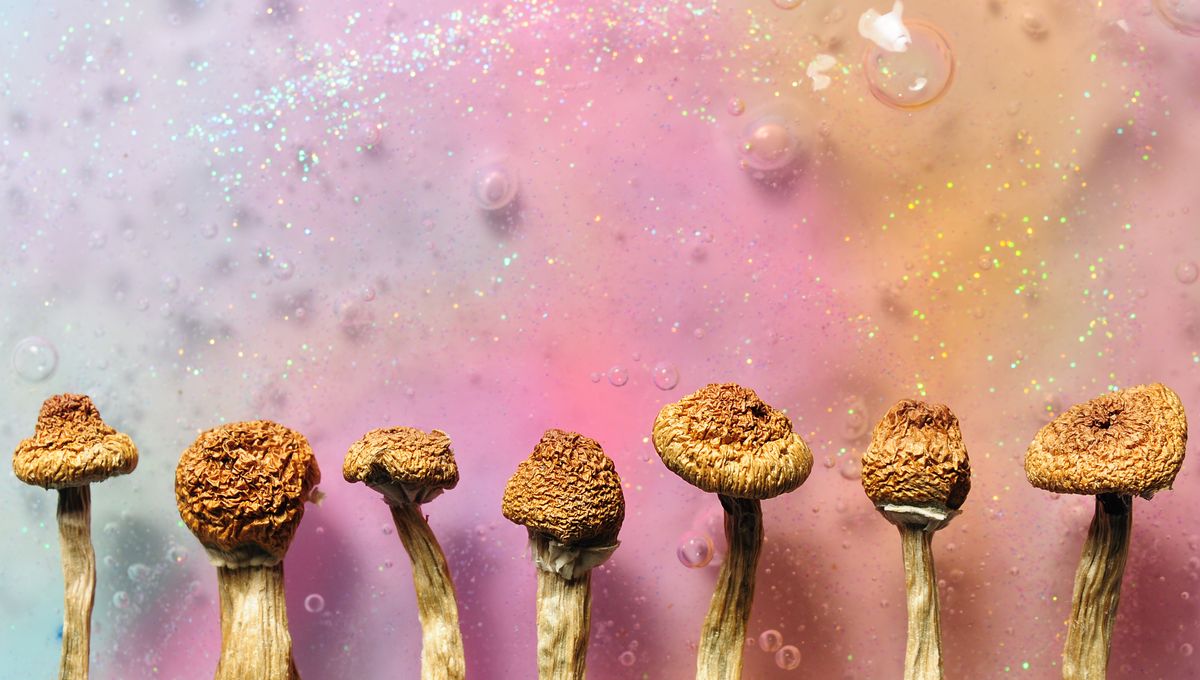
A scientific review and meta-analysis has examined the potential for psilocybin, the active compound in “magic mushrooms”, to treat major depression and depressive disorders. The evidence shows that psilocybin could be a safe and effective treatment that needs further study.
Despite advances in treatments for depression and other mental health therapies, there are still many patients who do not respond well to conventional options. In fact, what is known as treatment-resistant depression affects over 30 percent of patients with major depressive disorders. There is therefore an urgent need for alternative novel approaches to address this gap. And there is one compound that shows particular promise.
The magic in “magic mushroom”
Psilocybin is a naturally occurring hallucinogenic compound responsible for the “magic” associated with some species of mushrooms. But while this fungal feature has received a bad reputation since the counterculture movements of the 1970s, academics and wider society are increasingly seeing its potential as a treatment for severe depression, as well as mood disorders, obsessive-compulsive disorder, and alcohol and tobacco use disorders.
“Numerous trials have been published in recent years demonstrating psilocybin’s profound antidepressant effects in randomized, placebo-controlled clinical trials, the gold standard for determining the efficacy of a drug,” the authors of the new review study told PsyPost.
Research on this subject has reached a point where it is now worth conducting a formal review of the evidence to see what the state of the field is at the moment.
The team’s meta-analysis, an approach that systematically examines and merges the findings of multiple similar studies to produce new insights, sifted through thousands of publications related to psilocybin and psychotherapy.
During their search, the team focused on studies that included participants diagnosed with “major depressive disorder” or “distressing depressive symptoms” associated with life-threatening cancer. In addition, the diagnosis had to have been confirmed and based on “standard clinical assessments or structured interviews”, such as those included in the Diagnostic and Statistical Manual of Mental Disorders (DMS-5). This led to a sample of 686 participants from 13 randomized controlled trials that met these criteria.
The systematic review and meta-analysis found that patients receiving psilocybin-assisted therapy demonstrated greater improvements in depressive symptoms than those who did not receive it. This was consistent across subgroups, including those experiencing depressive disorders and those with depression associated with life-threatening cancer.
Interestingly, the results showed that both remission rates and response rates – the number of patients showing a significant reduction in depression symptoms – were highest among the psilocybin group than in the control groups.
The evidence suggests that the antidepressant action associated with psilocybin kicks in a lot quicker compared to the much slower antidepressant effects of current treatments. Moreover, the benefits of psilocybin therapy also appear to last for several months.
In most cases, patients took to the treatment well, but non-serious adverse reactions were common across all studies. This included people experiencing headaches, nausea, fatigue, anxiety, dry mouth, palpitations, and short-term high blood pressure. In most instances, these symptoms are manageable within a clinical setting and serious adverse events were rare.
There were isolated instances of more severe effects, such as worsening depression symptoms or suicidal ideation, especially among those with a history of these issues.
This, the authors write, suggests “an unclear relationship between psilocybin and suicide risk”. They add that, “on the other hand, a study of lifetime recreational psilocybin users has shown that drug use is associated with significantly reduced odds of recent suicidal behaviour.”
As such, “psilocybin’s safety profile in psychiatric patients must be closely monitored in future studies, and those with a lifetime history of suicidal behaviour should be included to provide generalizable results.”
Crucially, nearly all trials included in the study used psilocybin in conjunction with supportive and integrative psychotherapy.
“The average person should approach the findings of our paper with cautioned optimism, particularly with how psilocybin should be used in both clinical and non-clinical settings,” the authors told PsyPost.
“While the effect size (a measure of how effective psilocybin is at reducing depressive symptoms compared to placebo) of psilocybin was moderate, the studies have several limitations. It is difficult to find a placebo drug that can mimic psilocybin’s obvious psychological effects while not having the depressive action. In fact, such a drug does not yet exist.”
It is therefore very possible that participants in the study were unblinded, the authors added, which means they knew what treatment options they were receiving. The team also emphasized that, even though the results are encouraging, “psilocybin should only be prescribed in a monitored, clinical setting.” They do not recommend or condone self-medication with this compound.
“This is particularly important to highlight given the increasing presence of illicitly yet conspicuously sold psilocybin in large urban centres,” the authors concluded.
The study is published in Psychiatry Research.

Source Link: Psilocybin From Shrooms Could Be Effective Future Treatment For Depression, Meta-Analysis Argues
