• Email Us: [email protected]
  • Contact Us: +1 718 874 1545
  • Skip to main content
  • Skip to primary sidebar

Medical Market Report

  • Home
  • All Reports
  • About Us
  • Contact Us

Rare Tickborne Illness Caused By Bacteria Identified For First Time In US

March 10, 2023 by Deborah Bloomfield

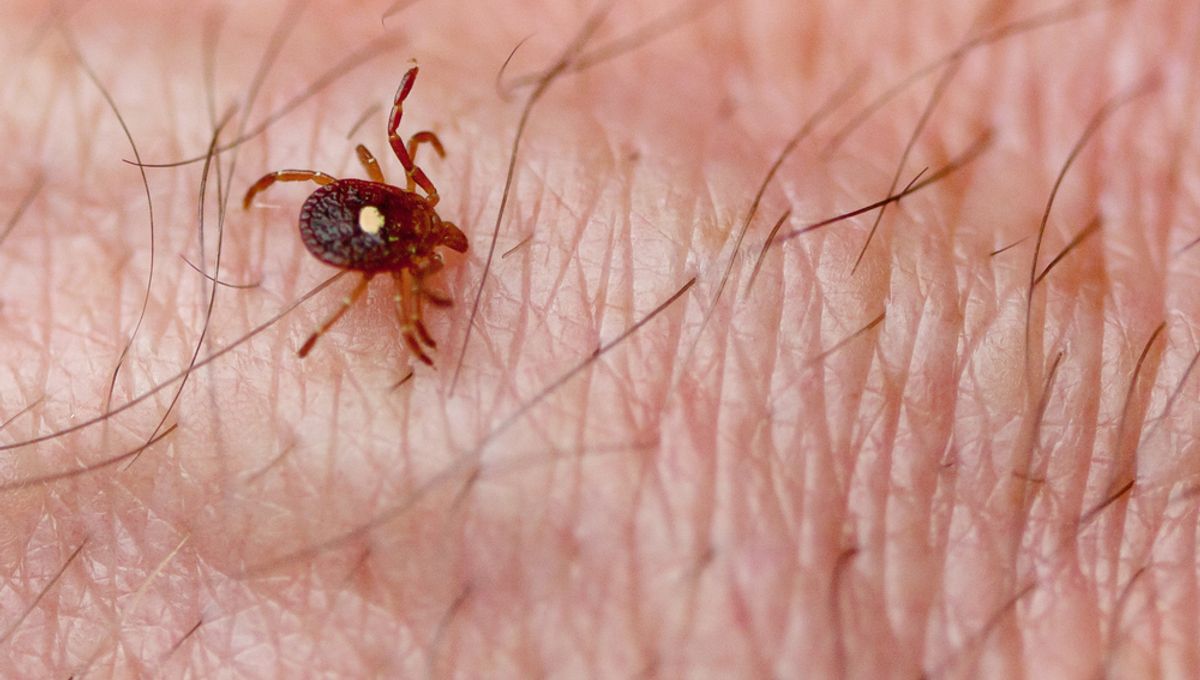
In a US first, a case of tickborne relapsing fever caused by a particular species of bacteria has been reported, according to the Centers for Disease Control and Prevention (CDC). The pathogen in question is Borrelia lonestari, a distant relative of the bacteria responsible for Lyme disease, which has never before been found to cause this particular illness.

Tickborne relapsing fever (TBRF) is a rare infection characterized by recurring fever, headaches, muscle and joint aches, and nausea. It is most common in the western US and is often linked to sleeping in rustic, rodent-infested mountain cabins. The condition is known to be caused by Borrelia bacteria – although not B. lonestari, until now – transmitted to humans through the bite of infected “soft ticks”.

Advertisement

The unusual case was reported last month in the CDC-run journal Emerging Infectious Diseases and involved a 75-year-old man from Alabama. Back in 2019, he reported experiencing relapsing fevers, as well as chills, sweating, headache, dizziness, and fatigue for around a month. He admitted to having removed a tick several weeks prior to his symptoms emerging. Fortunately, he was successfully treated with antibiotics.

Doctors initially identified spirochetes – spiral-shaped bacteria often spread by ticks – in his blood, and after months of investigation arrived at a diagnosis of TBRF caused by B. lonestari. 

B. lonestari was first detected in the lone star tick in 1996 and was found to infect humans over 20 years ago. A close relative of these bacteria, called B. miyamotoi, which is transmitted by hard ticks, is known to cause TBRF.

“This case report sheds light onto the potential of B. lonestari to cause human illness and contributes to the body of knowledge on TBRF,” study author Dr Laia J. Vazquez Guillamet told Infectious Disease Special Edition. “It is the second tickborne Borrelia species transmitted by hard ticks that has been identified as a causative agent of relapsing fever, being the previous ones [were] transmitted by soft ticks.”

Advertisement

It is important to note, however, that the patient was on immunosuppressant drugs for lymphoma, meaning it’s not possible to tell whether he developed TBRF because B. lonestari is particularly pathogenic or because his medication made him more susceptible to infection.

“In future years, increased awareness of the pathogenic potential of B. lonestari and the use of molecular diagnostics may give us an approximation about the real burden of human illness caused by this bacterium,” Vazquez Guillamet added.

The study is published in Emerging Infectious Diseases.

Deborah Bloomfield
Deborah Bloomfield

Related posts:

  1. Have ‘The Privacy Talk’ with your business partners
  2. Japan factory output seen down again in August on supply chain disruption: Reuters poll
  3. Kremlin says more U.S. sanctions would undermine dialogue hopes
  4. Australian law chief wants defamation rules fixed for the internet age – letter

Source Link: Rare Tickborne Illness Caused By Bacteria Identified For First Time In US

Filed Under: News

Primary Sidebar

  • US Just Killed NASA’s Mars Sample Return Mission – So What Happens Now?
  • Art Sleuths May Have Recovered Traces Of Da Vinci’s DNA From One Of His Drawings
  • Countries With The Most Narcissists Identified By 45,000-Person Study, And The Results Might Surprise You
  • World’s Oldest Poison Arrows Were Used By Hunters 60,000 Years Ago
  • The Real Reason You Shouldn’t Eat (Most) Raw Cookie Dough
  • Antarctic Scientists Have Just Moved The South Pole – Literally
  • “What We Have Is A Very Good Candidate”: Has The Ancestor Of Homo Sapiens Finally Been Found In Africa?
  • Europe’s Missing Ceratopsian Dinosaurs Have Been Found And They’re Quite Diverse
  • Why Don’t Snorers Wake Themselves Up?
  • Endangered “Northern Native Cat” Captured On Camera For The First Time In 80 Years At Australian Sanctuary
  • Watch 25 Years Of A Supernova Expanding Into Space Squeezed Into This 40-Second NASA Video
  • “Diet Stacking” Trend Could Be Seriously Bad For Your Health
  • Meet The Psychedelic Earth Tiger, A Funky Addition To “10 Species To Watch” In 2026
  • The Weird Mystery Of The “Einstein Desert” In The Hunt For Rogue Planets
  • NASA Astronaut Charles Duke Left A Touching Photograph And Message On The Moon In 1972
  • How Multilingual Are You? This New Language Calculator Lets You Find Out In A Minute
  • Europa’s Seabed Might Be Too Quiet For Life: “The Energy Just Doesn’t Seem To Be There”
  • Amoebae: The Microscopic Health Threat Lurking In Our Water Supplies. Are We Taking Them Seriously?
  • The Last Dogs In Antarctica Were Kicked Out In April 1994 By An International Treaty
  • Interstellar Comet 3I/ATLAS Snapped By NASA’s Europa Mission: “We’re Still Scratching Our Heads About Some Of The Things We’re Seeing”
  • Business
  • Health
  • News
  • Science
  • Technology
  • +1 718 874 1545
  • +91 78878 22626
  • [email protected]
Office Address
Prudour Pvt. Ltd. 420 Lexington Avenue Suite 300 New York City, NY 10170.

Powered by Prudour Network

Copyrights © 2026 · Medical Market Report. All Rights Reserved.

Go to mobile version