The Red Queen hypothesis was coined by biologists to explain the relentless “evolutionary arms race” that spurs the evolution of species. When it comes to natural selection, species must constantly adapt to survive being pitted against competing organisms and adversarial enemies that are also constantly evolving.
The idea was first described by Leigh Van Valen in 1973 who dubbed it a “new evolutionary law”. He essentially showed that species don’t independently evolve to fit into their surroundings, they also co-evolve with other species. It seems that evolution will still occur because organisms must continuously adapt just to keep up with their enemies in the battle for resources.
Species are constantly changing, although they don’t actually get any fitter relative to their enemies because they are constantly evolving too. Species must paddle upstream, only to stay in the same place, or else they will be swamped by the waves.
The common name for the hypothesis is a reference to a conversation between Alice and the Red Queen in Lewis Carroll’s book Through the Looking-Glass, in which the Red Queen states: “Now, here, you see, it takes all the running you can do, to keep in the same place.”
Scientists have looked to the Red Queen hypothesis to explain the evolution of sexual reproduction. As explained by the Royal Society: “The idea starts by considering that hosts and parasites are evolving together. If the hosts are sexual females, they can produce offspring that are genetically diverse and therefore avoid parasite infection. However, if hosts are clonal females, their offspring lack the ability to be as genetically diverse and will be more susceptible to attack by parasites. Thus, coevolution with parasites prevents the clones from taking over and gives sexual species an advantage.”
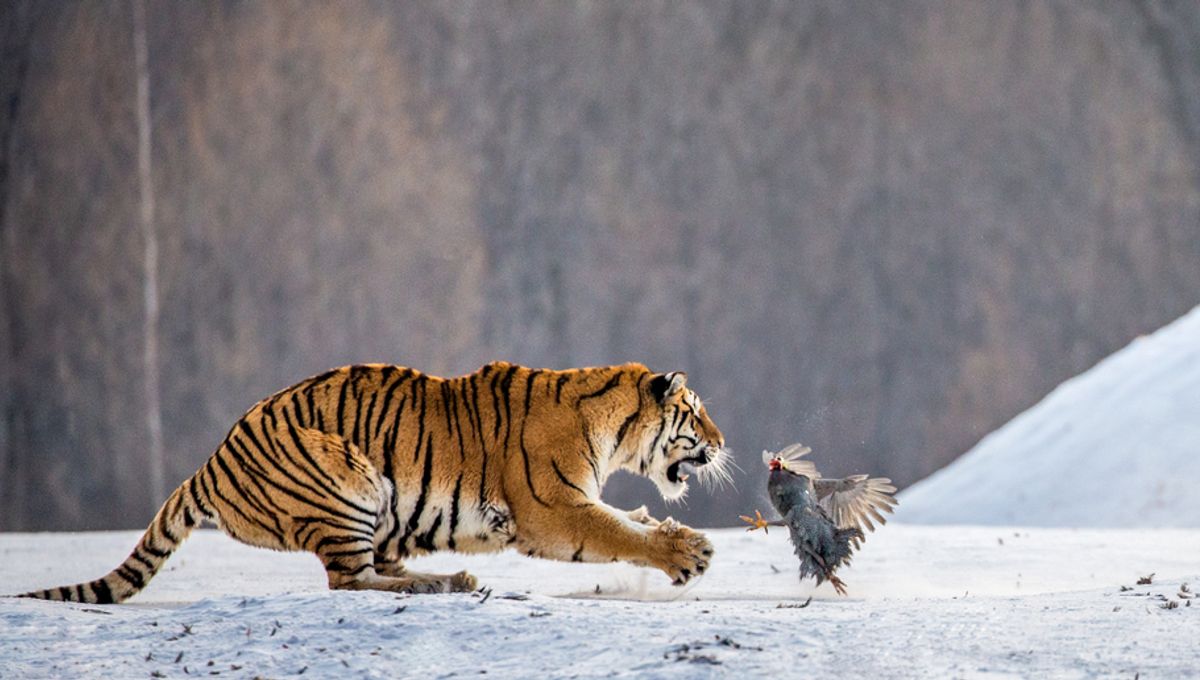
A simpler way to imagine the Red Queen hypothesis is the predatory-prey relationship between the rabbit and a fox. To evade hungry foxes, rabbits might evolve to become faster. Simultaneously, however, the fox is evolving to run faster to catch it, which then drives the rabbit to evolve to run faster. The two species are pitted against one another in a never-ending arms race.
An especially interesting example is the co-evolution of birds, butterflies, and poisonous plants. The milkweed plant evolved to produce toxic compounds in a bid to stop insects munching on its leaves. However, the monarch butterfly has since evolved resistance to these toxins, allowing it to eat the plant.
In the next chapter of the story, birds then acquired the same genetic mutation, allowing them to snack on monarch butteries without being poisoned. Who knows what will unfold next in this saga, but let’s hope the milkweed plant has got something exciting up its sleeve.

Source Link: Red Queen Hypothesis: The Never-Ending "Arms Race" That Fuels Evolution
